


Welcome to Memoir Land—a newsletter edited by Sari Botton, now featuring four verticals:
Memoir Monday, a weekly curation of the best personal essays from around the web brought to you by Narratively, The Rumpus, Granta, Oldster Magazine, Literary Hub, Orion Magazine, The Walrus, and Electric Literature. Below is this week’s curation. ⬇️
First Person Singular, featuring original personal essays.
The Lit Lab, featuring interviews—The Memoir Land Author Questionnaire—and essays on craft and publishing. There are also weekly writing prompts and other exercises from, ahem, a New York Times bestselling ghostwriter of memoirs (that’s me) exclusively for paid subscribers.
Goodbye to All That, where I continue to explore my fascination with the most wonderful and terrible city in the world, something I began doing with two NYC-centric anthologies, Goodbye to All That, and Never Can Say Goodbye.
*While I have you…I could use some more support in the form of paid subscriptions. If I’ve featured your work or that of your publication’s contributors…if you’re a publicists whose clients I’ve regularly featured…if you just want to help me keep doing ALL THIS and paying contributors, please consider becoming a paid subscriber…*
*Click here to get more out of this post by reading it online rather than in your inbox.*


Essays from partner publications…
My Father Was Found in a Residential School Incinerator When He Was an Infant
by Julian Brave NoiseCat
“Tony followed the wail, flashlight in hand. Sound and light led him inside the service wing to a garbage burner about the size of an office desk, where trash from the mission was turned to ash. He opened it, casting rays of light onto rubbish and soot. Somewhere near the top of the pile was an ice cream carton, repurposed as a makeshift wastebasket and discarded no more than twenty minutes before. Within was a newborn. The authorities called him “Baby X.” And he was my father.”
My Brothers and I Could Not Be More Different (an excerpt of Man Made)
by Steve Majors
“My search for a father figure begins long before I realize my father isn’t related to me. The man I call Pops, I learn too late, is just my mother’s husband. He’s also emotionally distant and physically unavailable to me—passed out drunk at home, locked up in jail, or out of town with a secret second family. That leaves my big brother, Jim, or Jim-Jim, to fill in.”
How Pluto Helped Me Accept My Trans Partner’s New Name
by Lisa Grossman
“When I started dating my future husband a few years after college, it all felt clearer. He identified as a lesbian and self-described as soft butch. He wore suits to dress up, and kept his hair short. His masculine presentation was a beacon to those in the know. Other lesbians recognized his queerness immediately — and mine, too, when I was with him. He was a V.I.P. pass to every gay bar and dyke night I had felt too embarrassed or confused to go to on my own prior. Other girls holding hands on the street would nod at us as we passed them. I would turn to him slack-jawed. Had there been a secret head nod this whole time?”
My Mother the Inventor: Why “Fail Better” is Sometimes the Best Lesson a Parent Can Give
by Coco McCracken
“My mother was an inventor. This is a sentence that I rarely utter aloud because it feels so bold and rare, which she was. But it is an accurate descriptor, even if the truth is that she technically only saw one product into the market and it failed spectacularly, bringing thousands upon thousands of dollars of debt into our lives and arguably taking down my parents’ marriage at the same time.”
Don’t Count Us Out
by Lisa Renee
“Aging is an effective teacher, if we listen. It counsels patience and acceptance, offers perspective and experience. The decades can whittle away our concern for the opinions of others, prune the unnecessary and allow us to blossom as we are, as we want to be. I care so much less now for protocol, for norms, for the rules of society. Through the cycles, seasons, wins, and losses, it’s getting up and bouncing back that trains us for the marathon. The storms are easier when we’ve survived so many.”
Essays from around the web…
The Afterlives of Oliver Sacks
by Peter Catapano
“Oliver vowed to live his remaining days to the fullest. ‘It is up to me now to choose how to live out the months that remain to me,’ he wrote. ‘I have to live in the richest, deepest, most productive way I can.’ He would later keep that vow — traveling, spending time with friends and loved ones, and writing essays and letters at a furious pace even as the illness gradually took its toll. He also expressed a deep sense of gratitude for the chance he’d been given to be ‘a sentient being, a thinking animal, on this beautiful planet.’”
What We Brag About When We Brag About Nothing
by Diana Spechler
“I want everything to be intense and nothing to be boring. Massage should hurt. Showers should scald. Music should hit me like I’ve sucked down a nitrous balloon. Conversation should elicit confession. There’s no such thing as TMI. Give me a workout in a 110-degree studio. If you’re going to touch my hair, please pull it. If food doesn’t set my mouth aflame—Estoy enchilado, they say in Mexico: I’m over-spiced—it’s just sustenance.”
We looked like a ‘Model Minority’ Family. No One Knew What My Father was Doing Behind Closed Doors
by Yvonne Liu
“Even after I graduated as valedictorian of my high school, got accepted into a top MBA program, and became a wife and mother, the silence stayed with me. As far as I know, my mother never considered leaving. She had no options — no money of her own, only limited English and nowhere to go. Divorce would have brought unbearable embarrassment to my traditional Chinese American mother. My parents were desperate to project the image of a respectable family. We were the “model minority” family before that phrase became commonplace.”
Memory and Music: Hiding on the Backstreets
by Michael Raymond
“Terry was a character in a Bruce Springsteen song, but also my best friend—the only best friend I ever had. Sometimes I blame myself for Terry’s death, but most of the time I blame the song. If there was a song that Terry and I considered “our song,” it was Bruce Springsteen’s “Backstreets.” It’s a song about friendship, but also about loss of innocence and betrayal.”
Arachnophobia: How I Overcame my Phobia to Adopt a Daddy Longlegs named Trixie
by Ruth Kogen Goodwin
“While I don’t, philosophically, like the idea of killing anything, practically, I wasn’t willing to make exceptions. I tolerated insects and other bug-like creatures outside, but if a creepy-crawly was in my space, it was trespassing, thus fair game.”
Body Stories: On Miscarriage and Cancer
by Becca Worby
“At home I tell Eamon that I’m probably not pregnant, but I’ll take a test to be sure. Do I really believe this, or am I already rewriting the narrative, accepting that the period I had twelve days ago wasn’t a period after all, but rather heavy implantation bleeding, the first sign that something was wrong? Have I said it in an attempt to reason with myself, to try to make it true? As soon as the second line appears on the test, dark and definitive, it’s impossible to remember.”
Bruce Springsteen has kept me company for decades
by Kate Neale Cooper
“I have no idea where or when I first heard of Bruce Springsteen. Or what made me ask for that album in December 1986. I was a 14-year-old ninth grader who had just moved to Queens, New York, from Washington state. By that time, Springsteen was a rock ’n’ roll god with a bad boy reputation. I was an earnest, over-achieving teenage girl who played by the rules and was rewarded by the system.”
Harmattan Harvests
by james achusiogu
“In the village, I spend a significant amount of time trying to speak Igbo to my relatives. Despite my parents’ subtle attempts to remind my older relatives that we did not go to school in Nigeria, and that our Igbo will be accented by our growing up with ndï öcha, they still tease us – light-heartedly. It’s better, they say, than those who cannot speak at all.”
It’s OK To Leave When The Money Runs Out
by Alex Poppe
“Barring a major medical emergency or a stock market collapse, my savings might last for another ten or 12 years. I’d be about 70, but then what? Religion and laws aside, is it okay to kill yourself when your money runs out?”
How to Shatter a Marriage
by Jazmine Becerra Green
“Should I have bound the splintered table back together? Maybe filled the cracks with gold, like some Japanese artisans do to preserve the history of an item? Sealed each splinter with glitter glue, perhaps? Maybe a constant reminder set beside the sofa would have stopped my husband from breaking things. Maybe if he set his morning coffee on its mended checkerboard after each sip, he wouldn’t forget what he did. Couldn’t forget the history of the object, the way he held it above his head before driving it into the ground with his whole self.”
I thought I was prepared for my husband’s military deployment. Then I realized I had no one to support me.
by Heather Sweeney
“If military spouses could compile a list of things not to say to a military spouse, one of those taboo sentences would be “You knew what you were getting into.”
🚨Announcements:
📢 Earlybird Registration Has Begun for the Southern Vermont Writers’ Conference, at Which I Am Leading a Workshop…
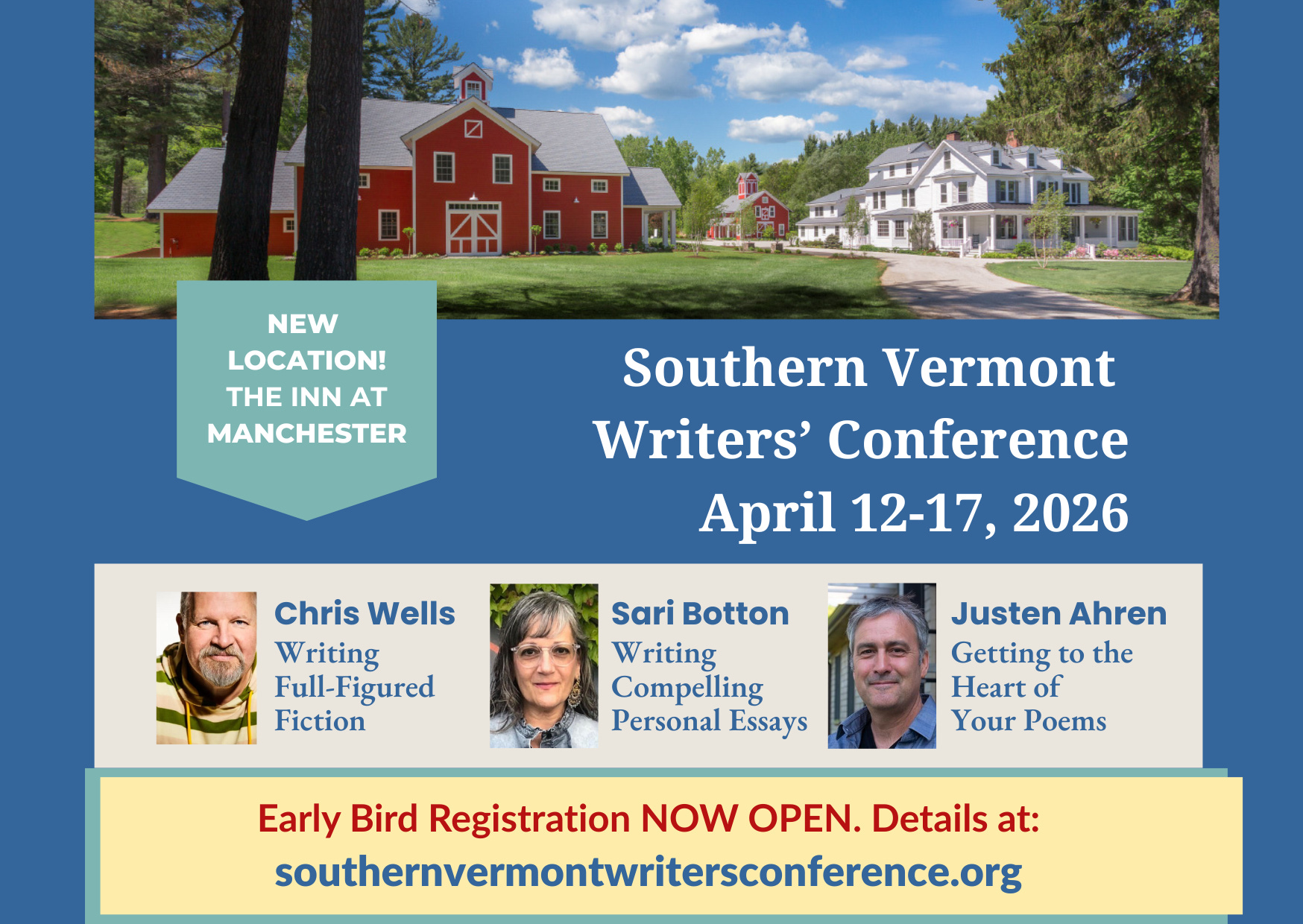
For the second time, I’ll be leading a personal essay writing workshop at The Southern Vermont Writers’ Conference.
*There are some scholarships available, too.
The Yvonne Daley Memorial Scholarship for a Vermont writer. This scholarship covers the conference fee.
The Third Act Scholarship for a writer 65+ which covers the conference fee.
The Stockbridge-Munsee Mohican Scholarship which is a full scholarship covering the conference fee, lodging, and travel for a member of the Stockbridge-Munsee Mohican Band to come and write in their ancestral homelands.
NEW! Emerging Voices Scholarship which covers the conference fee and lodging for an early-career writer from a community that is traditionally underrepresented in publishing.
The scholarship application deadline is November 1, 2025. Applicants will be notified by mid-December.
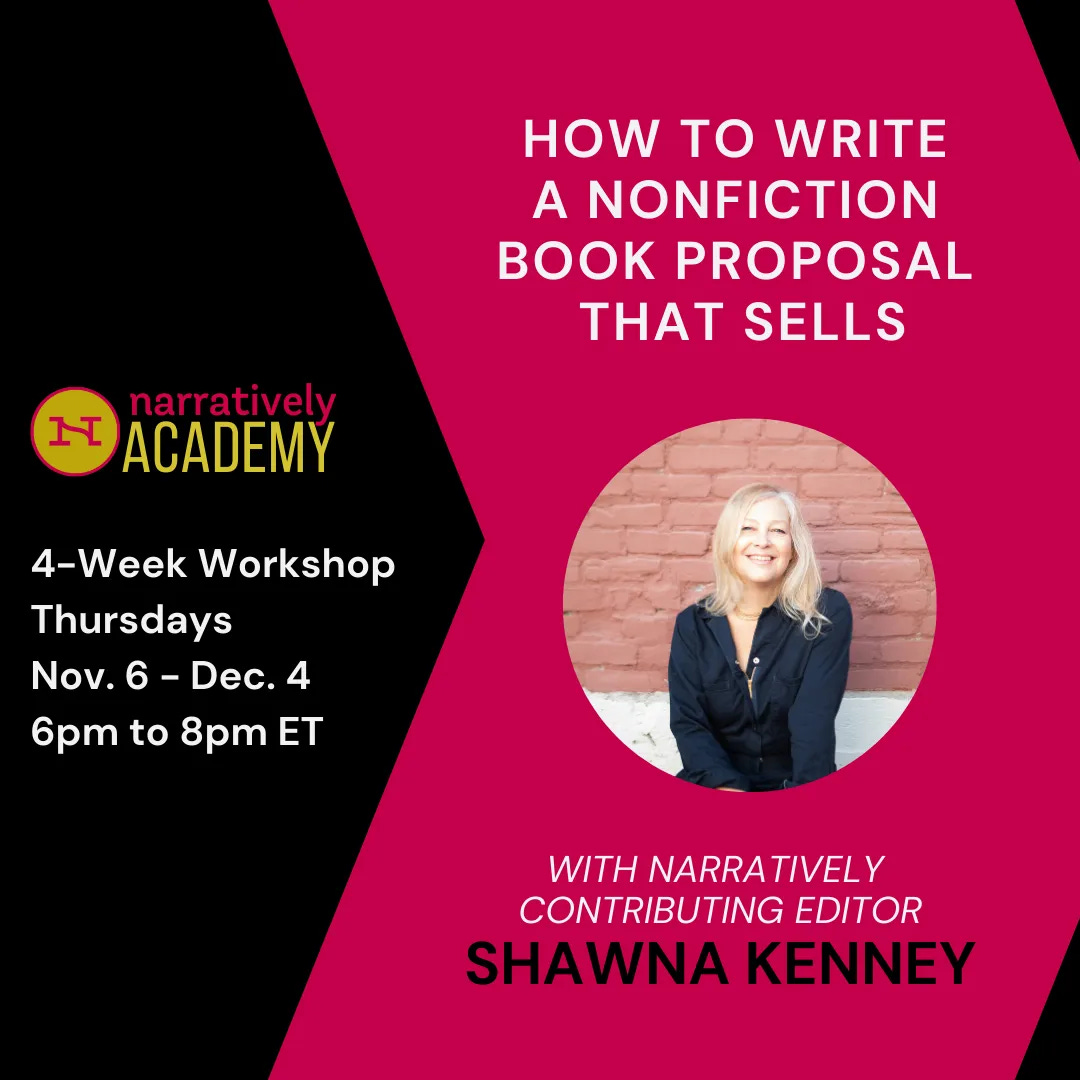
📢 From Narratively Academy: How to Write a Nonfiction Book Proposal That Sells, and their annual Memoir Prize
Starting this Thursday, November 6, Narratively Contributing Editor Shawna Kenney, who has published an award-winning memoir, authored two nonfiction books and edited an anthology, will lead this 4-part workshop on how to write a compelling book proposal that will demand attention from publishers.
Narratively Memoir Prize 2025:
Narratively is currently accepting submissions for their 2025 Memoir Prize. They are looking for “revealing and emotional first-person nonfiction narratives from unique and overlooked points of view.” The guest judge is #1 New York Times bestselling memoirist Susannah Cahalan. One grand prize winner will receive a $3,000 prize, publication on Narratively.com and in a special limited print edition, as well as a virtual awards ceremony to celebrate. For more information and to submit a story, you can use their pitch form here. There is a $20 entry fee — which is waived for Narratively and Narratively Academy subscribers! — and the deadline to submit is Sunday, December 7, 2025.
📢 Two Workshops from Literary Liberation
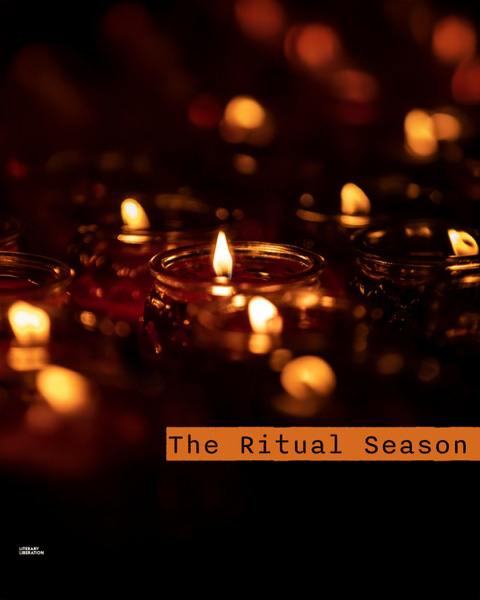
The Ritual Season begins today! The Ritual Season is a free month-long writing practice focused on presence, revelation, and sustainable creativity instead of word counts and deadlines. Follow along here on Substack for weekly reflections and prompts, or join us in Slack for daily check-ins and deeper community engagement—we start today.
Write Yourself Into the Future with Literary Liberation this Winter! Incorporate social justice into your writing, build stronger character development techniques, use astrology as your writing muse, or learn how to honor our inherited stories with us this winter! Our workshops are designed for writers at all levels. Seats are limited.
Memoir Monday readers can use code MEMOIRLAND15 for 15% off our workshops by November 30th.
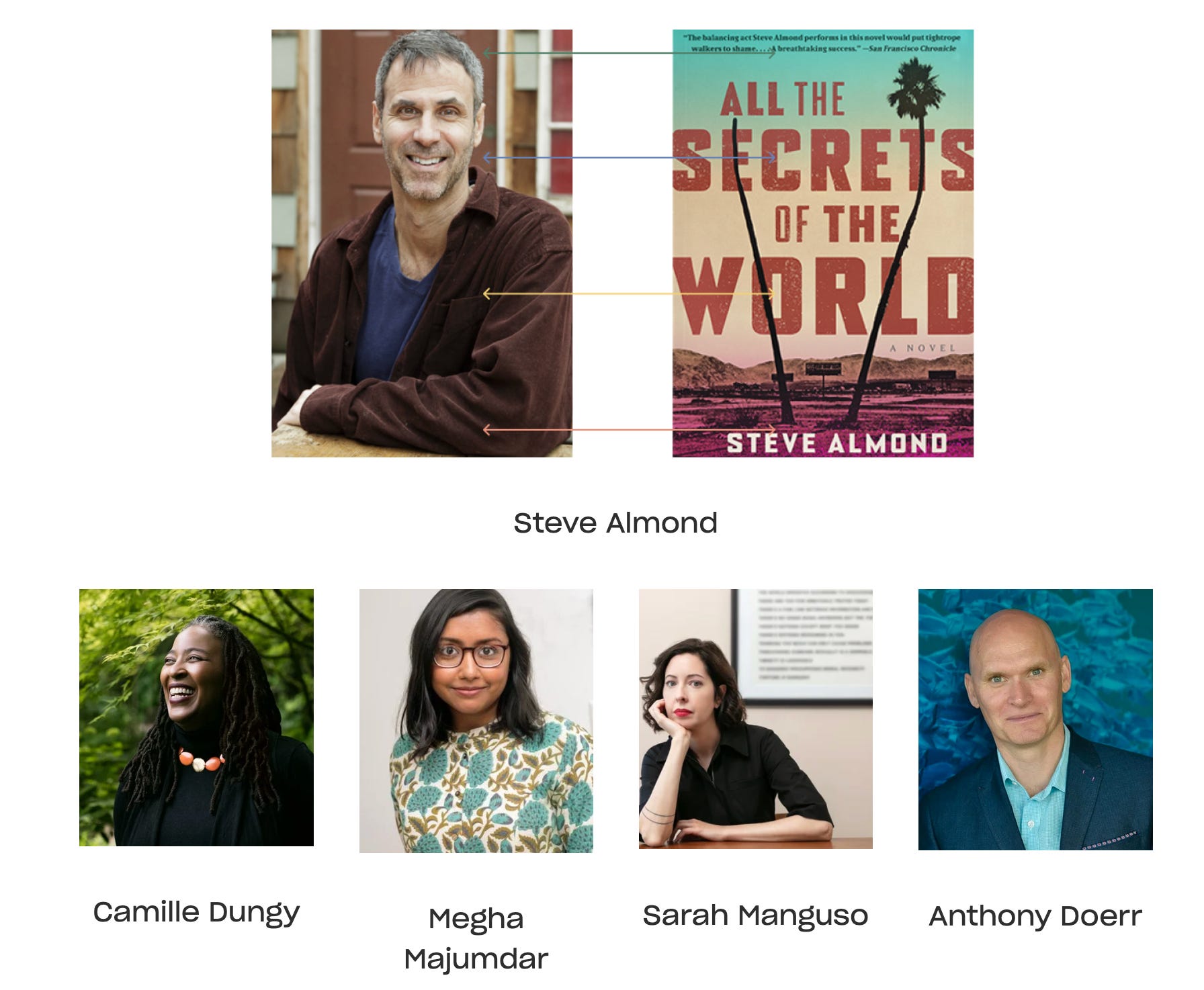
📢 “Writing Desire” with Off Assignment, Led by Steve Almond, with guest authors Camille Dungy, Megha Majumdar, Sarah Manguso, & Anthony Doerr
How do we turn internal obsession into a narrative that resonates broadly? What’s the role of restraint when writing with passion? Storytelling is neither a mystical pursuit, nor a technical one. It boils down to desire. The reader is asking two essential questions when they pick up a story. First: Who do I care about? And second: What do they care about? If you make the reader shoulder what Sarah Manguso calls “the burden of hope,” they will follow you anywhere.
This intensive (but free-wheeling) series will focus on desire as an engine of literary creation. Over the five sessions of this course, we’ll focus on four potent forms of desire: obsession, sex, unrequited love, and friendship. Each week, we’ll look at examples—fiction, creative nonfiction, even some poetry—by a variety of writers that show how these subjects drive stories deeper into truth: Camille Dungy, Megha Majumdar, Sarah Manguso, & Anthony Doerr.
Dates: Mondays: November 3 - December 1, 7 - 9 p.m. EST; Price: $400 (Memoir Monday readers can use code MEMOIR20 for 20% off)
📢 From Best American Essays Editor: The Art of the Essay
Join Kim Dana Kupperman & Baron Wormser for a weekend of discussing, contemplating, and generating essays, November 14-16, 2025
📢 Call for Submissions from Raising Mothers: When the Water Was Gone — Hurricane Katrina, 20 Years Later
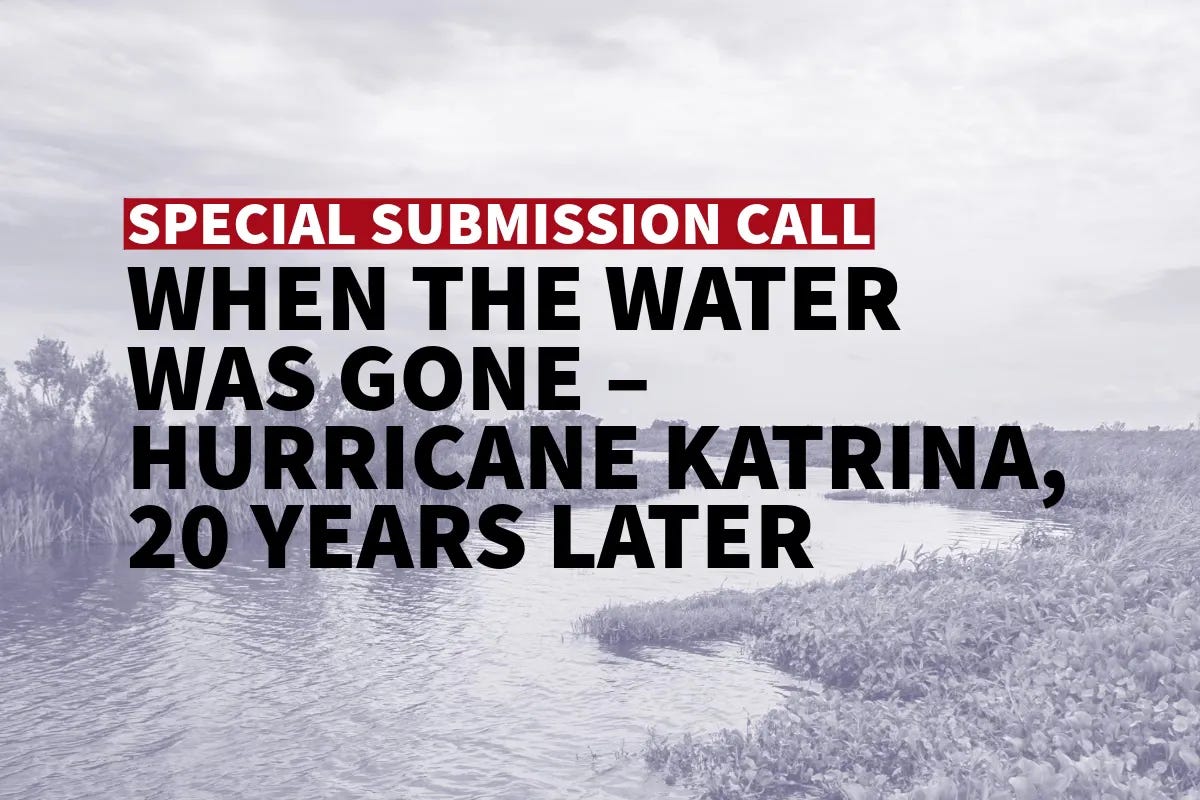
August marked the 20th anniversary of Hurricane Katrina. It marked a turning point in my own life on what I can bear witness to.
Our newest call, and the first special call for year ten at Raising Mothers, WHEN THE WATER WAS GONE aims to examine it all—the personal, the political, the betrayal, the hope, the determination. Perhaps you were young, a budding adult. Perhaps you have stories that were passed on to you. While we are interested in first person stories, we’re also interested in conversations and stories of what that moment kindled in you, what flame you’ve borne since. Share your stories. All accepted work will be paid. Submissions close December 15.
This call is open exclusively to writers of the global majority.
📢 Call for Submissions for “Freedom Ways,” a Collaboration Between Memoir Land and Literary Liberation
Memoir Land and Literary Liberation co-publish an essay series that is now called “Freedom Ways.” Rate: $150. For submissions guidelines, deadlines and more, visit Literary Liberation. Here are the first two essays in the series:


📢 At Open Secrets: Paid Call for Submissions for Personal Essays by Humans About the Human Experience (No AI Writing Allowed)
We are looking for original, unpublished 1,000-2,500-word personal essays that explore transformative, powerful human experiences, especially those that are often kept secret or hidden.
We pay $50 for general essays. Deadline: November 30, 2025 (ET); earlier submissions have the best chance of acceptance.
Object-ives is a new column featuring rotating authors that will run on Fridays in our Stuff-ed section for flash nonfiction essays of 500-999 words about an object you own or have owned in the past. We pay $25 for Object-ives essays.
📢 Call for Contributors to an Anthology about Infidelity
Tentative title: Stepping Out: Writings on Infidelity
Editors: Susan Ostrov Weisser, author of LOVELAND: A MEMOIR OF ROMANCE AND FICTION and Nan Bauer-Maglin, editor of GRAY LOVE and LOVING ARRANGEMENTS
This essay collection explores the enduring and complex issue of infidelity in romantic relationships, a topic that remains taboo and emotionally charged despite the evolving norms around love, commitment, and sexuality. The book will feature personal essays from those with direct or thoughtful insights into infidelity, whether as participants, victims, or observers. Analytic essays approaching the topic through psychological, sociological, historical, or literary lenses are welcomed. Reprints will be considered. Please send inquiries or a 1–2-page description to both Susan at weisser@adelphi.edu and Nan at Nan.Bauermaglin99@ret.gc.cuny.edu by August 31st. Be sure to include a short note about your previous writing, your profession, and any other relevant information about yourself.
📢 Attention Publications and writers interested in having published essays considered for inclusion in our weekly curation:
By Thursday of each week, please send to memoirmonday@gmail.com:
The title of the essay and a link to it.
Your name and Substack profile link, if you have one, so I can tag you in the post.
A paragraph or a few lines from the piece that will most entice readers.
Please be advised that we cannot accept all submissions, nor respond to the overwhelming number of emails received. Also, please note that we don’t accept author submissions from our partner publications.
Notebooks! Shirts! Mugs! Get Your Memoir Land Merch!

I've saved this essay, it's that good. Thank you for these lists!
Thank you so much. Still trying to figure out how the substack world works, but such an unexpected and pleasant surprise to see "Hiding on the Backstreets" getting this sort of love and attention.