

The Great Conversation
Curiosity, Community, and Commitment. An excerpt of "I Would Die If I Were You: Notes on Art and Truth-Telling"

“Hey, wanna meet up later and go over our Greek homework?”
“Yo, any chance you can read my Kierkegaard essay and tell me if makes any sense?”
“Dude, are you almost done with Three Theban Plays so I can read it?”
It was 1992, and questions like this dropped in the hallway of my dorm as often as icicles formed along the eaves of the buildings in rural Minnesota—the clean, sharp kind that you could break off and eat like a popsicle. The air was fresh and freezing; a wild night for me was listening to Neil Young’s latest record from start to finish and possibly slow dancing to “Harvest Moon” with my roommate if I could tear her away from her biology book; and all of us classics and theology majors were deliberately housed in this particular dorm alongside a few chem and bio majors who thought we were out of our minds. In fact, we were deep up in them, and it was magnificent because we were guided by three things that make for the writer or thinker a safe and vibrant place where vulnerability is welcome and dissent is okay: curiosity, community, and commitment.
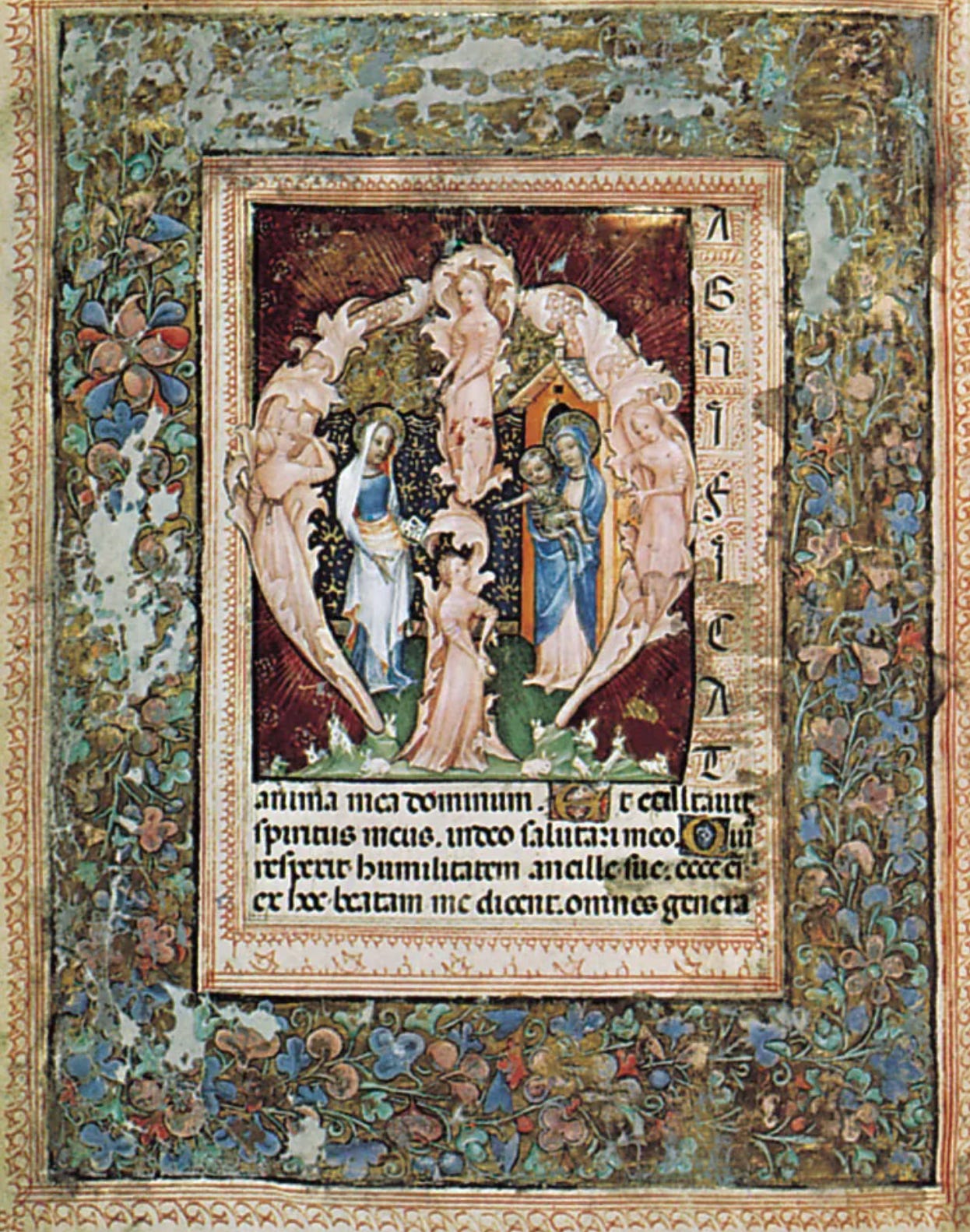
We were like the monks in illuminated manuscripts, having conversations with one another and ourselves within and about the text, but unlike monks scribbling marginalia in sacred texts during the Middle Ages, nobody drew pictures of themselves with ejaculating boners. Thankfully.
Curiosity, community, and commitment: these are the great pillars of creativity, whether it’s a translation of a Greek passage, or an interpretation of Saint Augustine’s battles of competing urges (sex or God—who can choose?) as described in Confessions, or a close reading of a short story or essay. I had always been curious about who wrote the Bible, and now I knew that it was hundreds of people across thousands of years and not God, as it turns out, which I had never actually believed anyway. I’d always wanted to live in a community of people who liked to read as much as I did, and who wanted to talk about books and why they mattered, how they changed people, and now that’s all anyone wanted to do. Over the summer we’d been assigned The Federalist Papers, and you’d have thought I’d just won the lottery. I was so excited to talk about this book. I had always been the person who did their homework ahead of time, and now I was free to get up at 8:00 a.m. on a Saturday morning and write my first drafts by hand, which if I could read my own handwriting and didn’t have carpal tunnel syndrome, I would still do. Asking for an extension was something you didn’t do or didn’t admit to doing, the nerdy, overachiever’s version of murder—The OG Law & Order: Small Christian Liberal Arts College Edition.
For two years, I lived in the Great Conversation, or Great Con, dorm as it was called, where we sat piled up in our pajamas discussing Cicero and Plato, reading classics and ancient languages, and struggling through the entire Oxford Study Bible, cover to cover, as ice patterned the windows and snow fell in piles as tall as our shoulders, creating labyrinths we navigated on the way to class. Each time I opened a book written in the time when togas and chitons were as popular as the oversize sweaters and Birkenstocks of the 1990s Midwestern college student (now making a comeback), I felt like that writer was speaking directly to me, teaching me, helping me frame and reframe the world, and shedding light on the thoughts and ideas bubbling up in my brain, and yet how? These words from thousands of years ago, still relevant now. What was this word magic, and how could I learn to wield such a wand? To realize that people had been talking about how to understand life for as long as people existed made my mind feel fresh, as if my brain had swallowed a peppermint patty and thoughts could flow right through. Curiosity is glitter with a magic comet tail. And it also made me feel connected, the opposite of what meditation teacher and psychologist Tara Brach describes as feeling “severed from my own world and estranged from my own being,” which is a cause of so much moral distress, individual and collective. My Great Conversation classmates helped me shape, express, and understand the world I’d come from, and fashion the one I wanted to create. It was a new nomenclature of knowing and it was delicious.
For two years, I lived in the Great Conversation, or Great Con, dorm as it was called, where we sat piled up in our pajamas discussing Cicero and Plato, reading classics and ancient languages, and struggling through the entire Oxford Study Bible, cover to cover, as ice patterned the windows and snow fell in piles as tall as our shoulders, creating labyrinths we navigated on the way to class.
None of us could afford all the books on the syllabi, so we divvied up the list and rotated texts on a color-coded schedule posted in the hallway. Trading was fun, as you’d see comments with initials in the margins, and you might respond to one with your own quip or start a new conversation. At the end of the Gospel of Mark in my study Bible (it was on my buy list, so I got to keep it, although it is used now as a fitness block for cycling squats) is a string of comments:
Whoa, so earliest Gospel but no resurrection. —ER
Sunday school: all lies. —KL
Easter will never be the same. —CG
Ketchup stain here. Sorry. —DB
It was the Flintstones/old-school version of today’s comment thread, only nobody was an asshole. We were like the monks in illuminated manuscripts, having conversations with one another and ourselves within and about the text, but unlike monks scribbling marginalia in sacred texts during the Middle Ages, nobody drew pictures of themselves with ejaculating boners. Thankfully.
I understood that the human project has always been how to reconcile body, heart, mind, spirit—all of it. How I had understood this up to the age of eighteen was through the lens of a Protestant upbringing that emphasized a personal relationship with a male God and promised salvation as a gift and sacrifice from Jesus if you believed in it and him. This lens became muddied now—disrupted in the best way. A fractured narrative lets some light in, and even if the full reconciliation of all parts of being a person in a body is impossible, the effort is not; it is everything. It IS the conversation across time and culture and history and experience: How do we live with meaning, purpose, and joy? To what ideals are we committed? What and whom do we believe in and why? What the fuck are we actually doing here? Why are some people frequently confronted with extraordinarily difficult circumstances, and other people seem to be on a constant luxury vacation? I don’t know, but I’m interested in talking and thinking about these questions and others. I certainly don’t want to do it alone.
I was engaged in these discussions with the same group of fifteen people (kids, really) for twenty-four months, which is like a decade in teenager time. We became deeply acquainted with one another’s minds and personal stories; we knew what time our parents were calling and on which day; we had a sense of our collective losses and histories, even as working-class and middle-class kids from small Midwestern towns or big cities like Minneapolis or Milwaukee. Nobody had a cell phone or an email address or a laptop, as these things were on the verge of being invented or accessible (my first email dropped that year from my friend Kate, writing from Skidmore College in upstate New York, with the subject line “Hey, hottie.”). The showers were giant steel heads flowing into a central drain and divided by flimsy plastic curtains; inevitably you’d hear someone shout, “I’m out of shampoo!” and then hear a bottle rolling along the floor and a “Thanks!” in response. We borrowed each other’s dot matrix printers and took turns typing out our essays on the one desktop computer that someone with a rich dad had in their room. Or, if you were feeling brave, you might go to the computer lab and try to press Print at the same time as the person you were crushing on and then just “happen” to be there when their pages were spit out, when you’d pray for a paper jam to extend the conversation. Nobody drank to excess. Nobody smoked regularly. Nobody did other kinds of drugs or probably even knew where to find them (at least I didn’t). And nobody was Catholic or Jewish that I knew, and probably 85 percent of us were blonds or redheads with some kind of Irish or Scandinavian heritage or a mix of both, me included.
For me, simply interacting with people I didn’t know and who didn’t know me or about me was a huge shift, and a welcome one. When you grow up as “the girl with the wooden leg” in every small town you’ve lived in, everybody knows your name, but it was a source of being set apart as different in a deficient way, not a welcoming moniker.
For me, simply interacting with people I didn’t know and who didn’t know me or about me was a huge shift, and a welcome one. When you grow up as “the girl with the wooden leg” in every small town you’ve lived in, everybody knows your name, but it was a source of being set apart as different in a deficient way, not a welcoming moniker. There were no amputee models with robotic legs in Target ads (which my dad now takes photos of on his cell phone and sends to me five times “to be sure they went through. Dad,” usually sent upside down). I was just different and weird, and it was obvious. I wanted nothing more than to blend in, and in this homogenous-looking think tank that was like an Ingmar Bergman film set on a leafy hill with very little sex or cursing, I did. Or at least my brain did, and that was good enough for me at the time. As my cruel grandmother liked to say whenever she looked at my wooden leg or looked at me at all, “It’s a good thing you’re smart.” And, as it turns out, I was. She wasn’t wrong about that.
Excerpted from I Would Die If I Were You: Notes on Art and Truth-Telling by Emily Rapp Black. Copyright © 2026 by Emily Rapp Black. Reprinted by permission of Counterpoint Press.
 | A guest post by
|
The color-coded book-sharing, the margins filling up with initials and quips — "the Flintstones version of today's comment thread, only nobody was an asshole" — I loved that. The staying, the talking after, the part where the book becomes something shared. And that question of word magic — how words written thousands of years ago still reach across and speak straight to you — is the whole reason some of us fell in love with language in the first place. This was a joy to read.
You brought back some great memories of hanging with my theater friends in a big house we rented. Oh, and when the phone rang on Sunday around 5 pm, everyone would announce in unison, "that's Barb's dad."