


Since 2010, in various publications, I’ve interviewed authors—mostly memoirists—about aspects of writing and publishing. Initially I did this for my own edification, as someone who was struggling to find the courage and support to write and publish my memoir. I’m still curious about other authors’ experiences, and I know many of you are, too. So, inspired by the popularity of The Oldster Magazine Questionnaire, I’ve launched The Memoir Land Author Questionnaire.
Here’s the 145th installment, featuring Jocelyn Jane Cox, author of Motion Dazzle: A Memoir of Motherhood, Loss, and Skating on Thin Ice. - Sari Botton
P.S. Check out all the interviews in The Memoir Land Author Questionnaire series.
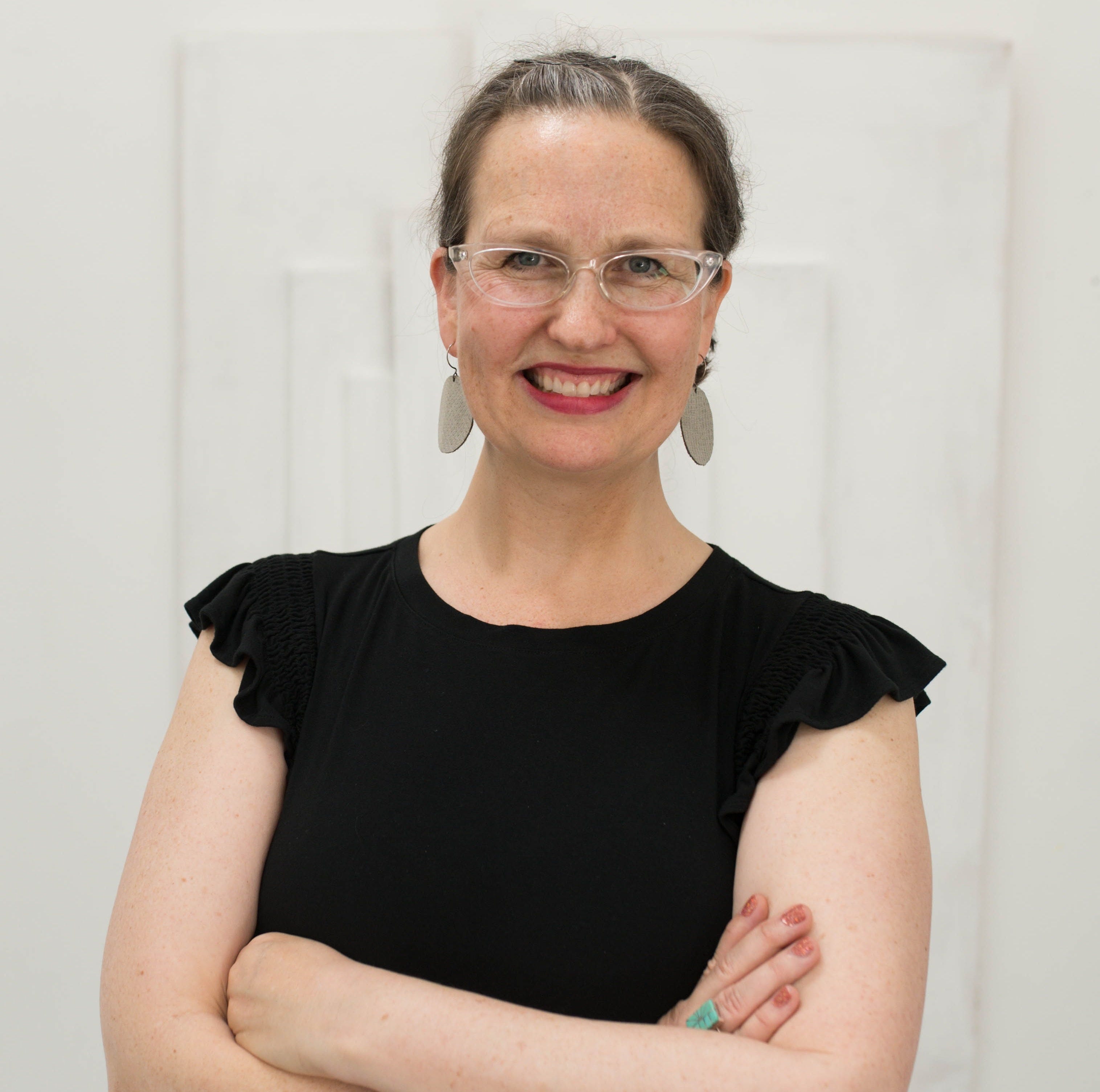
Jocelyn Jane Cox competed in the U.S. Figure Skating Championships with her brother Brad four times and coached the sport for over two decades. Among other publications, her work has appeared in The New York Times, Slate, Newsweek, Good Men Project, WIRED, The Offing, The Linden Review, Cleaver, Litro Magazine, and Colorado Review. Her fiction has been nominated for a Pushcart Prize. She received her MFA in Creative Writing at Sarah Lawrence College and now lives with her son and husband in the Hudson Valley of New York. More information at www.jocelynjanecox.com and on her Instagram @jocelynjanecoxwriter.
—
How old are you, and for how long have you been writing?
I am 53 years old and have been writing since I was a kid. I received a package of Papermate Erasable Pens from Santa when I was 7 years old, the year they came out (1979). These were remarkable to me because I could revise my short stories and still make them look highly professional. To my thinking, a pen was far more sophisticated than my former writing implement of choice, the pencil.
What’s the title of your latest book, and when was it published?
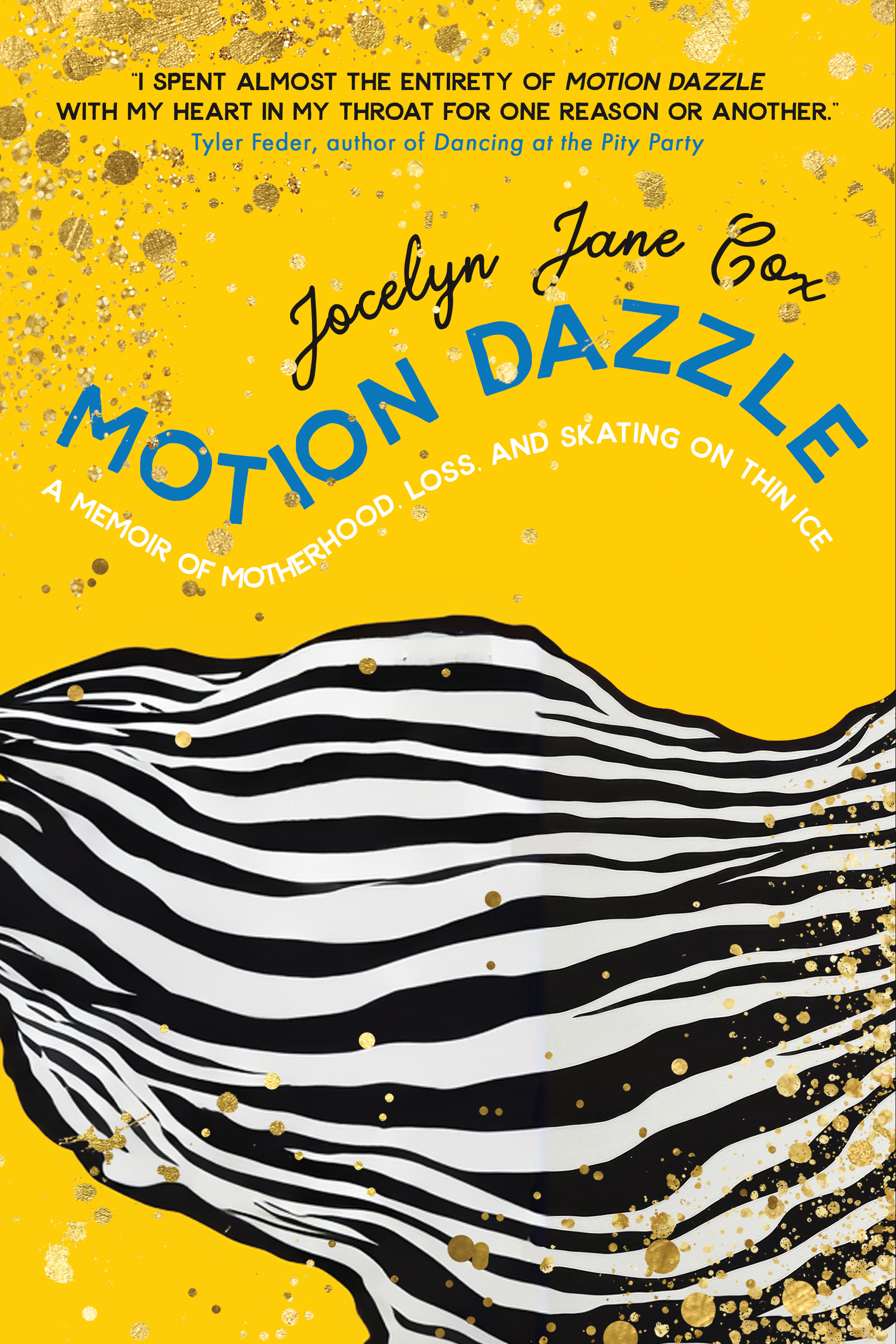
My latest book is Motion Dazzle: A Memoir of Motherhood, Loss, and Skating on Thin Ice, published by Vine Leaves Press, September 30th, 2025.
Motion Dazzle: A Memoir of Motherhood, Loss, and Skating on Thin Ice follows my son’s first birthday, the day I hosted a zebra-themed party for him, and also the day my mother, who was my best friend and biggest supporter, passed away from dementia and other ailments. During that difficult time, including the years of caregiving leading up to it, I drew strength from my years as a competitive figure skater. On the ice, I learned how to push through pain and discovered how performance and distraction can serve as effective coping mechanisms.
What number book is this for you?
This is my debut memoir and first book with a publishing house. Before this, I self-published a short humor book in 2012 called The Homeowner’s Guide to Greatness: How to handle natural disasters, design dilemmas, and various infestations like a champ. I also self-published a short how-to book in 2018 called First Day on the Ice: Tips from a Professional Skating Coach (and Mom)
How do you categorize your book—as a memoir, memoir-in-essays, essay collection, creative nonfiction, graphic memoir, autofiction—and why?
My book is a memoir. I’m calling it a “striped narrative” due to its segmented nature and the metaphor of zebras, which is threaded throughout the book.
What is the “elevator pitch” for your book?
Motion Dazzle: A Memoir of Motherhood, Loss, and Skating on Thin Ice follows my son’s first birthday, the day I hosted a zebra-themed party for him, and also the day my mother, who was my best friend and biggest supporter, passed away from dementia and other ailments. During that difficult time, including the years of caregiving leading up to it, I drew strength from my years as a competitive figure skater. On the ice, I learned how to push through pain and discovered how performance and distraction can serve as effective coping mechanisms. With humor and heart, Motion Dazzle shines a light on the life cycle and how we pass love from one generation to the next.
What’s the back story of this book including your origin story as a writer? How did you become a writer, and how did this book come to be?
I received my MFA in Fiction in 1999 and started off writing short stories. Gradually, my interest shifted to non-fiction, personal essays, and humor. This is actually my second memoir. I wrote my first about 20 years ago. Glide (later changed to Skate at Your Own Risk) was entirely about my competitive figure skating experience, both the fun and tribulations of skating with my older brother as my partner. My agent at the time shopped it around to publishing houses, but it was ultimately not published with the primary feedback being that it was unfortunate I wasn’t a famous skater. Of course, this was part of the point: I trained alongside Olympians but didn’t have what it took to become one. This was an eight year process that devastated me, and while I never quit writing entirely, it made me hesitant to write another book.
This book contains some elements from that manuscript but with far more perspective derived simply through the passage of time and living more life. Incredibly, the first draft of Motion Dazzle had only one paragraph about figure skating—I was avoiding the topic intentionally and still hurting from that earlier experience. Sara Weiss, an early reader, author, and a close friend, called me out on this conspicuous absence. She knew that skating had shaped me and had also played a huge role in my relationship with my mom. So I worked to add more skating to the narrative and I’m so glad I did. It is now a key theme in the book.
What were the hardest aspects of writing this book and getting it published?
This book was percolating for seven years, almost to the day. By the time I started it, the first (very messy) draft came pretty easily and took only nine months. I spent the next two years revising it with the help of about 20 BETA readers. While taking in all of this excellent feedback, the manuscript grew to about 92,000 words, a length I was not comfortable with. So one of my biggest tasks was to shave it down to the most essential story. I was eventually able to get it to 79,000 words, a length I felt better about submitting.
I also struggled a bit with structure. I knew I wanted to tell the story of a day, but ordering the backstory was a challenge. Over the course of about 14 drafts, the scenes in the past became slightly more (although not entirely) chronological.
I always suspected that, given several literary devices at play and the quirky combination of the dementia, figure skating, and zebra themes that this would probably have a better chance in the small press market. And I was right: I ended up getting two offers of publication and landed with Vine Leaves Press. I couldn’t be happier with how the editing process went with my editor Melanie Faith, who honored my intentions with so much insight and kindness, and helped with final shaping.
This is actually my second memoir. I wrote my first about 20 years ago. Glide (later changed to Skate at Your Own Risk) was entirely about my competitive figure skating experience, both the fun and tribulations of skating with my older brother as my partner. My agent at the time shopped it around to publishing houses, but it was ultimately not published with the primary feedback being that it was unfortunate I wasn’t a famous skater. Of course, this was part of the point: I trained alongside Olympians but didn’t have what it took to become one.
How did you handle writing about real people in your life? Did you use real or changed names and identifying details? Did you run passages or the whole book by people who appear in the narrative? Did you make changes they requested?
I only changed two names in my book (two former skating coaches) and elected to not name three other people (an ex boyfriend, and an ex skating partner, and my son). Otherwise, I named everyone and vetted the book with most of the “main characters.” I wanted the people closest to me to feel that my portrayal of them was accurate. I made a few small changes requested by three family members and was happy to do so in order to have their blessing.
Of course, one of the primary characters, my mother, has passed away. She was a private person who I suspect would feel exposed by this story, so I have definitely grappled with telling it. That said, she was always extremely supportive of my writing and I worked hard to characterize her in a loving way. Many readers have told me that they fell in love with her and the relationship we had. One of my many goals with this book was to portray the complexities and devastation of dementia and to share the little-told story of caregivers. Caring for people with memory loss is a unique and harrowing experience that doesn’t get a lot of exposure.
Who is another writer you took inspiration from in producing this book? Was it a specific book, or their whole body of work? (Can be more than one writer or book.)
Dave Eggers’ Heartbreaking Work of Staggering Genius, Ocean Vuong’s On Earth We’re Briefly Gorgeous, and Marguerite Duras’ The Lover all left a huge impression on me as far as tone, voice, and structure. Each of these books have had a significant impact on my writing, albeit many years apart and at different points in my process. Of course, these books differ greatly from mine, but they all opened an exciting portal.
I was not conscious of this while drafting my book, but I’ve realized recently that Mrs. Dalloway must have been floating around in my subconscious to some degree. I read it many years ago, and remember enjoying it, but had forgotten that the narrative also takes place in a day and focuses on a woman preparing for a party. There is no similarity as far as the context of the party and the plot, but there is an undeniable relationship.
What advice would you give to aspiring writers looking to publish a book like yours, who are maybe afraid, or intimidated by the process?
I think making lists can be a powerful and effective way to get started or to get unstuck. These lists, which don’t even have to be written in full sentences, are a low-lift that can often lead to some interesting material. I suggest: a list of people involved in the story you want to tell, a list of places (towns, buildings, or even rooms) that have had an impact or left an impression, and a list of objects with meaning.
The list that helped me the most was a list of “moments.” Many of these became the scenes of my book. I think the order (chronological? Random-play? Start in the middle and work backwards?) is less important at first than just getting some ideas on the page. From there, you can start playing with the structure and creating the connective tissue.
What do you love about writing?
I love the flow state and feeling like I enter another dimension while creating. Everything else falls away and I feel like I can achieve some kind of creative transcendence. Determining whether any of those sentences make any sense or work together in any kind of logical way the next day is always…an adventure.
What frustrates you about writing?
Like many, I’ve struggled with dashed hopes and disappointment when attempting to get pieces out into the world. It can be difficult to understand what you’re missing and why a piece you think might be a fit for a publication misses the mark from the editor’s point of view. Since I started sending my work out almost 30 years ago, I have gotten better at weathering rejection. I now take it less personally than I used to, and can sometimes treat it like a game. I have found that the more work I have “in play,” the less any one single rejection hurts. In any moment, a “yes” could still land in my in-box. Conversely, if I have nothing on submission, there’s no chance of this.
What about writing surprises you?
Even though I started revising back when I got those erasable pens, and understood early on how important that step is, I am still amazed by the new layers we can uncover through the revision process. Like many, I am often daunted by the prospect of revising (whether it’s self-directed or assigned by an editor), but time and again I learn more about myself, about writing, and about the story at hand when I truly dig deep and dig in.
I always suspected that, given several literary devices at play and the quirky combination of the dementia, figure skating, and zebra themes that this would probably have a better chance in the small press market. And I was right: I ended up getting two offers of publication and landed with Vine Leaves Press. I couldn’t be happier with how the editing process went with my editor Melanie Faith, who honored my intentions with so much insight and kindness, and helped with final shaping.
Does your writing practice involve any kind of routine, or writing at specific times?
I am an incorrigible night owl whose brain serves up the best ideas right when I should be going to sleep. I am trying really hard to reconfigure this and conjure more creativity earlier in the day. One can hope!
I started writing Motion Dazzle deep in the pandemic, on January 1, 2021. I drafted it from 10pm to midnight or 1am after my son and my husband had gone to sleep. I don’t always write to music, but I ended up listening to the soundtrack of the animated film SOUL, a Pixar movie we’d just watched with our son and I immediately fell in love with the storyline and the music. At first, I was listening to the entire soundtrack, but over time, I focused on a song called “Just Us,” written by Atticus Ross and Trent Reznor. I discovered that someone had put it on an hour-long loop (!) on YouTube and ended up drafting almost the entire book with that in my earphones. It was a strange experience, but somehow that ethereal and upbeat sound brought my brain into the flow state and made me feel like I was hanging out with my mom while writing about her.
Do you engage in any other creative pursuits, professionally or for fun? Are there non-writing activities you consider to be “writing” or supportive of your process?
I need to get outside to walk (and sometimes do interval sprints) once per day. Transitioning from training as a figure skater for 11 years, then coaching for 25 years to, now, writing full time has been somewhat drastic, physically. My body quickly feels the negative effects of the sedentary writing practice. My brain could happily write all day, but my body gets stiff, and craves movement. These daily walks force me to take a break from my computer and phone, providing not just exercise but much-needed breaks for my eyes. I usually walk with a friend, or chat with a friend on the phone, or listen to a podcast. I also snap lots of nature photos along the way, all of which feed my writing process indirectly.
I also enjoy thrifting and finding unique “pre-loved” items. I can’t help but imagine the former owners, how they interacted with these items, and what their lives were like. This reverence for objects from the past feels connected to memoir writing and also connects to my early years when I wrote fiction and considered all objects to be meaningful “props”. When I was a teenager, my mother and I started a vintage eyeglass collection and I always wondered: what did people see through these lenses? More recently, as an extension of my mother’s gift for “tablescaping” I started a side business called Preloved Tablescapes in which I composed full table settings entirely with used items. I’m not currently treating this as a business (because: book), but I still enjoy opportunities to be creative with visual elements.
What’s next for you? Do you have another book planned, or in the works?
I have been working on a collection of essays that I have put on pause so that I can promote Motion Dazzle and fully absorb everything that is happening with it. When my schedule calms down, I am looking forward to getting back to that project, restructuring it, and adding to it. I suspect that shepherding this current book into the world will end up informing that one significantly.
Love to see this. Jocelyn's memoir is a stunning blend of personal story and helpful messaging. Thanks, Sari!
Terrific interview. And the book is fantastic!