


Since 2010, in various publications, I’ve interviewed authors—mostly memoirists—about aspects of writing and publishing. Initially I did this for my own edification, as someone who was struggling to find the courage and support to write and publish my memoir. I’m still curious about other authors’ experiences, and I know many of you are, too. So, inspired by the popularity of The Oldster Magazine Questionnaire, I’ve launched The Memoir Land Author Questionnaire.
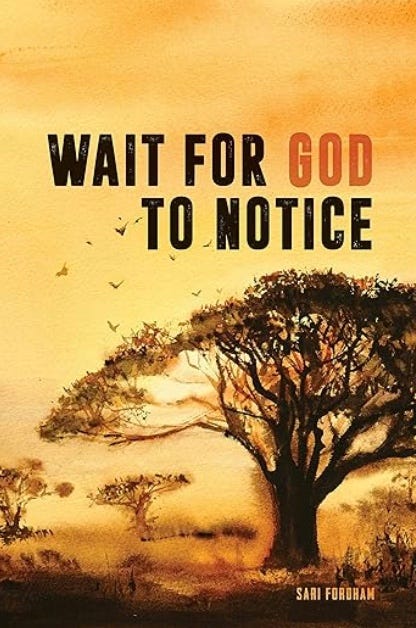
Here’s the 168th installment, featuring Sari Fordham, author of Wait for God to Notice. - Sari Botton
P.S. Check out all the interviews in The Memoir Land Author Questionnaire series.
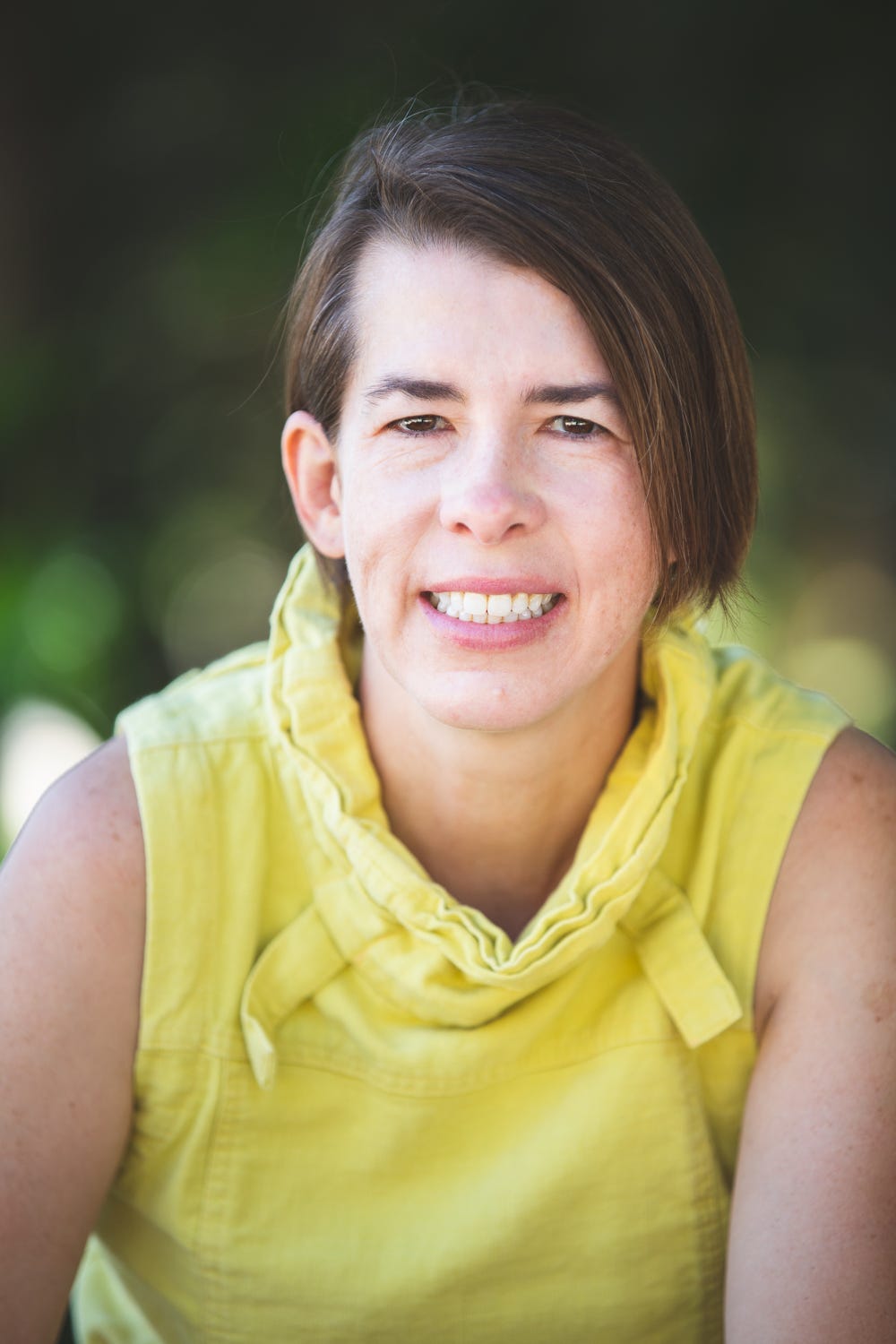
Sari Fordham is a writer, environmentalist, and professor. Her memoir, Wait for God to Notice, narrates her childhood in Uganda during the dictatorship of Idi Amin and was a finalist for the Sarton’s Women’s Book Award. Her work has been published in Brevity, Passages North, New York Times, Booth, Baltimore Review, River Teeth, Best of the Net, among others. Her free monthly substack—Cool It: Simple Steps to Save the Planet—was created for busy people who care about climate change. She lives in upstate New York with her husband and daughter and she teaches creative writing at SUNY Oswego.
—
How old are you, and for how long have you been writing?
I’m 51 and I’ve been writing since my 20s.
What’s the title of your latest book, and when was it published?
Wait for God to Notice and it was published in 2021.
What number book is this for you?
One.
I grew up in Uganda during and after Idi Amin’s dictatorship. The house we lived in was surrounded by rainforest. What was in many ways an idyllic childhood for me was fraught for my Finnish mother. She nursed her kids through malaria, killed the mamba that fell out of the stove, sold goods on the black market, and defied soldiers during our house arrest. Yet, when I was a teen living in the States, I considered my mother overly cautious. After she died, I began to research my childhood, reconciling the mother scared to drive on the freeway with the one who shook Idi Amin’s hand.
How do you categorize your book—as a memoir, memoir-in-essays, essay collection, creative nonfiction, graphic memoir, autofiction—and why?
My book is a memoir. While it’s heavily researched, I bring readers into the narrative through all their senses. I wanted them to hear the rain on a tin roof in Uganda and experience the heat of a Finnish sauna.
What is the “elevator pitch” for your book?
I grew up in Uganda during and after Idi Amin’s dictatorship. The house we lived in was surrounded by rainforest. What was in many ways an idyllic childhood for me was fraught for my Finnish mother. She nursed her kids through malaria, killed the mamba that fell out of the stove, sold goods on the black market, and defied soldiers during our house arrest. Yet, when I was a teen living in the States, I considered my mother overly cautious. After she died, I began to research my childhood, reconciling the mother scared to drive on the freeway with the one who shook Idi Amin’s hand.
What’s the back story of this book including your origin story as a writer? How did you become a writer, and how did this book come to be?
As a kid, I read so much that I got in trouble with my mom. “At least go read in your room,” she would tell me, waving at the messy living room. She had grown up in post-war Finland with the mantra that cleanliness was next to godliness.
My mom, though, was my biggest cheerleader when I began publishing small pieces in my twenties. When I started my MA in creative writing, my mother told me that I should write about Uganda. I remember telling her some version of “I’m not ready yet.” That summer, she died and while I continued the project I had started, I felt its thinness. When I began an MFA in creative writing, I began writing about Uganda. It wasn’t until I was deep into my project that I realized that, of course, I was really writing about my mother.
What were the hardest aspects of writing this book and getting it published?
My biggest writing challenge was that I was so young when we lived in Uganda.
Although I was a child in my book, I didn’t want to write in an artificial child’s voice. I wanted readers to feel what it was like to be a Seventh-day Adventist missionary kid, and also understand how colonialization was responsible for Idi Amin’s dictatorship and that mission work has an obvious dark side. The solution came as I figured out that my book was about understanding my mother. I then brought every writing tool to that task—research, scenes, documents, and even shifts in point of view.
By the time I finished my manuscript, it was hard to find agents that took memoir from writers without platforms. I researched smaller presses and sent my manuscript out to those who created beautiful books. Etruscan Press is one such press and I was so glad my book found a home with them.
When I started my MA in creative writing, my mother told me that I should write about Uganda. I remember telling her some version of “I’m not ready yet.” That summer, she died and while I continued the project I had started, I felt its thinness. When I began an MFA in creative writing, I began writing about Uganda. It wasn’t until I was deep into my project that I realized that, of course, I was really writing about my mother.
How did you handle writing about real people in your life? Did you use real or changed names and identifying details? Did you run passages or the whole book by people who appear in the narrative? Did you make changes they requested?
Such an excellent question! I used real names for family members and historical figures. For most everyone else, I changed names. Because so much time had passed, I didn’t think I needed to change identifying details, but I’ve had a few readers recognize people.
I had both my sister and father read the entire book before it was published. My father fact-checked the manuscript, catching a serious error I had made about Seventh-day Adventist history for which I was grateful. He didn’t love all the depictions of himself in the book, but he didn’t request any changes. My sister had no suggestions. I was lucky in that they both were really supportive of the project.
My dad provided most of the primary documents I used—letters, journals, photographs, and I talked with both my father and sister throughout the writing process. I wanted to understand how they experienced events and compare my memories with theirs.
Who is another writer you took inspiration from in producing this book? Was it a specific book, or their whole body of work? (Can be more than one writer or book.)
Michael Ondaatje’s Running in the Family was a major inspiration for my memoir. I was fascinated about how he wrote about family experiences, even those he wasn’t around to witness. He also writes some of the best sentences in the English language.
What advice would you give to aspiring writers looking to publish a book like yours, who are maybe afraid, or intimidated by the process?
I would encourage writers of memoir to figure out early on what your narrative question is. You’re not writing the Wikipedia entry of your life or even a specific episode of your life. Have a question in mind and use that question to guide you as you gather scenes and stories.
I would also recommend taking a class. There are so many good virtual memoir classes out there that you don’t need to have a physical space, though something like the Loft in Minneapolis is incredibly special. Arm yourself with knowledge. Take a class that will push you to write more deeply or take a class that will inform you about the publishing process.
What do you love about writing?
I love how a particular phrase or word choice can transport readers. In Pablo Neruda’s poem “Bird,” there are two lines that create a feeling in me every time I read them: “I stayed suspended and green/between sun and geography-” Even though I’m a writer, I couldn’t tell you exactly how I feel, but just in writing out those lines, I am transported. Now try to imagine those lines with a color other than green. I can’t. Green is the only word that works here for me.
What frustrates you about writing?
Getting the right words lined up, especially when you’re writing about something messy. It’s frustrating to keep writing and rewriting the same paragraph or scene. But it’s immensely satisfying when it finally comes together. Complicated essays are the ones I reread, and they’re the art I want to create. They emerge when you write into a messy experience rather than smoothing it out.
I am worried that AI is going to encourage writers to skip over that frustration. Once a tidy AI scene emerges from your prompt, that scene will replace your memory. In order to avoid frustration, you have erased your lived experience from what should be your story. And, of course, readers will be left wondering what is real and what isn’t. And I’m not even delving (AI’s favorite word) into AI’s impact on climate change or the fact that it was built by stealing writers’ works, including mine.
What about writing surprises you?
Depressing answer: I thought creative nonfiction would be safe from AI slop and I was wrong.
Expansive answer: I am surprised at how I wake up each day with a new writing idea. I’m a slow writer and so this means I have to cull a lot of ideas, but it’s exciting that I will never run out of things to write about.
By the time I finished my manuscript, it was hard to find agents that took memoir from writers without platforms. I researched smaller presses and sent my manuscript out to those who created beautiful books. Etruscan Press is one such press and I was so glad my book found a home with them.
Does your writing practice involve any kind of routine, or writing at specific times?
I write best when I have a deadline. Knowing I have to submit something on a certain day forces me to stop fiddling with sentences and start writing full paragraphs. I also write best when I can sit down and not worry about being somewhere in a couple hours, and so I do most of my writing at night.
Do you engage in any other creative pursuits, professionally or for fun? Are there non-writing activities you consider to be “writing” or supportive of your process?
I paint, garden, kayak, mend, hike, photograph, parent, and protest. Living a full life is essential to my writing process. Life gets in the way of writing, but without all that life stuff, I would have less to say.
What’s next for you? Do you have another book planned, or in the works?
I’m writing a book about the drivers of climate change that flow through our houses and how we can respond. Specifically, I’m writing right now about food waste and South Korea’s ambitious food waste reduction program, which charges citizens by weight for the food they throw out. I went to South Korea last summer to see how that program works in actual homes and whether South Koreans could help Americans learn to waste less food. I learned a lot, ate well, and even got to throw food scraps into a smart bin. The lived experience in South Korea is less tidy than most news stories capture and so I’ve been writing into that complication.
I’m so struck by what Sari says about bringing readers into the narrative through the senses. This is exactly where writing, especially memoir writing, earns its power for me: in the body. Sensory detail is how we embody events. That specificity enables readers to inhabit rather than just understand.
I’ve known Sari for many years. She’s a real creative force. So glad the rest of the world is starting to know this amazing writer.