


Since 2010, in various publications, I’ve interviewed authors—mostly memoirists—about aspects of writing and publishing. Initially I did this for my own edification, as someone who was struggling to find the courage and support to write and publish my memoir. I’m still curious about other authors’ experiences, and I know many of you are, too. So, inspired by the popularity of The Oldster Magazine Questionnaire, I’ve launched The Memoir Land Author Questionnaire.
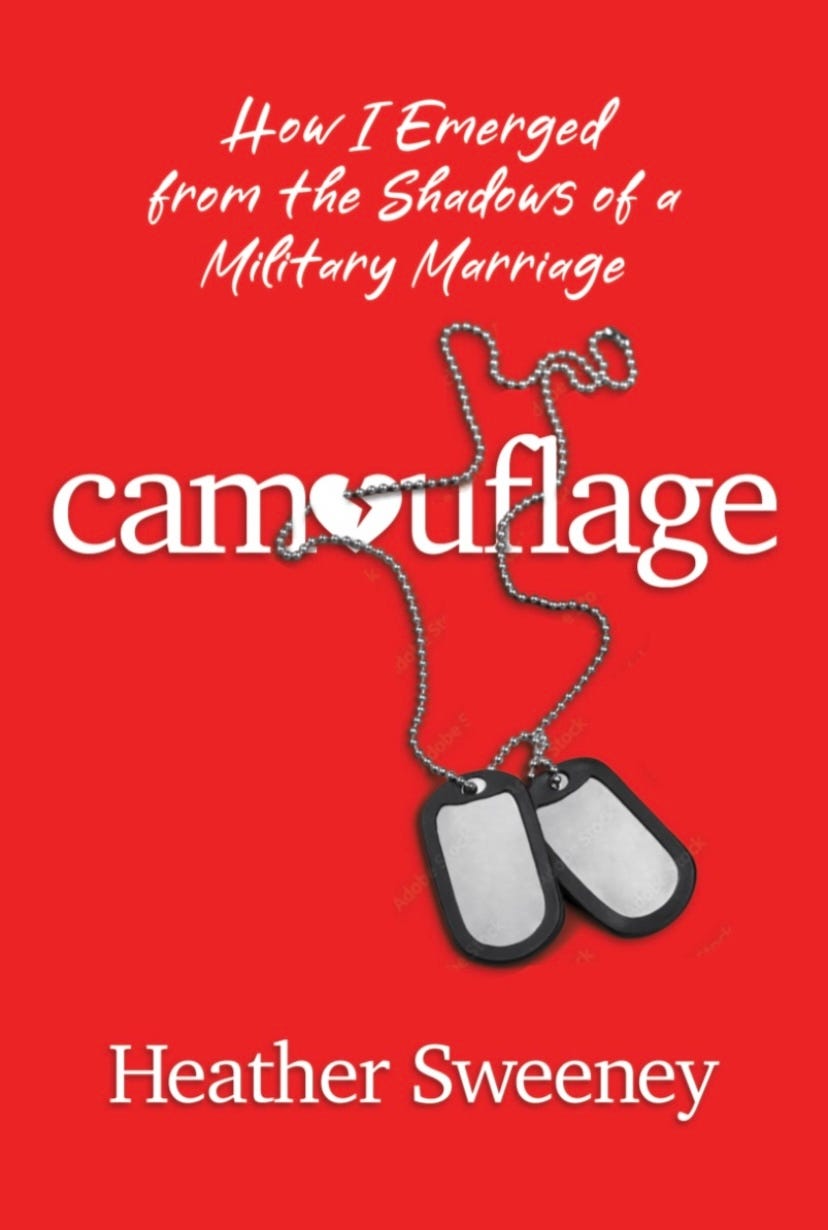
Here’s the 178th installment, featuring Heather Sweeney, author of Camouflage: How I Emerged from the Shadows of a Military Marriage. - Sari Botton
P.S. Check out all the interviews in The Memoir Land Author Questionnaire series.
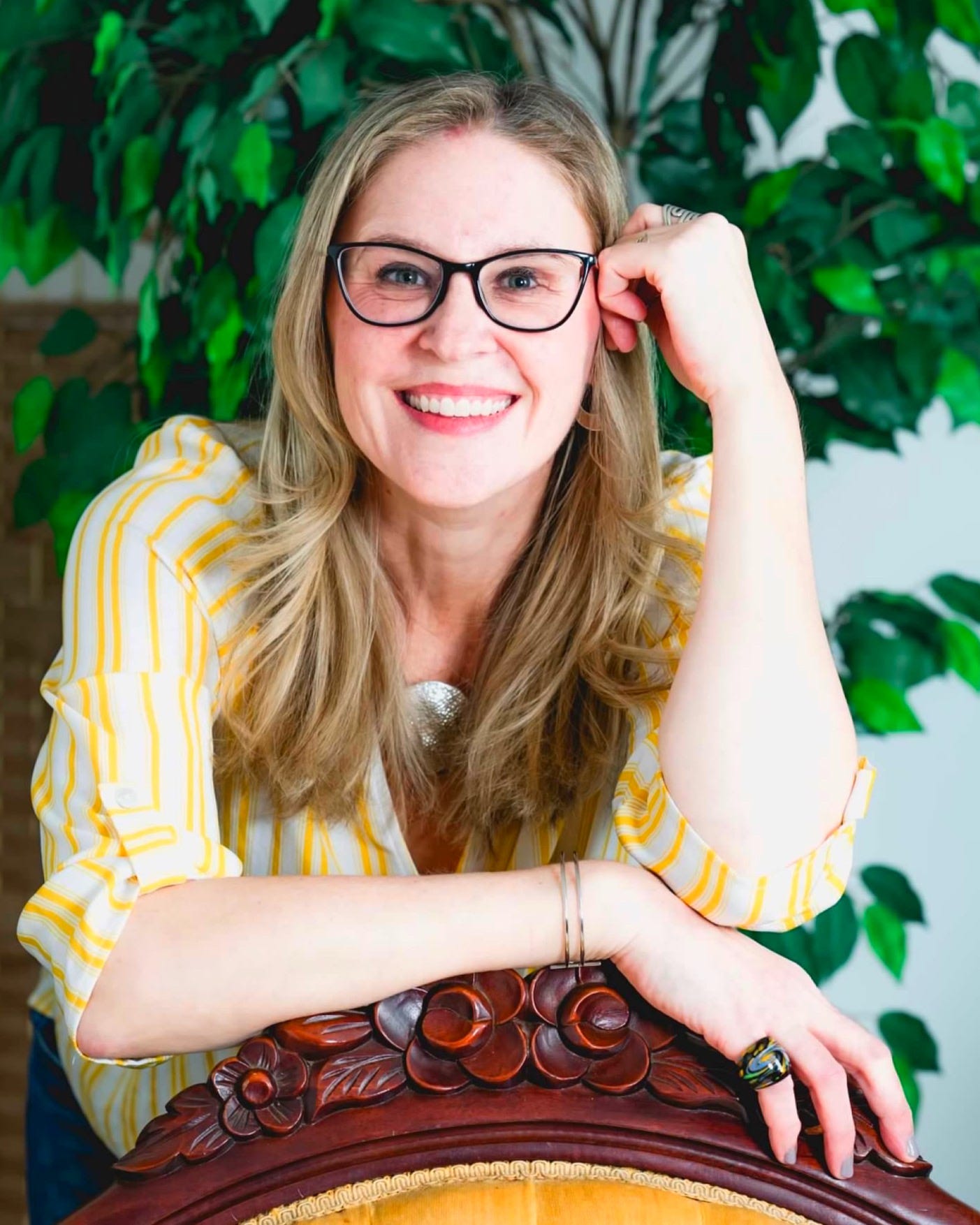
Heather Sweeney is the author of the memoir Camouflage: How I Emerged from the Shadows of a Military Marriage. She writes about divorce, life as a military spouse, parenting, and women’s health, and her work has appeared in The New York Times, The Washington Post, HuffPost, Business Insider, TODAY.com, Newsweek, Good Housekeeping, Healthline, Reader’s Digest, Electric Lit, and Military.com, among many others. She lives in Virginia. Camouflage is her first book. You can learn more about her at heatherlsweeney.com
—
How old are you, and for how long have you been writing?
I’m 49, and I’ve been writing professionally for about 15 years. (But really I’ve been writing since I was old enough to grip a pen.)
What’s the title of your latest book, and when was it published?
My memoir Camouflage: How I Emerged from the Shadows of a Military Marriage was published Oct. 28, 2025 by Knox Press.
What number book is this for you?
My first. But hopefully not my last!
I’d never considered writing a memoir until I published an article called 5 Marriage Tips from a Divorced Military Spouse. After the piece went live, my inbox flooded with women praising me for writing about military divorce, a topic that’s rarely talked about. Some women were facing military divorce, others were experiencing a rocky phase in their marriage and thanked me for the tips, and many encouraged me to write a book about my experiences.
How do you categorize your book—as a memoir, memoir-in-essays, essay collection, creative nonfiction, graphic memoir, autofiction—and why?
Camouflage is definitely a memoir because it’s a linear, true story that isn’t divided into standalone essays. I actually considered writing this as autofiction so I could include some aspects that I eventually removed to protect others’ privacy. But I ultimately decided to stick with memoir.
What is the “elevator pitch” for your book?
“Camouflage: How I Emerged from the Shadows of a Military Marriage is about a woman’s journey from being overshadowed by her husband’s military career to rediscovering her identity as a single mother entering a new stage in life. The memoir explores how, like many military spouses, she camouflaged her identity, conforming to the expected role of the supportive wife who was secondary to her husband’s career as a Navy officer. But after she ended her thirteen-year marriage in her late thirties, she set out on a quest to figure out who she was as a woman without her husband, discovering that the hardships of military life—the forced independence, frequent loneliness, required adaptability, and fierce resilience—had trained her for life after divorce.”
What’s the back story of this book including your origin story as a writer? How did you become a writer, and how did this book come to be?
My writing career started very simply: a blog. It was 2010, and I was a stay-at-home mom with a husband in the military who was gone a lot. So I started a blog, writing about my life as a military spouse.
The blog became popular in the military community, and I started getting opportunities to freelance, celebrating bylines in national outlets like the New York Times and the Washington Post. Eventually I was offered a job at a military news website writing about all the things I was already writing about.
Meanwhile, my marriage was falling apart, and with this new job earning my own money, I was ready to pursue divorce. This meant that the topics I wrote about shifted, which initially concerned me because I’d never written about anything other than my marriage to a service member. But it ended up making me realize I had so much more to write about, including divorce, parenting, women’s health, and the craft of writing.
I’d never considered writing a memoir until I published an article called 5 Marriage Tips from a Divorced Military Spouse. After the piece went live, my inbox flooded with women praising me for writing about military divorce, a topic that’s rarely talked about. Some women were facing military divorce, others were experiencing a rocky phase in their marriage and thanked me for the tips, and many encouraged me to write a book about my experiences. It made me reflect on the end of my marriage and how I couldn’t find any memoirs about military divorce at a time when I so desperately needed them. So, as they say, I wrote the book I wanted to read.
What were the hardest aspects of writing this book and getting it published?
The first draft was extremely challenging, taking about three years to write because I was simultaneously reading through 20 years of journals. When I first started jotting down notes for it, I didn’t think I would have enough material for an entire book. But the first draft clocked in at 115,0000 words! I was thrilled to have a draft completed, however, I knew I had a lot of work ahead revising and killing my darlings down to a much shorter manuscript. (The final draft was about 79,000 words.)
The hardest part of getting Camouflage published was the agent querying. I’d been working on my memoir for several years and knew I wasn’t quite ready to query when a literary agent reached out to me on Twitter offering to consider representing me. I quickly sent her my query letter, and she immediately requested my full manuscript. I just knew I was about to get an offer of representation. And then…I never heard from her again.
Being ghosted by that agent hit me pretty hard. But it opened my eyes to the work my query letter and manuscript still needed. My gut feeling that I wasn’t quite ready was spot on.
After working with a developmental editor for months, I jumped back into the query trenches, querying 45 agents in the span of about nine months. I ultimately signed with my agent after live-pitching agents at the Nonfiction Writers Conference, and from there things moved pretty quickly.
“The memoir explores how, like many military spouses, she camouflaged her identity, conforming to the expected role of the supportive wife who was secondary to her husband’s career as a Navy officer. But after she ended her thirteen-year marriage in her late thirties, she set out on a quest to figure out who she was as a woman without her husband, discovering that the hardships of military life—the forced independence, frequent loneliness, required adaptability, and fierce resilience—had trained her for life after divorce.”
How did you handle writing about real people in your life? Did you use real or changed names and identifying details? Did you run passages or the whole book by people who appear in the narrative? Did you make changes they requested?
Writing about real people in a book is very tricky. In my first draft, I told myself to get everything down on the page, that in the revision process I could remove anything that others might not be happy about, which I did in the next 10 drafts. And yes, I used fake names and changed identifying details to protect people’s privacy.
My parents, who appear in several parts of the book, were my first beta readers. They were fine with everything I wrote about them and also acted as fact-checkers. Three other people in the book also read an early draft to help with accuracy, and no one asked me to change anything.
I did leave some events out of the book because of privacy concerns, but I never throw away any words I write. So maybe you’ll see some fictionalized version of those deleted scenes in a future novel!
Who is another writer you took inspiration from in producing this book? Was it a specific book, or their whole body of work? (Can be more than one writer or book.)
People often ask me if there’s one book that inspired me to write my own memoir, and that book is Cheryl Strayed’s Wild. I’ve read that book multiple times. It’s so moving and well-written, and it showed me that real stories written by real people matter, stories that others can relate to and take something from to apply to their own lives. I read everything Cheryl writes!
What advice would you give to aspiring writers looking to publish a book like yours, who are maybe afraid, or intimidated by the process?
Follow your own path and trust your own process.
When I first started researching the publishing industry, I thought there was only one path to publication: get an agent and get a deal with a Big 5 publisher. But the more I researched and the more I talked to other authors, I realized that everyone has a different path.
Some authors have an agent, some submit their manuscripts themselves to small presses. Some authors go to auction, some get exactly one yes. Some authors get picked up immediately upon going on submission, others wait for years. Everyone’s path is different. So don’t give up. Keep going and find your own path.
What do you love about writing?
I love when an idea hits me, and I have to rush to my Notes app or my laptop to get it down before it slips away. I love when I’m writing something that feels so special that my fingers can barely type quickly enough to keep up with my brain. And I love closing my laptop for the day, knowing I got some beautiful words down on the page.
What frustrates you about writing?
The days when the words aren’t flowing. It always amazes me how different my creativity flows from day to day. I’ve learned over the years that it’s best for my writing if I don’t push myself on those days of cloudy creativity. Instead, on those days, I’ll switch to something writing adjacent, usually picking up a book and reading. I believe that reading voraciously improves writing, so I remind myself that even if I’m not writing, I can use other people’s words to spark some inspiration and improve my craft.
What about writing surprises you?
I’m always surprised by the sense of discovery writing allows me. I’m a pantser, not a plotter. So no outlines for me. I wrote this memoir with no outline, just as I write essays and other work with virtually no idea where I’m going to start or end. I love sitting down and just typing. And I almost always end up in a different place than I expected.
Does your writing practice involve any kind of routine, or writing at specific times?
Definitely not. I used to be very regimented with my writing schedule. If I didn’t have a large chunk of quiet, uninterrupted time to dedicate to writing and nothing else, I just wouldn’t write at all.
But then I got a full-time job. Then I got divorced and was a single mother. Then my kiddos got older and had a million after school activities. Finding a large chunk of quiet time became unrealistic, so I taught myself to write in pockets of time. A lot of my memoir was written in those pockets of time, from the bleachers of my daughter’s softball practices and my son’s track meets, to twenty minutes in the kitchen while dinner was in the oven. I write where I can, when I can.
When I first started researching the publishing industry, I thought there was only one path to publication: get an agent and get a deal with a Big 5 publisher. But the more I researched and the more I talked to other authors, I realized that everyone has a different path.
Do you engage in any other creative pursuits, professionally or for fun? Are there non-writing activities you consider to be “writing” or supportive of your process?
I’d love to say I can draw or paint or do other creative things, but I’m pretty sure my creative juices are dedicated solely to writing. My two favorite non-writing activities that I need for my writing process are reading and walking. I think all writers should make time for reading. And there’s something about going for a walk, breathing fresh air and moving the body, that allows my brain to take a break from focusing on words so I can come back to the page feeling like I hit a reset button.
What’s next for you? Do you have another book planned, or in the works?
I was actually working on a novel when I decided to switch gears and write Camouflage, and I decided to revisit that manuscript. I’ve spent my entire writing career focusing on nonfiction, so fiction has been a challenging new adventure. As I figure it out, I’ll also continue writing personal essays, creative nonfiction, and maybe some poetry.
Your journey is inspiring, Heather! You have such a positive approach.
Thanks so much for featuring me and my author journey, Sari!