


Since 2010, in various publications, I’ve interviewed authors—mostly memoirists—about aspects of writing and publishing. Initially I did this for my own edification, as someone who was struggling to find the courage and support to write and publish my memoir. I’m still curious about other authors’ experiences, and I know many of you are, too. So, inspired by the popularity of The Oldster Magazine Questionnaire, I’ve launched The Memoir Land Author Questionnaire.
Here’s the 200th installment, featuring Tom Sleigh, author most recently of Rosie: A Memoir of Farewell. - Sari Botton
P.S. Check out all the interviews in The Memoir Land Author Questionnaire series.
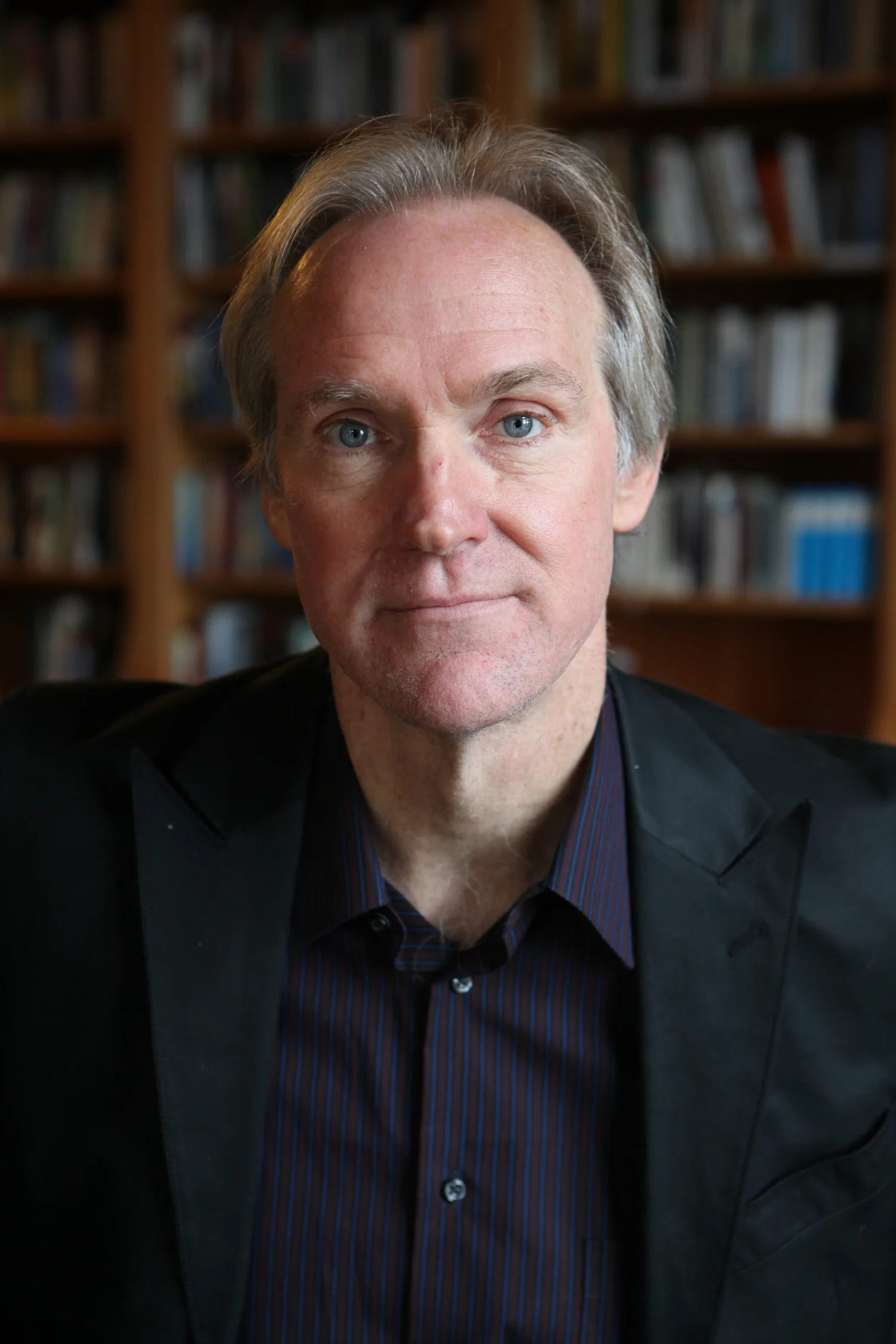
Tom Sleigh is the author of eleven books of poetry, including The King’s Touch, Paterson Poetry Prize; Army Cats, John Updike Award from the American Academy of Arts and Letters; Space Walk, $100,000 Kingsley Tufts Award; Far Side of the Earth, Academy Award from the American Academy of Arts and Letters; The Dreamhouse, a finalist for the Los Angeles Times Book Award; The Chain, a finalist for the Lenore Marshall Prize; and After One, winner of the Houghton Mifflin New Poetry Series Competition. He has published two books of essays, Interview with a Ghost, and The Land Between Two Rivers: Writing in an Age of Refugees, winner of the Poetry Magazine Editors Prize. His memoir, Rosie: A Memoir of Farewell, was featured on WBUR with Lisa Mullins. His New and Selected Poems, 1982-2027, will be published in Spring, 2027.
—
How old are you, and for how long have you been writing?
I’m 73 years old and I’ve been writing seriously since I was 26. So, 47 years, more or less.
What’s the title of your latest book, and when was it published?
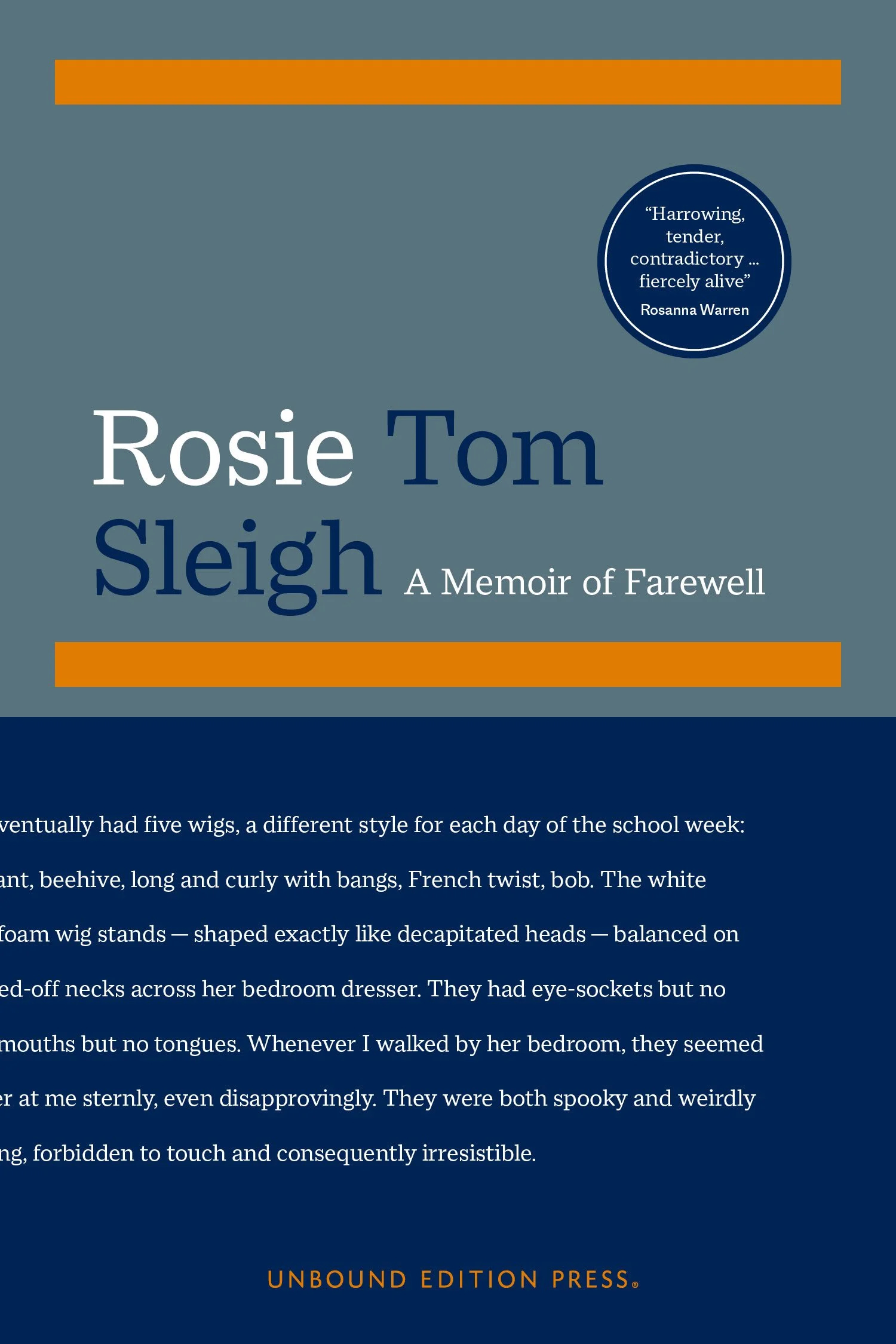
Rosie: A Memoir of Farewell, Unbound Edition Press, to be published by May 5, 2026.
What number book is this for you?
My fifteenth. My sixteenth will be out in Spring 2027.
How do you categorize your book—as a memoir, memoir-in-essays, essay collection, creative nonfiction, graphic memoir, autofiction—and why?
All my life I’ve wanted to write a book about my mother. When she died at 97 by her own hand, I knew that if I didn’t start working on it immediately, then the impulse might pass and I’d miss my chance. So, I set out to capture her life in light of what led up to her death. I wrote it as a tribute to her, as a way to keep her close to me.
I know for some people that writing a memoir is a way to find closure on something painful. But for me, it was just the opposite. When I finished the book, I didn’t feel a sense of resolution or as if anything between us had finally gotten settled. Instead, it felt like I’d lost her a second time.
So maybe what I’ve written is an anti-memoir? As if nothing I could ever write would compensate for having lost her?
All my life I’ve wanted to write a book about my mother. When she died at 97 by her own hand, I knew that if I didn’t start working on it immediately, then the impulse might pass and I’d miss my chance. So, I set out to capture her life in light of what led up to her death. I wrote it as a tribute to her, as a way to keep her close to me.
What is the “elevator pitch” for your book?
Rosie: A Memoir of Farewell tells the story of my mother’s life, but from the perspective of her death. At the age of 97, she took her own life by drinking down a four-drug cocktail while I held her hand and watched her die. The book depicts her rise from extreme poverty as a Kansas Dustbowl farm girl to becoming a radical (and legendary) high school English teacher.
Alongside this is her love of literature and how her passion for words became my passion, a passion that estranged and brought us together. And in a truly bizarre twist, the book tells how my mother in her final months would be featured on the front-page Christmas Day edition of the San Diego Union Tribune and would go viral all over the world. And then, ten days before she was also scheduled to appear on the popular daytime TV talk program, The Kelly Clarkson Show, she decided to take her own life. Rosie explores the long tangled history of how we arrived, together, at her final breath.
What’s the back story of this book including your origin story as a writer? How did you become a writer, and how did this book come to be?
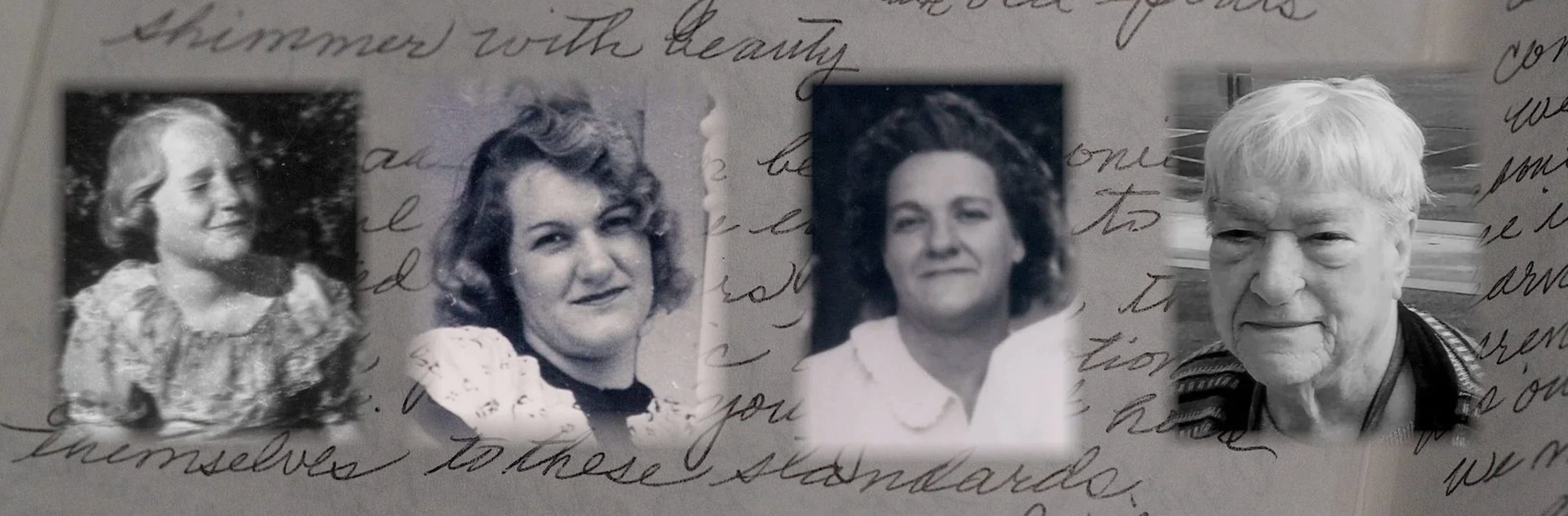
My mother was born in 1924 in western Kansas to a dirt-poor farm family. And when I say dirt poor, I mean that literally. Her first house was made of dirt. It was a dug-out made of sod, a soddie, as she called it. She drove a cow to pasture and back home from the time she was 6 or 7, and she was driving the tractor at the age of 11. But when she reached high school, she’d had enough of playing the loyal daughter who took care of her younger brother and then climbed on the tractor for eleven hours straight. She desperately did not want to end up as a farmer’s wife. Education was my mother’s way out. She was extremely gifted, a brilliant student. Encouraged by her mother, she eventually became the high school valedictorian and won a small scholarship to Kansas University. She became the first person in Greeley County, male or female, ever to go to college.
She married my father after he came back from serving in China during World War II. They ran a drive-in movie theater in Mt. Pleasant, Texas in the early 1950s when I was a kid. Since my parents didn’t have the money to pay a babysitter, my brothers and I went to the movies every night. My twin brother and I would sleep head to head in the backseat window well of our old green Plymouth, and my older brother would sleep on the back seat. My dad ran the projector while my mother attended to the snackbar. The movie music would begin to swell, the actors would start talking, and I’d fall asleep. I’d hear voices coming into my dreams. And I suspect that that’s one reason why I became a writer: I wanted to feel that sense of wonder that came when those voices began to talk to me. And so, in a way, when I’m writing, I’m back in the Plymouth, listening for voices coming to me out of the ether the way I listened to the actors’ voices coming to me through the speaker.
When television came along, my parents sold the drive-in and moved to Utah. My father got a job as an electrical engineer at Thiokol on the ground floor of the space race, and my mother began her 40-year career as a legendary public high school English teacher, both in Utah and in San Diego where we moved in the late 1960s, in part to escape the atmosphere of Mormonism. My mother loved teaching and loved her students. I think she felt far more at home with them than she did with her own kids: and why not? It wasn’t so much our psychological as our intellectual well-being that she cared about. Or rather they were one and the same.
So, the classroom was a natural place for her to be herself. Especially in Utah, she stood up for the kids the way no one else in the faculty would: out-of-wedlock mothers, abortion seekers, the drinkers, the smokers, the fuckups, the misfits, the boys and girls who were confused about being gay or had been abused or misunderstood. She defended them all and was legendary for it. But as she once told me, “Motherhood just wasn’t my thing.”
However, after I grew up and left home, and despite her being the polar opposite of what the psychologist, D. W. Winnicott, called “the good enough mother,” she turned out to be the most wonderful friend—the best friend I’ve ever had. And even though I was afraid of her all through childhood, nonetheless she was exciting, unpredictable, even a little mad at times. She spent time in a mental institution when I was 8 and had shock treatment for suicidal depression.
And then, one day when I was about 9 years old, I saw a wholly different side of Mom. I heard her laughing to herself in her bedroom in a delighted way that I’d never heard before. Usually, I would never have dared go into her bedroom, but I was so dumbfounded by the change that I wanted to see what she was laughing about.
She was reading aloud to herself the ant war section in Thoreau’s Walden. It’s one of the most gruesome depictions of war I’ve ever heard. It’s also weirdly funny, written in a mock-heroic style. Thoreau transforms a red ant gnawing on the leg of a black ant even as the black ant is gnawing through the red ant’s neck into an epic battle between noble warriors, almost like knights-of-old or Homeric heroes. And even though the anatomical precision of the gore was horrifying, my mother was so totally transformed, she took such delight in the ironized tone and precision of the description, that even at 9 years old I could see she was experiencing a kind of joy—a joy I’d never seen in her before. And at that moment, I wanted to have that joy for myself. It moved her out of the category of Mom into the far more intriguing category of Weirdo.
That’s the moment when her love of language became my love of it. And our shared passion for it drew us as close as we could come.
What were the hardest aspects of writing this book and getting it published?
Whenever I write anything, but especially this book, my mother’s voice is in my head, both encouraging me but also asking, as she used to do in life, if I’ve found the best words in the best order. And since I made use of her journals, journals I found wholly by chance just minutes after she’d died—she’d kept them in her medication drawer buried under drug bottles—the book became a kind of duet, at times an argument, a way of stating two opposing truths at the same time but without having to choose between them. The writing was exhilarating but it also took a lot of patience and care and close attention to details.
As to getting it published: As always, the hardest thing was to find the right publisher/editor who would understand the book. Several did understand it, several simply said they didn’t know how to sell it, one or two clearly understood the book and wanted to publish it but were held back by too many other books they were shepherding into print. As it turns out the publisher I found has been terrific to work with—the absolute best I could have hoped for. They’ve designed the book beautifully and fully support it.
After I grew up and left home, and despite her being the polar opposite of what the psychologist, D. W. Winnicott, called “the good enough mother,” she turned out to be the most wonderful friend—the best friend I’ve ever had. And even though I was afraid of her all through childhood, nonetheless she was exciting, unpredictable, even a little mad at times.
How did you handle writing about real people in your life? Did you use real or changed names and identifying details? Did you run passages or the whole book by people who appear in the narrative? Did you make changes they requested?
Well, my mother was dead and my father had died when he was 70, almost 30 years before my mother died. Besides, even if they’d been alive, they would never have deterred me from writing about them. And because my mother lived to such a great age, 97, all of her contemporaries were also dead. So, none of them were around to object.
The only people who would have known her at an earlier stage of her life were her students, by now middle-aged or even late middle-aged. And they play an important, but minor role in the book as a whole.
The only other people featured in the book besides myself, my mother, her parents, and my father, were my brothers—and what I wrote about them, I showed to them. Neither of them features largely in the book, but I’ve tried to portray them in a way that they themselves would recognize—as deeply sympathetic, complexly layered people who lived their own version of our family life together.
That said, I was naive to think that just because someone dies, your relationship comes to an end. Through the writing of the book, my mother and I have stayed in near constant touch. And I can’t help but think that what she might think of me or my brothers or my father is still very much up in the air—an open question, I guess, in which all our feelings are subject to change, elaboration, and the finest of fine shadings.
Who is another writer you took inspiration from in producing this book? Was it a specific book, or their whole body of work? (Can be more than one writer or book.)
About 15 years ago, I had a fellowship at the American Academy in Berlin, and I was knocking about in the library one day looking for something to read when I came across the Austrian writer, Peter Handke. I’d read him back in college, so I decided to take another look. I remember sitting down in my study and, as I read, feeling both elated, envious, and so enthralled that when I finished, I was in a daze that anyone could write so well and from such a depth of heartbreak. It was a short book, only about 80 or 90 pages, A Sorrow Beyond Dreams. It was about his mother’s life and her eventual suicide. It astonished me for its complete lack of sentimentality, for the way in which he fought shy of any kind of solace, of consolatory or redemptory rhetoric. For Handke—and for me when I was writing Rosie—that kind of thinking tended to efface/erase his mother and her suffering.
Even worse, in my case it felt like a violation of what and who my mother is now that she’s dead, as well as who she was when she was alive. Like Handke, I came to feel that to look for solace was an affront to my mother’s honesty, her strange form of courage in taking her own life when she felt there was no longer any reason to continue.
At the same time, I wanted to accomplish what Handke accomplished: he was full of love for his mother, as sharp-eyed and undeluded as only love at its most disinterested can be. And when I finished reading his book, I knew that this was the book I’d been wanting to read my whole life long, and that at some point I would have to write a similar book about my mother.
The problem was, I didn’t know how the book would end until my mother died. That she, too, took her own life—but under quite different circumstances—was a coincidence that I try not to make too much of...but as I read Handke, I felt like I was reading my own autobiography.
The book starts with an epigraph from Handke: “All at once in my impotent rage, I felt the need of writing something about my mother.” The epigraph sums up my feeling of helplessness about how my mother died—with my help—and the desire to keep her with me by writing about her. To write a memoir that brings a person literally back to life is ridiculous, stupid, utterly doomed...yet it’s the only ambition that made or makes any sense to me. If a book can’t bring the dead one back to life, if only for a little while as you’re writing the book, or for the time it takes to read it, then why bother?
What advice would you give to aspiring writers looking to publish a book like yours, who are maybe afraid, or intimidated by the process?
Well, I wrote this because my mother told me to! I didn’t think of the outcomes, of whether or not it would be published or sell, or the potential social or personal complications. I wanted to write a book that she would approve of, that Handke would want to read, that my friends—living and dead, tough critics all—would recognize as credible. But it was mainly my mother’s voice in my head advising me on what to do: Tom, forget everything but the words and try to make them as memorable and truthful and enjoyable as you can.
What do you love about writing?
The fact that I’m never bored, that it’s always a challenge, that I love the feeling of edging out onto a limb to see how far I can go before it seems like it’s about to break off. I love working on the sentences and working them over to make them feel spontaneous, with all the aliveness of good conversation but also compressed, weighed, deeply considered. Above all, I want no sense of strain: as Seamus Heaney once said, “ You don’t want your veins bulging in your biro.” (A biro is what the Irish and English call a fountain pen).
What frustrates you about writing?
Me. My limitations as a person and as a writer.
What about writing surprises you?
How quickly I leave “me” behind and become subsumed into the process of the words paying out across the line. Elizabeth Bishop once said that the writing of poems requires the same kind of attention as the reading of them: “a self-forgetful, perfectly useless concentration.” That’s the joy my mother experienced when she read Thoreau aloud to herself (and to me) and it’s the joy, even when the work is going badly, that I always experience when I sit down to work.
I love getting out of the way of the words and letting them take over. I also love to write because it’s wonderfully unpredictable: you can fail at it and then “fail better” as Beckett said. And I love it because it’s always an adventure, regardless of the outcome, or if someone else likes or doesn’t like it, or if an editor or fellow writer approves of it. Some days words like you, some days they don’t. But you live in all your faculties as you’re writing—and that’s the only definition of happiness that’s ever made sense to me.
Does your writing practice involve any kind of routine, or writing at specific times?
I write every day, usually in the morning. My writing time has shifted to late morning now, mainly because of my age and my need to exercise before I sit down to work. I’m a little creaky in the morning so it’s good to move and stretch first.
I was naive to think that just because someone dies, your relationship comes to an end. Through the writing of the book, my mother and I have stayed in near constant touch. And I can’t help but think that what she might think of me or my brothers or my father is still very much up in the air—an open question, I guess, in which all our feelings are subject to change, elaboration, and the finest of fine shadings.
Do you engage in any other creative pursuits, professionally or for fun? Are there non-writing activities you consider to be “writing” or supportive of your process?
I exercise a lot, four days a week, and I walk a lot: I love to walk 4 or 5 miles a day. I also love to swim. I find that I’m working on my writing, sometimes consciously, sometimes not, when I’m swimming or walking. I’ll come home after exercising and suddenly I’ll have a fresh access to the right words or I’ll find myself turning toward an area of my experience that I haven’t explored or I’ll get a sixth sense that maybe this kind of image or approach to language or formal constraint makes the page take shape in a new way, a more interesting way, a way I never could have hit on by simply willing it. Will can’t do the work of the imagination.
That’s the problem with workshops, prompts, the sense that you’ve written something “plausible” or that it’s “good writing.” It’s harder than that, messier, more exhilarating and risky. You find that the language leads you into places that you might find hard to reconcile with your ordinary sense of who you are, psychologically, socially, politically, morally, and sexually.
What’s next for you? Do you have another book planned, or in the works?
I have a new book of poems coming out in the spring of 2027, New and Selected Poems, 1982-2027. The trick with such a book is to make it a steppingstone and not a tombstone. And I’m also working on another complete book of poems. I’ve got a solid draft, but I’m still working on it, trying to keep everything open so that I don’t shut the process down too soon. The desire to have a finished book is strong in all of us, but at this late stage of the game, my main desire is to keep everything up for grabs, to make the language fresh, open to circumstance, keeping just ahead of what I can grasp.
I, too, watched a parent die by taking a 4-drug cocktail. Even though I was scared and ambivalent beforehand about watching my father die at the day and time he chose, in the end it was a good and peaceful death. It allowed me to articulate my love for him, to lie down next to him, to hold his hand and smooth his forehead as he fell asleep, went into a coma, and finally died.
There is no closure. Nor are their stages. One mother’s suicide is not the same as another’s and every death is different. But clearly she loved that you were a writer and you can carry that with you. Always.