


Since 2010, in various publications, I’ve interviewed authors—mostly memoirists—about aspects of writing and publishing. Initially I did this for my own edification, as someone who was struggling to find the courage and support to write and publish my memoir. I’m still curious about other authors’ experiences, and I know many of you are, too. So, inspired by the popularity of The Oldster Magazine Questionnaire, I’ve launched The Memoir Land Author Questionnaire.
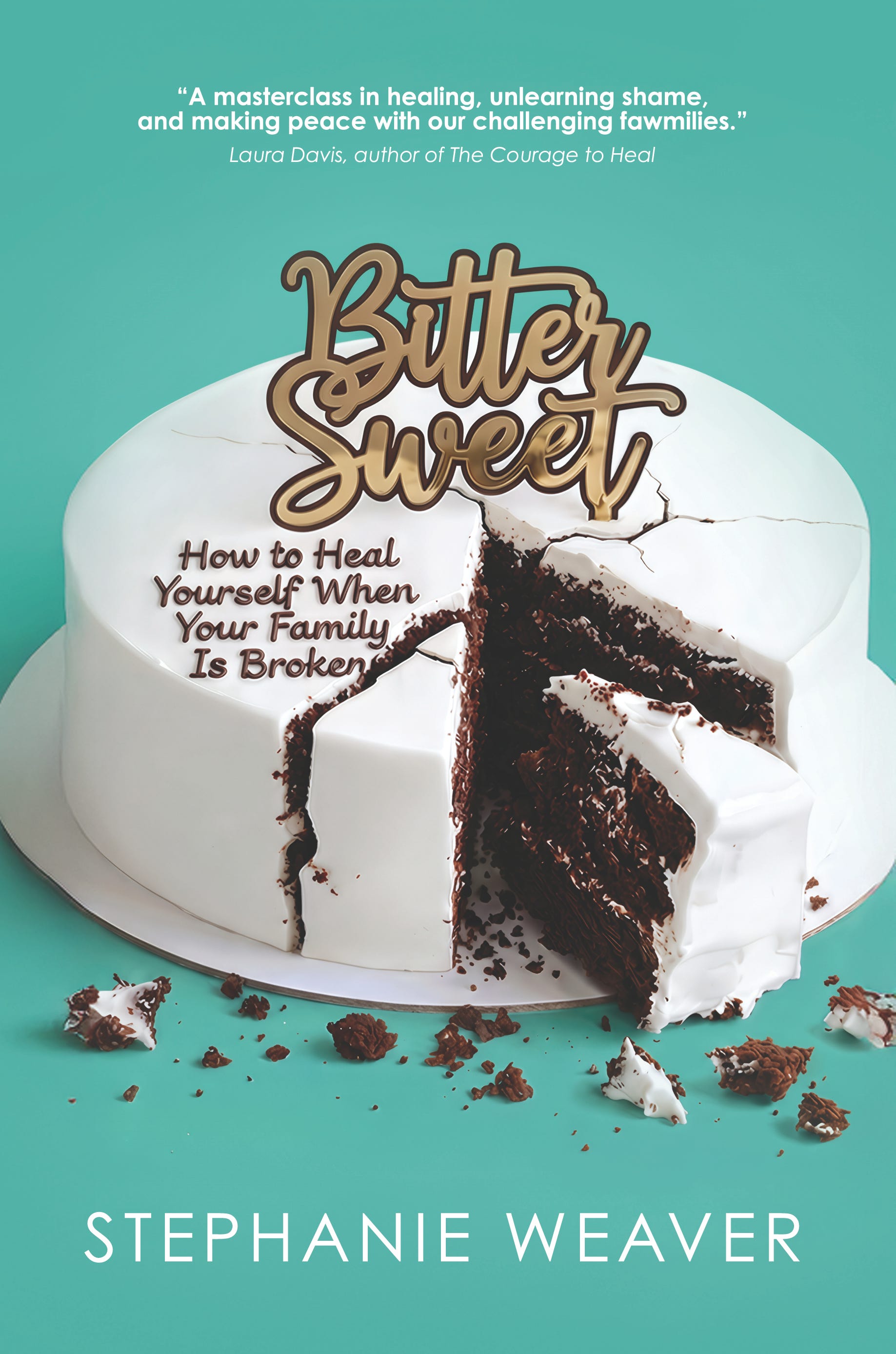
Here’s the 194th installment, featuring Stephanie Weaver, author of Bitter, Sweet: How to Heal Yourself When Your Family Is Broken. - Sari Botton
P.S. Check out all the interviews in The Memoir Land Author Questionnaire series.
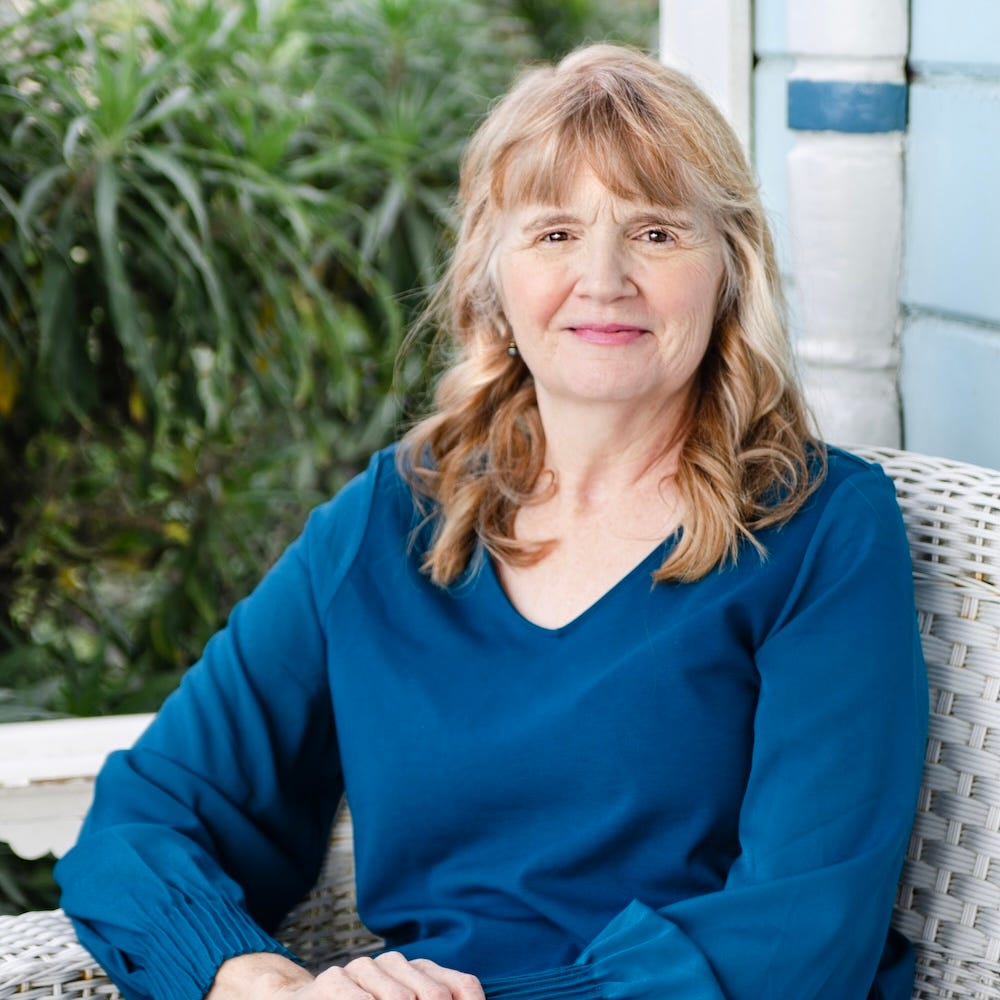
Stephanie Weaver, MPH distills complex human experiences into accessible, compelling narratives. Her new book Bitter, Sweet: How to Heal Yourself When Your Family Is Broken is a heartfelt exploration of healing, reconciliation, and personal transformation.
As a sought-after TEDx coach, she has worked with luminaries such as Billie Jean King and Richard Dreyfuss, helping them craft transformative stories. She served as a coach for TEDxSanDiego, where she guided speakers to deliver powerful, impactful talks. Her career includes influential roles at The White House and The San Diego Zoo, where she honed her expertise in audience advocacy and storytelling.
Weaver’s personal journey as an abuse survivor who reconciled with her parents after years of estrangement informs her work, inspiring others to rewrite their own narratives and transform pain into purpose. She publishes the newsletter Bitter, Sweet: Notes from a happy/sad life.
—
How old are you, and for how long have you been writing?
64. I started writing in my teens, got rejected a lot, depression took over and I stopped. I kept a journal for decades, mostly whining and swearing. Being a technical writer for museums spawned the idea for my first book: a visitor experience guide for museum professionals. I supported my museum consulting business with a blog in 2005, then created a food blog as a passion project in 2010.
Learning how to write about food and blogging regularly got me back in the habit of writing for readers. In 2013 after our beloved golden retriever died I published a pet loss memoir via Kickstarter. Around that same time, I was diagnosed with migraine disease and vertigo, which led to me writing a migraine lifestyle guide with 75 recipes followed by a full-color migraine diet cookbook.
Bitter, Sweet a personal growth memoir focused on family estrangement, forgiveness, and reconciliation. I tried unsuccessfully to sell it as a hybrid memoir-with-recipes for three years before retooling it with a service angle. While it’s not prescriptive, it includes an in-depth resource section in the back, and questions for book clubs, classroom discussion, and therapy sessions.
What’s the title of your latest book, and when was it published?
Bitter, Sweet: How to Heal Yourself When Your Family Is Broken was published on April 7, 2026 from Woodhall Press.
What number book is this for you?
Five.
How do you categorize your book—as a memoir, memoir-in-essays, essay collection, creative nonfiction, graphic memoir, autofiction—and why?
It’s a personal growth memoir focused on family estrangement, forgiveness, and reconciliation. I tried unsuccessfully to sell it as a hybrid memoir-with-recipes for three years before retooling it with a service angle. While it’s not prescriptive, it includes an in-depth resource section in the back, and questions for book clubs, classroom discussion, and therapy sessions.
What is the “elevator pitch” for your book?
“In Bitter, Sweet, Stephanie Weaver blends her personal journey of healing from childhood sexual abuse, family estrangement, and narcissistic dynamics with research and cultural context. At age 30, memories of her abuse surfaced, forcing her to confront betrayal, gaslighting, and emotional wounds. A lifeline for survivors of trauma and estrangement, Bitter, Sweet is poignant, unflinching, and “persistently hopeful,” reminding readers that healing is not just possible—it’s transformative. For anyone seeking resilience and healing, this book is a powerful guide forward.”
What’s the back story of this book including your origin story as a writer? How did you become a writer, and how did this book come to be?
Every book I’ve written has shown up and demanded I write it. It’s highly inconvenient, as I often don’t have the skills required, they’re in different genres, and they may not have a ready audience. I’d never considered writing a memoir. For years I’d thought that once both of my parents died, I’d write a book called The High Road where I’d interview other people who have forgiven the unforgiveable and include my experience as one of the chapters. I’d had a rocky relationship with my parents since confronting my father about the incest and my mother for covering for him. We were estranged for 16 years before I forgave them and reconnected.
In 2018 I came home after eight days at my dying mother’s bedside with her recipe box. Waiting for the call that she had passed, I flipped through the recipe cards every night. I realized that her entire life was in those cards, as was mine. I started writing about the recipes, thinking I might blog about them. 15,000 words later, I realized I was writing a memoir, had no idea what I was doing, and needed help, fast. I found a local memoir certificate program and started the next week.
What were the hardest aspects of writing this book and getting it published?
I had never written memoir and didn’t know I was writing one until I was already in the weeds. Finding the container for the story was difficult. Because the recipe box had inspired the project, I held onto that device for many, many iterations. I tried using the eight days I spent at her bedside. I tried a Prologue introducing the recipe box, then framing each chapter around a recipe. I tried recipes at the beginning of each chapter, then at the end. I considered ditching the recipes altogether. It was a puzzle I wasn’t sure I was going to solve.
I assumed that having a culinary agent, a good publishing track record, and a strong work ethic would help me sell my memoir. It did not. My agent didn’t know memoir and the person she referred me to wasn’t interested. Despite this being my fifth book, it felt like I was starting over.
I thought the manuscript was ready to query in 2020 and started pitching agents. After each batch of rejections, I’d work on it, set it aside, come back to it. I did a huge round of queries in 2022. In all, 179 agents got a query from me. Sixty-five responded either with a form rejection or requests for material. Eventually all the maybes turned to no. The reasons I got from agents who loved the writing were 1) lack of platform, 2) the book was too sad, 3) memoir is too hard to sell, or 4) it didn’t grab me enough to take a chance on it.
My 4th book was coming out in July 2022, so I set the memoir aside for close to a year. I came back with a new angle of family estrangement, a switch to the personal growth genre, and a plan to pitch directly to small publishers. After completely restructuring the book for the twelfth time I sold it to Woodhall Press, one of the first five indie publishers I pitched. Call me a terrier.
In 2018 I came home after eight days at my dying mother’s bedside with her recipe box. Waiting for the call that she had passed, I flipped through the recipe cards every night. I realized that her entire life was in those cards, as was mine. I started writing about the recipes, thinking I might blog about them. 15,000 words later, I realized I was writing a memoir, had no idea what I was doing, and needed help, fast. I found a local memoir certificate program and started the next week.
How did you handle writing about real people in your life? Did you use real or changed names and identifying details? Did you run passages or the whole book by people who appear in the narrative? Did you make changes they requested?
Only a few close friends and other memoirists were aware I was working on something. Since my family was and is fractured, none of them knew I was writing it. I wrote the first 50 or so drafts with the real family and place names to get the emotion right. After I felt the book had found its shape, I carefully crafted alternative names for everyone and only used general area names, like Colorado or Connecticut.
I didn’t run passages by anyone, but my next-oldest sister clarified some details on phone calls. The idea of telling my family was paralyzing, so for six years I told myself it was just a file on my computer. Once the Publishers Weekly deal report was about to publish, I told my sisters. No one in my family read it in advance, as I had been advised against that.
Who is another writer you took inspiration from in producing this book? Was it a specific book, or their whole body of work? (Can be more than one writer or book.)
I read more than 60 memoirs early on, mostly to understand the genre and see what styles I liked: experimental, memoir-in-essays, hybrid, etc. As I was working on specific aspects of the book and weaknesses in my writing, Ronit Plank, host of Let’s Talk Memoir, suggested I read specific memoirs as reference. I turned to Jeannette Walls’ The Glass Castle for childhood voice and how she integrated dialogue without tags, Cheryl Strayed’s Wild for time jumps and braiding, Jamie Gehring’s Madman in the Woods and Alia Volz’s Home Baked for how they handled transitions between reported content and memoir storytelling. Gina Frangello’s Blow Your House Down challenged me to write more honestly about sex.
What advice would you give to aspiring writers looking to publish a book like yours, who are maybe afraid, or intimidated by the process?
First understand your goals for a book project. Do you want to have the experience of just finishing a manuscript? Self-publishing and selling a few copies? Capturing your family’s story for family members? Or do you aspire to being reviewed in The New York Times? Those are very different paths to publication. Next educate yourself about writing, the genre, and the business of publishing, so you can craft a great book and have realistic expectations. Assess how much you are able to spend and invest in the project. Be willing to let go of what you thought the book was. Take feedback open-heartedly. Read a ton. Finish your first draft without rewriting. You won’t know what the book is for a while, but you don’t have anything without a first draft.
What do you love about writing?
When I’m able to craft beautiful scenes and move people, it’s highly fulfilling. My goal is to use my story to help others heal. I know it sounds lofty, but that’s what drives me. This book is the one I wish had existed when I was 25 and deeply struggling. That vision of my 25-year-old self kept me going through all the rejections. If a reader tells me they feel seen in my story, or that my story gives them permission to take action toward healing, that will feel like a win.
What frustrates you about writing?
Writing doesn’t frustrate me. Publishing and gatekeepers do. You must be fully armored to take so many rejections, especially when you see other people’s posts and it sounds like it was so much easier for them. (Fun fact: It’s not.)
What about writing surprises you?
The ability to take someone inside the intimate moments of your life is special. I’m also surprised when my writing makes me cry. It cracks me up when I read an old title of mine and don’t remember portions of it and think it’s well written.
Does your writing practice involve any kind of routine, or writing at specific times?
When I was working on the memoir, I wrote every afternoon for a two-hour block, reasoning that in three months I’d have a book. I did have a first draft in three months. I didn’t have a book for five years. I learned to take a walk if I was stuck, to make sure I was taking care of myself when writing difficult scenes, and register what emotions that day’s writing was bringing up. I survived my childhood by dissociating, so I have to pay attention to that happening and ground myself back in the present.
Currently I write a weekly post on Substack, which I usually draft midweek, then do a daily pass until it posts on Monday.
For years I’d thought that once both of my parents died, I’d write a book called The High Road where I’d interview other people who have forgiven the unforgiveable and include my experience as one of the chapters. I’d had a rocky relationship with my parents since confronting my father about the incest and my mother for covering for him. We were estranged for 16 years before I forgave them and reconnected.
Do you engage in any other creative pursuits, professionally or for fun? Are there non-writing activities do you consider to be “writing” or supportive of your process?
I sew occasionally, do little crafty projects, and garden. I’m most creative in the kitchen these days, and eagle-eyed readers will see that four of my five books contain recipes or food descriptions. This year I wanted to get back to drawing so I bought a small 5” X 5” sketching journal. I draw one thing per day on that week’s page. I share them every week on social media, even though my drawing is not perfect.
What’s next for you? Do you have another book planned, or in the works?
I have an idea for a book about my disordered eating journey, and another about narrative healing. But I won’t write anything in the future that I don’t sell on proposal. I hope to be speaking about this book for a while, and perhaps that process will clarify book six.
Stephanie, I was delighted to see your smiling face in my inbox. And on one of my favorite Substacks, no less. Congratulations on the publication of your newest book. As a fellow Wrighteous Sister, I am always encouraged when I see one of us make it across the finish line (at least that particular line, one of so many in the memoir-writing journey). Best of luck, and I hope our paths cross soon!
I love this story of how your memoir came together, Stephanie! And your persistence. I’m inspired! ❣️