


Since 2010, in various publications, I’ve interviewed authors—mostly memoirists—about aspects of writing and publishing. Initially I did this for my own edification, as someone who was struggling to find the courage and support to write and publish my memoir. I’m still curious about other authors’ experiences, and I know many of you are, too. So, inspired by the popularity of The Oldster Magazine Questionnaire, I’ve launched The Memoir Land Author Questionnaire.
Here’s the 242nd installment, featuring Anne Marie Wells, author most recently of Happy Iceland: How Icelandic Strangers Taught a Miserable American the Secret to Lifelong Happiness. - Sari Botton
P.S. Check out all the interviews in The Memoir Land Author Questionnaire series.
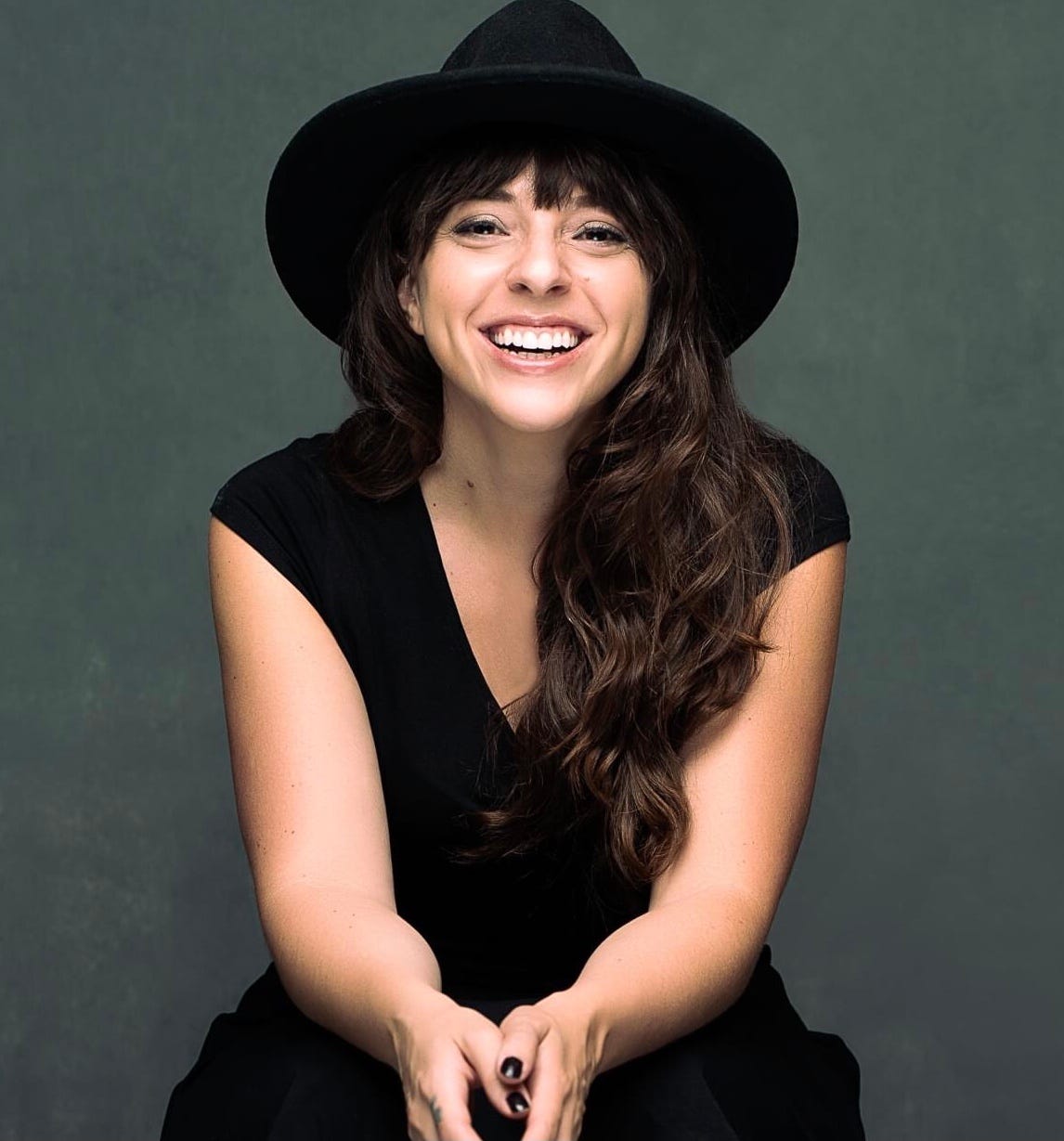
Anne Marie Wells (she/they) is a Queer, award-winning poet, playwright, memoirist, and oral storyteller. Her debut poetry collection, Survived By: A Memoir in Verse + Other Poems, was published by Curious Corvid Publishing in April 2023. Her chapbook Mother, (v) won the 2023 Cinnamon Press Pamphlet Contest and was released in 2024. Her bilingual children’s book Mommy, Why Am I a Bird / Mamã, porque sou uma ave was published by Imprensa da Universidade de Coimbra in 2015 and later featured on Wyoming PBS in 2020. In 2025, she published the coloring and activity book Underwater Explorers & Rescuers in collaboration with the global nonprofit Ethical Seafood Research. The same year she self-published a book of writing prompts titled Write Some Cool Sh!t: 366 Prompts to Rekindle Your Creativity. Her travel memoir, Happy Iceland: How Icelandic Strangers Taught a Miserable American the Secret to Lifelong Happiness, debuted with Star Belt Press in June 2026. She is a freelance copy editor, proofreader, and writing coach. When she is not writing, she enjoys spending time outdoors, tackling the New York Times crossword, and jazzercising at her local YMCA. Find her online at annemariewellswriter.com and most social media platforms @AnneMarieWellsWriter. —
How old are you, and for how long have you been writing?
I am 40, and I started learning how to write when I was 30 (2016). I’ve been writing as a passion since 2019, and writing as my main gig since 2023.
What’s the title of your latest book, and when was it published?
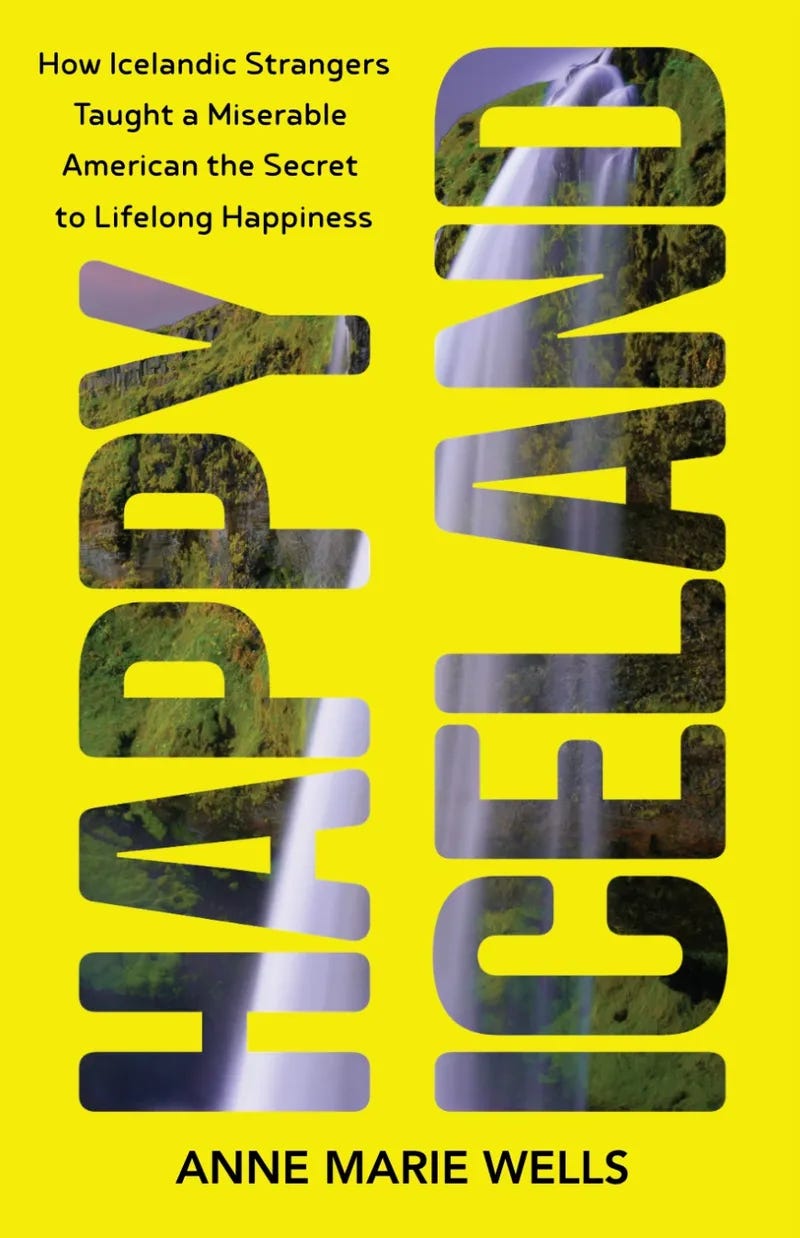
My latest book is my travel memoir, Happy Iceland: How Icelandic Strangers Taught a Miserable American the Secret to Lifelong Happiness which was published at the end of June 2026.
What number book is this for you?
This is my sixth book.
The hardest part was learning how to write. You don’t know what you don’t know. As I learned more skills and implemented what I learned into my manuscripts I had a lot of cringe moments reading what I wrote and knowing that it wasn’t any good. At the same time, I got a lot of satisfaction from rewriting and knowing I was improving.
How do you categorize your book—as a memoir, memoir-in-essays, essay collection, creative nonfiction, graphic memoir, autofiction—and why?
I’d say it’s a braided memoir. The main story is my experience backpacking and hitchhiking around Iceland finding the places where strangers’ happiest memories happened, but I braided in Icelandic natural history, cultural insights, and my own background. Plus maps!
What is the “elevator pitch” for your book?
A simple question at Iceland’s international airport—What are your happiest memories of Iceland?—sets off an unforgettable journey across the Land of Fire and Ice. Abandoning guidebooks and itineraries, a young woman on the precipice of turning 30, newly unemployed and stuck in a faltering relationship, spends five weeks backpacking and hitchhiking to find the locations where Icelandic strangers’ happiest memories took place. From childhood sports fields and family farms to hidden waterfalls and the remote Highlands, this intimate travel memoir explores Iceland far beyond what can be seen from a sightseeing bus tour. Part adventure, part meditation on what it takes to be happy in a volatile world, Happy Iceland is a reminder that some of the best journeys begin when we shut up and listen.
What’s the back story of this book including your origin story as a writer? How did you become a writer, and how did this book come to be?
The back story of this book and my origin story as a writer are intertwined. I never thought about being a writer before I came up with this idea to travel around Iceland finding people’s Happy Places. I studied environmental science in college and went on to get a master’s degree in ecology. As part of my graduate work, I wrote a children’s book called Mommy, Why Am I a Bird? that my university press published in 2015, but I had literally no other publication credits to my name—not even an op-ed in a newspaper.
I started reading every book on writing, taking English classes online, and volunteering for a local literary nonprofit so I could attend their workshops and annual writer’s conference for free.
At the conference in 2018, someone suggested I hire a writing coach to help me with my manuscript. As luck would have it, a YA author I was familiar with was advertising writing coaching packages for dirt cheap as they built up their coaching portfolio. I jumped at the opportunity even though it was a big chunk of change for me. I was so overwhelmed by their six-page editorial letter and their suggestions—”show don’t tell”, “show more of yourself here”—I didn’t look at my manuscript for months.
The following year at the conference, I sat in on Florence Williams’ nonfiction workshop. (Florence Williams wrote the acclaimed creative nonfiction books, The Nature Fix and Heartbreak.) During the workshop, we all went around the circle sharing why we were in the workshop, and of course I talked about my project and manuscript. At the end of the workshop, a stranger came up to me and said, “I was just in Iceland, and you have no idea how many people asked me if I had heard of the American woman who went around collecting people’s happy memories. And I would tell them, ‘There are 300 million people in the US. No, I don’t know this person.’ And now, two weeks later, I’m in the same room as you.” I couldn’t believe it. I just broke down and ugly cried. I knew I couldn’t give up. People in Iceland were still talking about me. They were waiting for this story to come out. I had to keep going.
In 2022, I thought my big break had come when I was a finalist and then won a travel book contest hosted by an indie press. The validation that someone believed in this story and liked it so much they wanted to publish it felt intoxicating. The publisher gave me valuable feedback for improvement, and I made another round of revisions. However, the publisher essentially wanted to self-publish my book through Amazon and then split the royalties 50-50. I requested they purchase an ISBN so that the book would be listed as published through their name and not “Independently published,” but they resisted. When I insisted, they terminated my contract, but it was a relief instead of a disappointment. I knew I wanted more.
Two years later, after trying three times, I was accepted into AWP’s writer-to-writer mentorship program. Memoirist, Laura Carney, author of My Father’s List, supported me as I made additional revisions based on her suggestions. Primarily, she helped me flesh out my epilogue. At the time, my epilogue spanned about two weeks post-trip, but eight years had gone by. I was partnered and had a child. How did the lessons I learned on my trip impact my current life?
At the end of the mentorship program, Laura hand-delivered my manuscript to her agent for consideration. After waiting six months for her response, it was still a no. But because Laura had a relationship with her agent, she received some feedback about why it was a no. Her agent said that my book was good and that I was a beautiful writer, but my social media following wasn’t robust enough for her to sell the book to the publisher, so it was a no for her. This was the hardest no to accept because it had nothing to do with the quality of my writing, it had to do with whether or not I had built-in buyers. It was the no that broke my spirit.
But through that no, I decided to bring this book into the world myself. This wasn’t my first rodeo. I had traditionally published four books at this point—two children’s books and two poetry collections. I knew enough about the industry and the behind the scenes to book publishing that I knew I could do it on my own. I launched Star Belt Press and published Happy Iceland. In the future I hope to publish more travel-centered books written by women and non-binary writers.
What were the hardest aspects of writing this book and getting it published?
The hardest part was learning how to write. You don’t know what you don’t know. As I learned more skills and implemented what I learned into my manuscripts I had a lot of cringe moments reading what I wrote and knowing that it wasn’t any good. At the same time, I got a lot of satisfaction from rewriting and knowing I was improving.
And though it took me years to get my book to a point where I felt proud to share it with the world, I wouldn’t have had it any other way. In the new age of AI, I am grateful I had the opportunity to learn how to write so that I am not even tempted to use AI to write for me. And when I read obvious AI slop, I know for a fact that my writing is better than that, so I can trust my own voice rather than feeling insecure to the point of asking an LLM to write something for me.
I’d say it’s a braided memoir. The main story is my experience backpacking and hitchhiking around Iceland finding the places where strangers’ happiest memories happened, but I braided in Icelandic natural history, cultural insights, and my own background. Plus maps!
How did you handle writing about real people in your life? Did you use real or changed names and identifying details? Did you run passages or the whole book by people who appear in the narrative? Did you make changes they requested?
For most individuals, I either used pseudonyms or I used descriptors like “Jersey Accent” or “Red Backpack Kid”. I also changed some aspects of who they are: where they work, what they look like. When I first wrote the book nearly a decade ago, I did run passages by those who were in the book for approval. No one asked for changes to be made. Though the book is quite different from the version they received, I didn’t ask for further approval.
Who is another writer you took inspiration from in producing this book? Was it a specific book, or their whole body of work? (Can be more than one writer or book.)
Because I am a solo female traveler, of course I read Cheryl Strayed’s Wild and Elizabeth Gilbert’s Eat. Pray. Love. I don’t know how much those two books really inspired Happy Iceland. I read dozens of memoirs and books on craft. It’s hard to say how much impact any one individual book had. Maybe it’s more like the Ralph Waldo Emerson quote: “I cannot remember the books I’ve read any more than the meals I have eaten; even so, they have made me.”
What advice would you give to aspiring writers looking to publish a book like yours, who are maybe afraid, or intimidated by the process?
My advice is to find help. The process is only intimidating if you feel like you have to do it all by yourself with no guidance, but there’s so much help available: writing communities, critique groups, workshops, webinars, courses, books, writing coaches. All of it helps to understand the process better and to work through the process step by step.
What do you love about writing?
I love the catharsis of writing. Letting everything inside of my brain out is such a relief. I also love going back to something I wrote and being surprised by it. I also love revising. It’s so satisfying to re-read my work and come up with something else that I like better. I love that feeling.
What frustrates you about writing?
I can’t think of anything that frustrates me about writing itself. What’s frustrating to me is the writing industry. The gatekeeping. The elitism. The nepotism. The self-imposed hierarchies of those with MFAs and those without. Those with MFAs from Ivy League programs and those without. Those published with a “Big 5” and those who are self-published. Judging a book, not by its quality, but whether or not the author can sell thousands of copies on their own and make the publisher money without them having to do much effort. It’s all socially constructed bullshit.
What about writing surprises you?
What’s surprising me right now about writing is the extent to which AI writing is infiltrating our lives. Social media captions, carousels, scripts. The percentage of people who are writing their own work has plummeted. As a professional editor, I have now put a clause in my contracts that states I will not edit anything written by AI. Authors have to initial that their work was not written even in part by AI. And the justifications people make for using it also surprise me. They’ll say things like they came up with the story, but put their words into ChatGPT to just “write it better.” Or that they don’t know how to write and so what they would write would just be gobbledygook if they didn’t use AI to write it for them.
I’m imagining that we’re living in a similar time to when industrialized agriculture and textiles were taking over. How our ancestors must have worried that their descendents wouldn’t know how to grow their own food or make their own clothes, that their grandchildren would be completely reliant on other people (and factories/machines) for food and clothing. And here we are. I don’t know how to farm or even grow a garden. I don’t know how to sew or even darn a sock. I also don’t have the desire to learn. And maybe the future will be that my grandchildren will be completely reliant on other people (and factories/machines) to write a poem, to write a sentence, to come up with the words to tell someone they love them because they don’t know how and have no desire to learn.
Does your writing practice involve any kind of routine, or writing at specific times?
No. When I have tried to impose such a routine, it has not worked, and I saw writing as a chore rather than something I wanted to be doing. I would dread it the way I would dread going to a job I didn’t like. When I make time to write, it’s like I’m doing something special, and I look forward to that time. But if I have to do it every day at a certain time, it just changes that dynamic.
I am also the primary caregiver for my toddler and I’m going back to school and I’m an entrepreneur. Waking up at 5 AM to write, for example, doesn’t work for me since my toddler is awake at 5 AM. If I woke up at 4 AM to write before everyone else was awake, I would be a miserable gremlin the rest of the day. I am often reading or writing while my son is playing with Lego or watching Ms. Rachel next to me. I will read craft books in the bathroom while my son is playing in the bath. Irregularity and spontaneity works best for me. It doesn’t work for everybody, and I’m not saying that no one should have a routine. It just doesn’t work for me.
I decided to bring this book into the world myself. This wasn’t my first rodeo. I had traditionally published four books at this point—two children’s books and two poetry collections. I knew enough about the industry and the behind the scenes to book publishing that I knew I could do it on my own. I launched Star Belt Press and published Happy Iceland. In the future I hope to publish more travel-centered books written by women and non-binary writers.
Do you engage in any other creative pursuits, professionally or for fun? Are there non-writing activities you consider to be “writing” or supportive of your process?
I took piano lessons from age 4 to 18. I don’t have a piano where I live now, but when I visit my mother, I will play. I enjoy it and it makes my mother cry with joy. I get the same kind of catharsis playing the piano as I do from writing.
Though they are writing-adjacent, I love editing and teaching creative writing. Reading others’ work and providing suggestions or leading a creative writing workshop reinforces those same principles I’m sharing with others in my own work.
What’s next for you? Do you have another book planned, or in the works?
Right now I am working on a multi-point-of-view novel, but I also have ideas for a choose-your-own adventure novel. As for travel or memoir, I haven’t had a big trip since my trip to Iceland ten years ago. My family and I moved from the east coast USA to west coast Canada, and I will maybe write one day about the experience of being an immigrant in Canada, but not yet. I dream that someday my son will read Happy Iceland and want to recreate my trip and see the things that I saw. Maybe he and I can do it together. It’ll be a surprise for everyone including me.
Thank you for your thoughtful comments about ChatGPT. IT’s a slippery slope on entry. The result is always slick and noticeable despite the disclaimers.
On another boundary crossing, If only immigration agents the world over asked “what would you like to experience of this country, while you are here?” when people enter. And “what were your happiest moments when you were here?” when people left.
I’ve traveled the world, and been greeted with indifference, rudeness and suspicion in so many places. I can count the smiles with five fingers.
And visiting friends from abroad have often commented about rudeness upon entry here.
Leaving it’s a rubber stamp.
The alternative 😕😐😊 buttons on leaving Whole Foods is not the solution. Maybe it’s thermal baths. 🤷🏼♂️
Welcome to the west coast of Canada, one of the most beautiful places in the world! I enjoyed reading about your writing and life process.