


Since 2010, in various publications, I’ve interviewed authors—mostly memoirists—about aspects of writing and publishing. Initially I did this for my own edification, as someone who was struggling to find the courage and support to write and publish my memoir. I’m still curious about other authors’ experiences, and I know many of you are, too. So, inspired by the popularity of The Oldster Magazine Questionnaire, I’ve launched The Memoir Land Author Questionnaire.
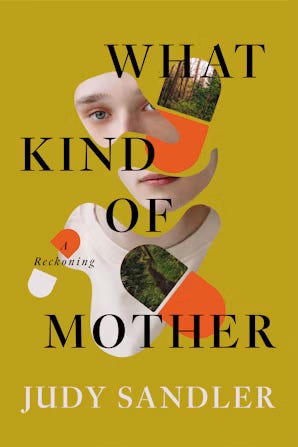
Here’s the 243rd installment, featuring Judy Sandler, author What Kind of Mother: A Reckoning. - Sari Botton
P.S. Check out all the interviews in The Memoir Land Author Questionnaire series.
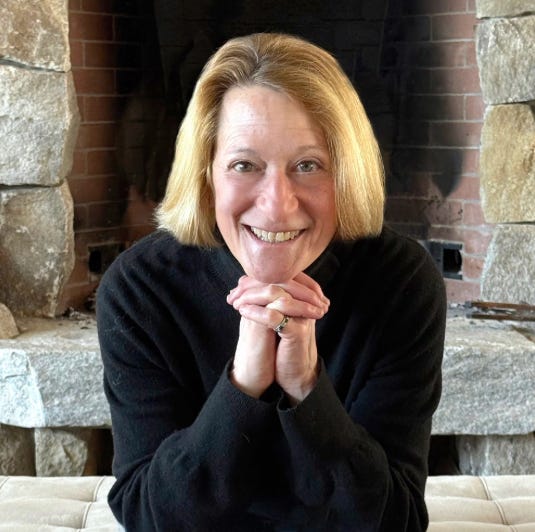
Judy Sandler resides in Lincolnville, Maine. She holds a BA from The University of Pennsylvania, an MLA from Johns Hopkins University, and an MFA from Stonecoast at The University of Southern Maine. Her work has been published in The New York Times’ Tiny Love Stories, Maine Public Radio’s Poems From Here, The Portland Press Herald, Brevity Blog, Yale School of Medicine’s The Perch, and others. Her debut memoir, What Kind of Mother: A Reckoning iwas published September 8, 2026 by West Virgina University Press. Judy’s body of work explores themes of motherhood, mental health, and everyday experiences that remind us we are connected. See more at her website.
—
How old are you, and for how long have you been writing?
I am 64 years old, and I have been writing since I was in elementary school. I wrote and illustrated my first book, A Fish Tale, in sixth grade. It was a great book about one fish, in a school of fish, who dares to leave the pack.
What’s the title of your latest book, and when was it published?
What Kind of Mother, A Reckoning and it was published September 8, 2026
What number book is this for you?
Not counting A Fish Tale, this is my first book.
What Kind of Mother is a memoir that traces the reckoning with my son’s descent into severe mental illness and his refusal to seek medication. Just as he began using prescribed pharmaceuticals to start his recovery from his bipolar diagnosis, my son joined a “therapeutic living community” in the woods of Vermont where he gave up his medications. Slowly, but surely, his condition became an emergency.
How do you categorize your book—as a memoir, memoir-in-essays, essay collection, creative nonfiction, graphic memoir, autofiction—and why?
I was told by my first, but no longer, agent that “memoir isn’t selling, so let’s not call it a memoir.” But, it’s a memoir. It’s written in very short chapters; the longest is a few pages, the shortest is one sentence.
What is the “elevator pitch” for your book?
What Kind of Mother is a memoir that traces the reckoning with my son’s descent into severe mental illness and his refusal to seek medication. Just as he began using prescribed pharmaceuticals to start his recovery from his bipolar diagnosis, my son joined a “therapeutic living community” in the woods of Vermont where he gave up his medications. Slowly, but surely, his condition became an emergency. As much as this book is a quest for the root of my son’s mental illness, it’s also an unflinchingly honest, voice-driven interrogation of the anti-pharmaceutical netherworld—a memoir that reckons with my past in order to live with forgiveness in the future.
What’s the back story of this book including your origin story as a writer? How did you become a writer, and how did this book come to be?
These are two very different questions for me.
I probably became a writer because my father was a writer. I grew up watching my father tap away on his typewriter, writing stories for The Baltimore Sun. When he wasn’t writing stories, he was telling them to my brother, sister, and me. He had an incredible story-telling voice and he made up his own stories, “The Hippo That Sang” and “Randy the Dog,” come to mind as my favorites. But my father wrote about other people—never about himself, and never about our family. If he were alive to see the publication of my book, I think he would like the writing, but I’m not so sure he would like the airing of the family laundry. And, maybe that is how this book came to be.
He passed on to me an impossible, two-sided trait: an allegiance to keep the family code, but also the inherent need to write. I started to write in graduate school about my experiences with my son’s severe mental illness. I found that writing it down was a way to help me make sense of a situation that was completely out of my control. This book started as my thesis for my MFA at Stonecoast, at The University of Southern Maine. It was there that I learned the difference between writing my story and writing my son’s story. Writing this book taught me hard lessons about permission and truth in memoir. So, maybe the back story of this book and my origin story as a writer are related, after all.
What were the hardest aspects of writing this book and getting it published?
The most difficult part of writing this book was not the remembering or the making of sentences. It was granting myself permission to tell the story, to put into the world something about my family that didn’t look like The Brady Bunch. It took me years to be able to say to my son, “I don’t think I need your permission to write this story because it’s my story. But I would like your blessing.” Only recently did my son tell me, “I trust you to tell your story and not mine.”
Getting the book published was its own journey. I shocked myself by signing with a well-known New York agent on my first round of queries. After about a year, I realized this was not a good match for either of us, and I began submitting on my own to smaller publishers and University presses. I feel fortunate to have found West Virginia University Press and specifically, the Connective Tissue Series, which publishes books about narrative medicine. It feels like the right place for my book.
I started to write in graduate school about my experiences with my son’s severe mental illness. I found that writing it down was a way to help me make sense of a situation that was completely out of my control. This book started as my thesis for my MFA at Stonecoast, at The University of Southern Maine. It was there that I learned the difference between writing my story and writing my son’s story. Writing this book taught me hard lessons about permission and truth in memoir.
How did you handle writing about real people in your life? Did you use real or changed names and identifying details? Did you run passages or the whole book by people who appear in the narrative? Did you make changes they requested?
This is the area I learned the most about in writing the book. I love writing—I am one of those people who, when given a prompt, just gets to work. I got a lot of side-eyes when I was in high school. But writing about real people is something I could never have predicted would be so difficult. I wrote the whole thing without changing names or consulting people who appear in the book. I needed to use real names as I wrote because there is a lot of history and meaning in peoples’ names that I needed to feel as I wrote the story. It wasn’t until I was making edits for my publisher that I changed the names. I feel very strongly that this is my story—it’s about what happened to me when my son experienced severe mental illness.
I did run passages by people who appear in the book, and I honored their requests to change something if it didn’t affect the truth of my story. For the most part, this involved minor characters and small changes. My son read most of the book, and told me he didn’t want to read the rest; it was difficult for him to read, which I respect. He asked that his name be changed. We had long and difficult conversations about how I remembered a scene, and how he remembered that same scene. In the end, I stuck by my own memories. I need to say here that Elissa Altman, and her book, Permission, were very helpful to me as I struggled with the whole issue of writing about family. Also, I found the essays in the book, Family Trouble, Memoirists on the Hazards and Rewards of Revealing Family, edited by Joy Castro, to be very helpful.
Who is another writer you took inspiration from in producing this book? Was it a specific book, or their whole body of work? (Can be more than one writer or book.)
I think I took inspiration from every writer who ever tried to write about mental illness; their own or someone else’s. I was obsessed with Esme Weijun Wang’s The Collected Schizophrenias, the way she wrote in short, snappy chapters, and her voice—so undramatic. I also wrote to and depended on Charlotte Pierce-Baker’s This Fragile Life. She encouraged me early on to take my time, get permission, and tell my own story. Finally, and maybe most importantly, I studied Maggie Smith’s You Could Make This Place Beautiful. It’s not about mental illness, but I fell in love with the structure of that book, her courage to be honest on the page, how she addresses the reader, the way the short chapters speak to each other.
What advice would you give to aspiring writers looking to publish a book like yours, who are maybe afraid, or intimidated by the process?
I would tell them that, like aging, it’s not for the faint of heart. I would tell them that each stage; the drafts, the queries, the agents, the proposals, the submissions, they all take time and you don’t know what you don’t know. I thought I knew everything, but really I was not ready to move onto the next stage until I learned what I didn’t know. You just have to go through it. I would tell them not to be intimidated about any of it. Writers are people, and I don’t care how many books they have published. Most writers want to help you through the process, so don’t be afraid to ask.
What do you love about writing?
I love that, like running, writing does not require a lot of equipment. You need only a pen and a piece of paper, or a laptop. I love that you can write anywhere and anytime. Here is a secret; sometimes I appear to be sitting at a coffee shop with a friend, but in my head, I’m writing. I love writing all the time, but mostly when I am not writing for “a project.” Somehow when I am working on a book or an essay, it feels serious and real, and I like writing when it isn’t that. I think journaling is the best kind of writing.
What frustrates you about writing?
I get caught up in writing “for publication” and that feels frustrating. Nothing frustrates me about the act of writing. It’s a natural thing to put one’s thoughts down on paper. It feels like talking to a friend. But then somehow an expectation seeps into my body and it’s that I “should” do something with the writing. Writing can serve two purposes: it can be just for you, to figure out what you are thinking and to try to make sense of the world (good luck with that!), or you can write to help others; to connect, to share human experiences. I love when I read something and I nod along to whatever I am reading because I feel seen. That’s what writers can do. It is frustrating to me how difficult it is to publish work and share it with large audiences.
What about writing surprises you?
I am often surprised by what happens when I sit down to write for a just a short time and then I am onto something and I keep writing, and sometimes I like what I wrote and I can find a tiny idea in there somewhere. It is literally a surprise because I don’t sit down with any topic in mind, but as I write, I uncover something that has obviously been there all along, but is now on the page. Writing can surprise you like that!
Does your writing practice involve any kind of routine, or writing at specific times?
It does. I have been an athlete all my life, so I am used to working out in the late afternoon, or at specific times of the day. My writing practice reflects the same kind of habit/routine that I give to running or any other athletic endeavor. I like to write first thing in the morning. I have some attention issues, so morning is when I am most focused. I don’t always write for the whole morning; sometimes I read submissions for a journal, or I catch up on reading Substacks I follow (I think this all counts as writing).
As much as this book is a quest for the root of my son’s mental illness, it’s also an unflinchingly honest, voice-driven interrogation of the anti-pharmaceutical netherworld—a memoir that reckons with my past in order to live with forgiveness in the future.
Do you engage in any other creative pursuits, professionally or for fun? Are there non-writing activities you consider to be “writing” or supportive of your process?
I am married to a photographer, so I spend a lot of time gazing at photographs as a creative pursuit. Sometimes I like to pretend I am Alex Katz and I collage the scene in front of my house, which is a pond with docks, and houses dotting the shoreline. Mostly, I run, walk the dogs, play pickleball, and stay outside. I consider all of this to be supportive of my process. In fact, sometimes it is more productive than sitting down to write.
What’s next for you? Do you have another book planned, or in the works?
I thought my next book was going to be fiction, and I had an idea, but like I mentioned before, I didn’t know what I didn’t know about writing fiction. So I am sticking with non-fiction, and yes, I have lots of ideas in the works! The subject of mental health is near and dear to me, and one I continue to believe needs everyone’s attention, so my work in progress is about expectations, institutions we trust, and mental health.
I really enjoyed this, especially the publishing story. Signing with a well known agent on the first round of queries sounds like the kind of opportunity most writers would assume they should hold onto, so I liked that Judy was willing to leave when it wasn’t the right fit. It feels like a good example of self trust too, being able to recognise that an impressive opportunity still isn’t right for you and trust your own judgement enough to walk away.
“I trust you to tell your story and not mine.”
That's such an important distinction.
I've been writing more and more from memory lately, and the people I love inevitably end up on the page. I'm realizing that there's a big difference between writing about someone and writing about what it was like for me to know them.
I'm still figuring out exactly where that line is.