


Since 2010, in various publications, I’ve interviewed authors—mostly memoirists—about aspects of writing and publishing. Initially I did this for my own edification, as someone who was struggling to find the courage and support to write and publish my memoir. I’m still curious about other authors’ experiences, and I know many of you are, too. So, inspired by the popularity of The Oldster Magazine Questionnaire, I’ve launched The Memoir Land Author Questionnaire.
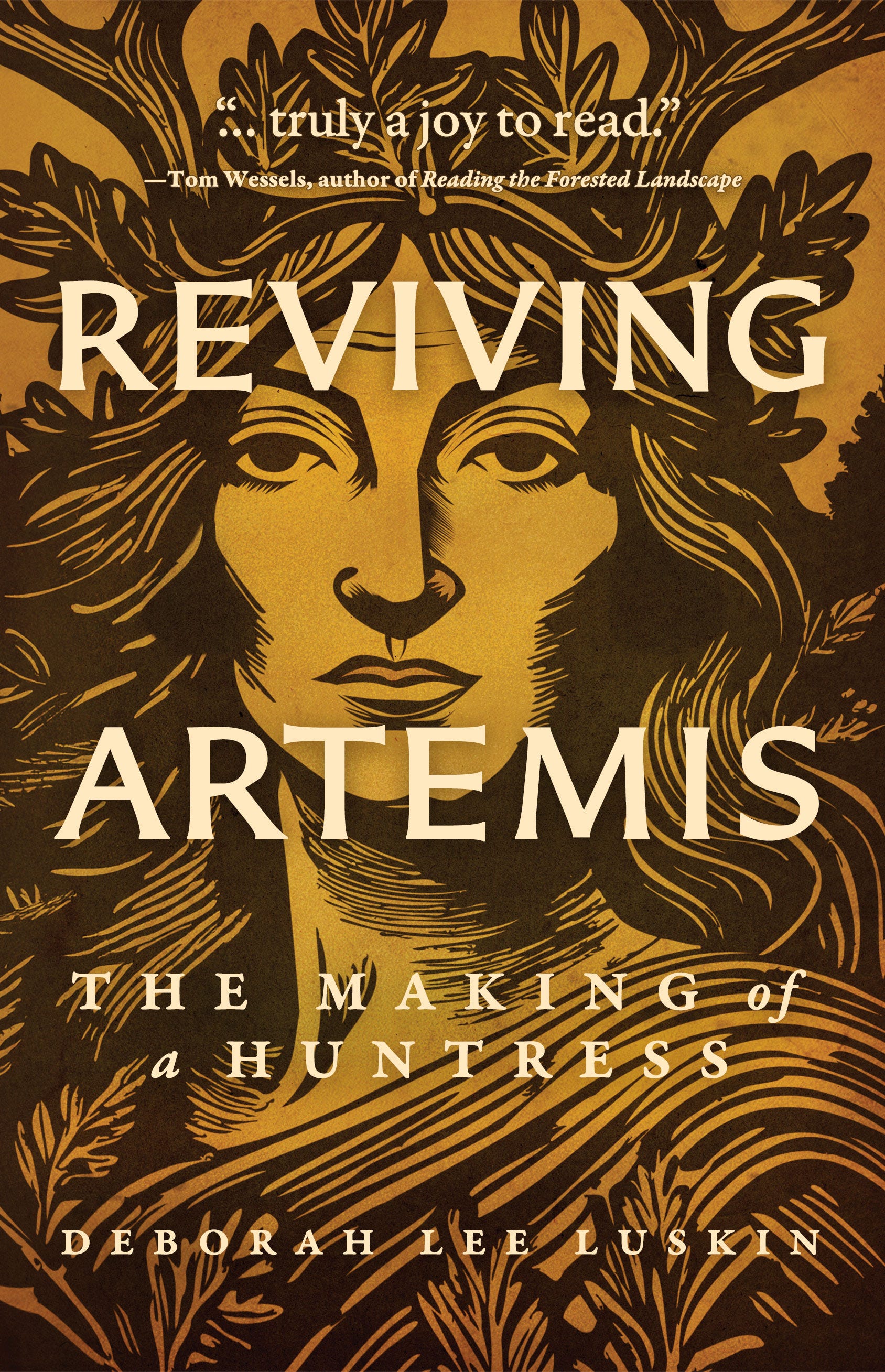
Here’s the 163rd installment, featuring Deborah Lee Luskin, author most recently of Reviving Artemis: The Making of a Huntress. - Sari Botton
P.S. Check out all the interviews in The Memoir Land Author Questionnaire series.
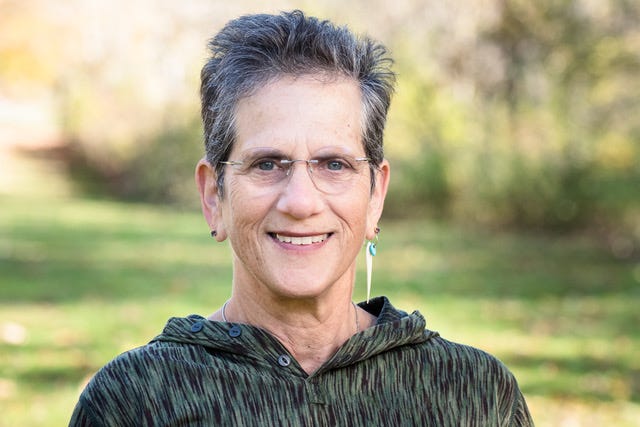
Deborah Lee Luskin moved from New York City to Vermont in 1984 to write, garden, keep bees, and raise daughters. Luskin has been an editorial columnist, radio commentator, pen-for-hire, and blogger. Her first novel, Into the Wilderness, won the Independent Publishers Gold Medal for Regional Fiction. Luskin has also enjoyed a long career as an educator, teaching writing and literature-based humanities to gifted elementary writers, college students, new adult readers, lifelong learners, healthcare workers, and prison inmates. Since 2016, Luskin has been facilitating the on-going Rosefire Writing Circle, a place to write in community and with support. Engaged in civic life, Luskin practiced restorative justice as a volunteer at the Brattleboro Community Justice Center and served as the elected Town Moderator in Newfane, Vermont. She holds a PhD in English Literature and expected to become an academic, not a deer hunter. She lives in Vermont with her husband, their dog, usually a cat, and a variable number of chickens.
—
How old are you, and for how long have you been writing?
I’m 69 years old. “The 60s,” as Arielle Ford notes, “is a spectacularly underrated decade.” In my 60s, I found my freedom and power. I know who I am and where I stand in the natural world. In a couple of months, I’ll step into my 70s, strong, calm and curious.
What’s the title of your latest book, and when was it published?
Reviving Artemis: The Making of a Huntress, published November 4, 2025
While I set out to write a straightforward hunting narrative, the story turned into an exploration of personal transformation when Artemis turned up and showed me how women have always been both protectors of wildlife and hunters. I reexamined how I grew up believing being a boy was better than being a girl. (Not true.) I reinterpreted myths told and translated by men, reading them from a woman’s point of view. I realized that as a gardener, I’d learned how to care for the soil, but it’s as a hunter, I’m learning about stewardship of the wild.
What number book is this for you?
This is my first memoir, second published book.
Into the Wilderness, my first novel and winner of the IPPY Gold Medal for Regional Fiction, will be reissued by Sibylline Press in April. It’s a love story between people in their mid-60s, set in Vermont in 1964. I wrote it when I was 48. I think I was born to be an elder.
How do you categorize your book—as a memoir, memoir-in-essays, essay collection, creative nonfiction, graphic memoir, autofiction—and why?
Reviving Artemis: The Making of a Huntress is a memoir. It’s a personal account of how learning to hunt deer forced me to examine how I became a disciple of Artemis, the mother goddess, protector of women and wildlife.
While I set out to write a straightforward hunting narrative, the story turned into an exploration of personal transformation when Artemis turned up and showed me how women have always been both protectors of wildlife and hunters. I reexamined how I grew up believing being a boy was better than being a girl. (Not true.) I reinterpreted myths told and translated by men, reading them from a woman’s point of view. I realized that as a gardener, I’d learned how to care for the soil, but it’s as a hunter, I’m learning about stewardship of the wild.
What is the “elevator pitch” for your book?
When I was about to turn 60, I looked over the fence that keeps wildlife out of my vegetable garden and stared at the dense forest that covers most of Vermont, a forest I only ever entered on a blazed trail. I wanted to know how to read the landscape so I could find my own way through the woods. The universe called to me, “Learn from the deer.” Deer know how to navigate through the forest to find food and community. I knew right then that to forge my own path into meaningful aging, I’d become a deer hunter.
What’s the back story of this book including your origin story as a writer? How did you become a writer, and how did this book come to be?
I knew almost as soon as I was summoned by this force I can hardly describe that I would write about learning to hunt, because writing is how I make sense of the world. In the same way that I knew I needed to hunt, I knew I would narrate this story of walking into the woods alone, with a rifle, in the dark.
What were the hardest aspects of writing this book and getting it published?
I didn’t know that narrating the five years of learning to hunt would keep pitching me backwards into the formative experiences of my childhood right through my long marriage to the present. I’m regularly introspective, but writing this book demanded delving deeper into the accepted sexism of my youth, and the silence I learned to keep, a silence that helped me understand why I am a writer, why I want to be read and heard.
The hardest part of getting the book published was waiting for agents to get back to me. In an unexpected turn of luck, a friend told me about Sibylline Press, an independent publishing house dedicated to “the brilliant work of women over 50.” They replied with the letter a writer dreams of: “We are loving your book. So much.” It’s been a great fit.
When I was about to turn 60, I looked over the fence that keeps wildlife out of my vegetable garden and stared at the dense forest that covers most of Vermont, a forest I only ever entered on a blazed trail. I wanted to know how to read the landscape so I could find my own way through the woods. The universe called to me, “Learn from the deer.” Deer know how to navigate through the forest to find food and community. I knew right then that to forge my own path into meaningful aging, I’d become a deer hunter.
How did you handle writing about real people in your life? Did you use real or changed names and identifying details? Did you run passages or the whole book by people who appear in the narrative? Did you make changes they requested?
I used real names for people I met in a public and/or professional capacity, like the wonderfully helpful people who work at the Vermont Department of Fish and Wildlife. I asked for and received consent to use names of family and friends. The disclaimer at the front of the book covers everyone else: “Some of the first names have been changed, and some last names omitted to preserve friendships and protect privacy.” In one special circumstance, I allowed someone to see what I’d written in advance of publication, and I agreed to the changes requested.
Who is another writer you took inspiration from in producing this book? Was it a specific book, or their whole body of work? (Can be more than one writer or book.)
H is for Hawk by Helen MacDonald strongly influenced Reviving Artemis. And, of course, Mary Pipher’s book, Reviving Ophelia, was the inspiration for the title. Jane Austen is my model for balanced, euphonic, prose.
What advice would you give to aspiring writers looking to publish a book like yours, who are maybe afraid, or intimidated by the process?
1. Fear masks excitement. Harness the excitement.
2. Find support in community.
3. Writing is a creative act. I quote W. Somerset Maugham to every client I work with: “There are only three rules for writing a book. Unfortunately, no one knows what they are.” To which I add, the rules are different for every book.
What do you love about writing?
I like telling stories to create change, stories that are provocative, stories that might make my readers a little uncomfortable, prod them to examine their own beliefs and prejudices. For instance, readers who think they are totally against hunting, might be surprised to discover how hunting aids conservation. Or they may question the carbon footprint of their food. Maybe readers will decide to spend more time outdoors. Or not.
A book event I was scheduled to do at a conservation organization was cancelled when donors objected to hosting a discussion about hunting. Some people have made up their minds and don’t want to change them; they’ve stopped being curious and don’t want to learn. There’s nothing I can do about that.
Readers of Reviving Artemis—even readers who are skeptical about hunting—tell me how much they learn from reading this personal narrative, and how moved they are by the story.
I love the intimacy of the writer-reader relationship. My words infiltrate my reader’s mind. Even though I’ll never meet all my readers, we’ll have been spent time together much in the same way we spend time with best friends.
What frustrates you about writing?
I’m both a slow writer and a profligate with words. I write and write and write. And then I cut and cut and cut. My process is one of distillation, like turning water into whisky.
What about writing surprises you?
Writing is an act of discovery. I might sit down at my desk with a certain idea, and by the end of five-hundred or a thousand words, I might discover how best to achieve whatever I’m aiming for—whether it’s an essay, a poem, or a scene in a novel. The end is the beginning, and I start over.
I’m also surprised by how much writing doesn’t occur at my desk, but when I’m walking, weeding, cooking, or folding laundry. I’m always thinking about how to solve a narrative puzzle—whether It’s a moment, an emotion, a character, or a circumstance—I’m preoccupied by the imaginative world I create in words.
I didn’t know that narrating the five years of learning to hunt would keep pitching me backwards into the formative experiences of my childhood right through my long marriage to the present. I’m regularly introspective, but writing this book demanded delving deeper into the accepted sexism of my youth, and the silence I learned to keep, a silence that helped me understand why I am a writer, why I want to be read and heard.
Does your writing practice involve any kind of routine, or writing at specific times?
I have an 80 square-foot jewel box of a writing studio I call my Chapel of the Imagination, separate from my house. I like to arrive at my desk before dawn. Those first hours of the day, between 5 and 10, are my best. The rest of the day, I think about what I’m writing during meditative moments: driving, gardening, cooking, and—especially—walking. No matter what I’m else I’m doing, I’m almost always thinking about what I’m writing.
Do you engage in any other creative pursuits, professionally or for fun? Are there non-writing activities you consider to be “writing” or supportive of your process.
My husband and I have a small homestead in Vermont, where there are always chores, projects, seasons, and weather. We plant a large vegetable garden, manage a small greenhouse, tend a flock of laying hens and another of meat birds. We cut, split, stack, and heat with wood. We both cook and bake, often from food we grow. Most of these activities foster metaphors and provide a background against which I can solve a problem in the architecture of an essay or a plot point in a long narrative.
We also hike, bike, canoe, ski, and snowshoe according to the season. And we read.
What’s next for you? Do you have another book planned, or in the works?
Into the Wilderness will be reissued in April 2026. It’s the middle of a trilogy of historical novels set in small-town Orton, Vermont. One takes place against the building of the interstate in 1958, and the other begins at a boarding school about to go co-ed in 1986. They are all broadly about human resistance to change, imagined in the particular.
I look forward to reading the book. As a vegan, and having the experience recently of finding a deer killed by a bow and arrow on my property and meeting the hunters, I actually find hunting more benign than buying saran wrapped meat at the supermarket. At least the deer killed by me had a good life until he didn't.
I love the cover! Also, I'm "anti-hunting" in general but also aware that "hunting" can mean so many different things that can take place in different contexts and for different reasons with specific impacts. How you explain that here in the interview made so much sense to me--and made me think that the organization that cancelled your talk because of anti-hunting protest from the community missed an opportunity for a thought-provoking conversation.