


Since 2010, in various publications, I’ve interviewed authors—mostly memoirists—about aspects of writing and publishing. Initially I did this for my own edification, as someone who was struggling to find the courage and support to write and publish my memoir. I’m still curious about other authors’ experiences, and I know many of you are, too. So, inspired by the popularity of The Oldster Magazine Questionnaire, I’ve launched The Memoir Land Author Questionnaire.
Here’s the 220th installment, featuring Jason Prokowiew, author of War Boys: A Father and Son Memoir. - Sari Botton
P.S. Check out all the interviews in The Memoir Land Author Questionnaire series.
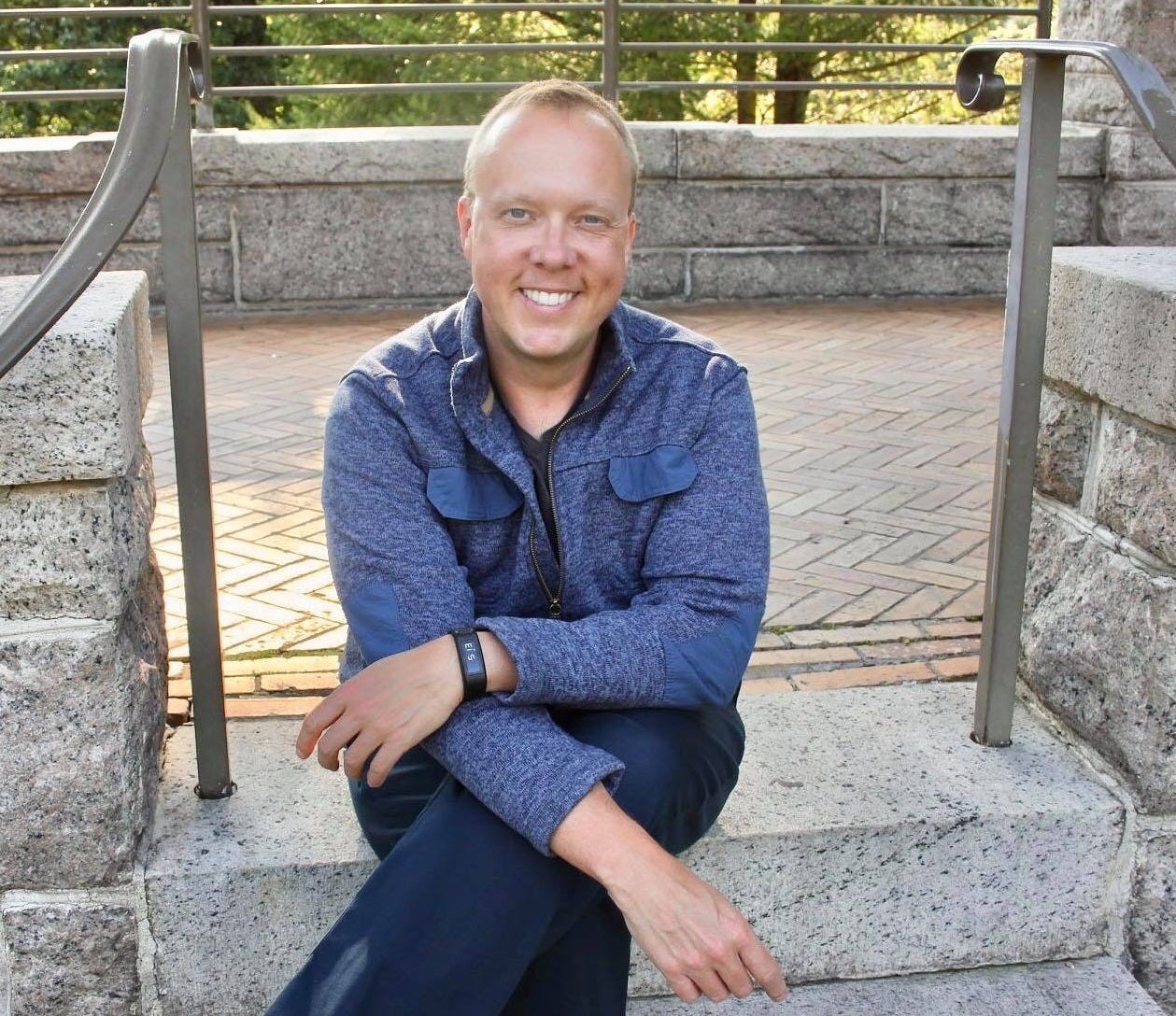
Jason Prokowiew received the PEN America/Jean Stein Grant for Literary Oral History, a Fulbright Scholar Award, and the Aurora Polaris Award from Trio House Press for his debut memoir War Boys, published July 1, 2026. His writing has appeared in Under the Sun, The North American Review, The Guardian, Salon, WBUR’s Cognoscenti, Roxane Gay’s The Audacity, and on WORLD Channel’s Stories from the Stage, where his piece “Sing” is the most watched in the show’s history. He’s received support from Bread Loaf, Tin House, Ragdale, and the Mass Cultural Council. He lives on a lake in Massachusetts with his husband Dave and their greyhound Champ.
—
How old are you, and for how long have you been writing?
I’m 49 and had my first personal essay called “I Appreciate You More Than You Will Ever Know,” about my big sister, published in my hometown paper when I was in third grade.
What’s the title of your latest book, and when was it published?
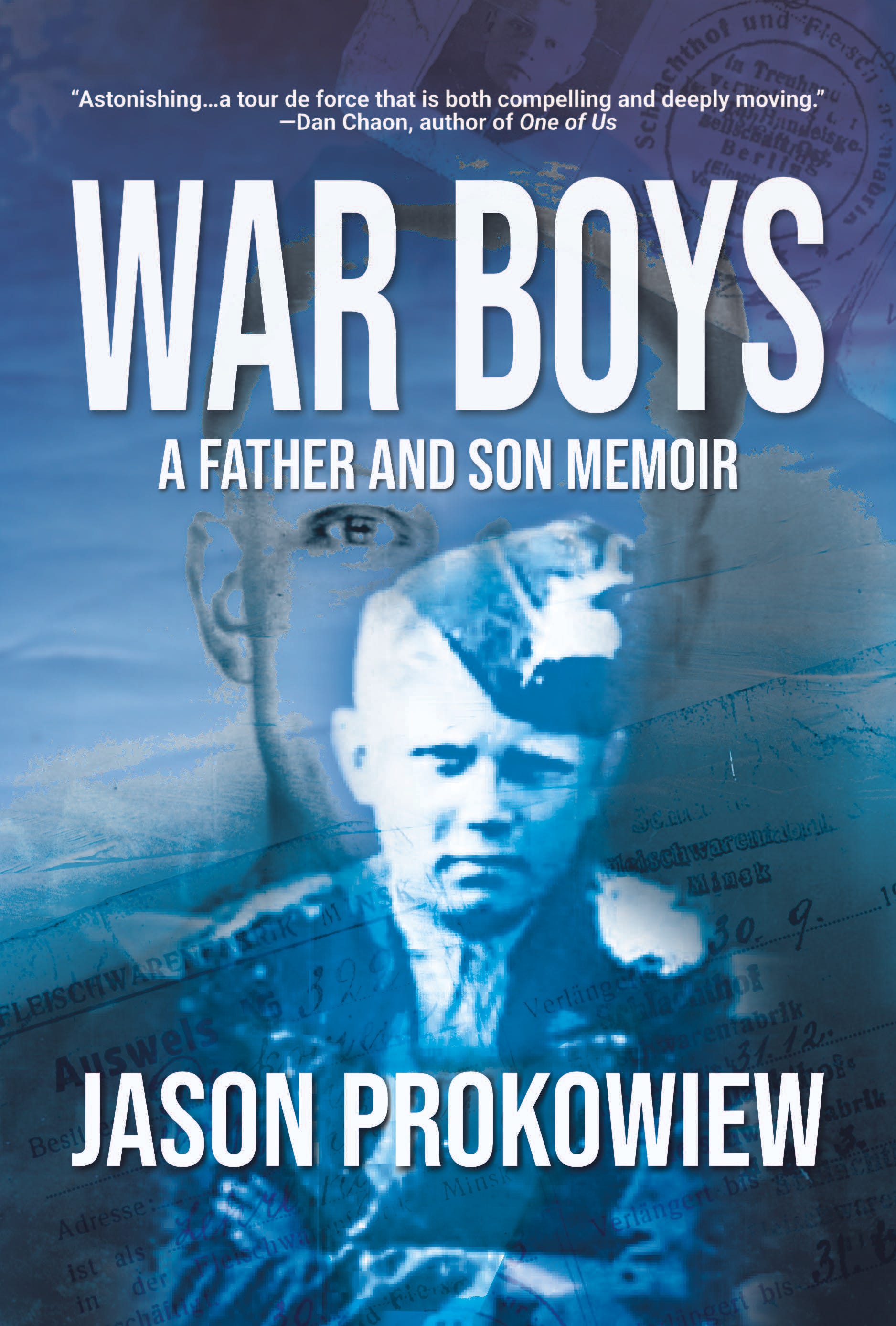
War Boys: A Father and Son Memoir, published by Trio House Press on July 1, 2026.
What number book is this for you?
This is my first!
In order to heal what was still hemorrhaging inside of me, I had to know my father’s stories. War Boys is about my Russian father’s adoption by the Nazis, who murdered his family at the start of World War II, and the trauma he carried into parenthood.
How do you categorize your book—as a memoir, memoir-in-essays, essay collection, creative nonfiction, graphic memoir, autofiction—and why?
I categorize it as a memoir, specifically a braided memoir because it tells my father’s wartime story, my story of being raised by a father traumatized by war, and the third strand of the braid is crafted from fifty hours of interviews I did with my dad from 1999 to 2001.
What is the “elevator pitch” for your book?
In order to heal what was still hemorrhaging inside of me, I had to know my father’s stories. War Boys is about my Russian father’s adoption by the Nazis, who murdered his family at the start of World War II, and the trauma he carried into parenthood.
What’s the back story of this book including your origin story as a writer? How did you become a writer, and how did this book come to be?
Like many child abuse/neglect survivors I know, reading and writing were early refuges for me. I especially loved true stories and remember the first biography I read was about Stevie Wonder, and I found it in third grade. Coincidentally, the first teacher who really encouraged my writing was my third-grade teacher, Marylou Thompson. She let me stay inside during many recesses to read or write or create plays with the other kids that didn’t want to go outside. Many of us would come out as Queer later in life.
As for War Boys, I heard bits and pieces of my father’s wild story as I grew up, but the idea for the book began from a college Russian politics course where the professor showed us a Russian film about the Nazi invasion of Belarus called Come and See. Scenes from the film sparked memories for me of my father’s stories, and I found myself drawn to my professor’s office to talk about the connections. He showed a curiosity about my dad’s life that made me think, “Maybe I should know more about my dad’s history.”
My college, Oberlin College, has a month-long winter term meant to encourage independent study, so that same professor sponsored me for the winter term to visit my dad and start recording his stories. Those tapes became the foundation of War Boys.
What were the hardest aspects of writing this book and getting it published?
The hardest parts of writing War Boys were finding its structure, and writing the Jason storyline. For the longest time I was trying to make the two storylines equal through an A/B structure. I was lucky to work with an editor in 2022, Mike Scalise, who pitched me the idea of using the interviews as the present moment of War Boys, which allowed me to let the dad and Jason storylines communicate, rather than be in competition with each other. Finding that structure was a huge relief.
It took me until 2021 to really begin adding the Jason storyline to War Boys, which was difficult because it meant identifying with and sharing my history as a survivor of child abuse and neglect. I really began writing that storyline during a year-long memoir program at GrubStreet in Boston, and was fortunate to be in community with a cohort that never made me feel less-than because of that history, which I think was what scared me most about sharing that history.
I heard bits and pieces of my father’s wild story as I grew up, but the idea for the book began from a college Russian politics course where the professor showed us a Russian film about the Nazi invasion of Belarus called Come and See. Scenes from the film sparked memories for me of my father’s stories, and I found myself drawn to my professor’s office to talk about the connections.
How did you handle writing about real people in your life? Did you use real or changed names and identifying details? Did you run passages or the whole book by people who appear in the narrative? Did you make changes they requested?
I changed most names throughout War Boys except for main characters, and I created some composite memories or left out the specific person’s name to protect some of my siblings who also endured abuse in our home. In some cases, I changed the specifics of an incident to provide anonymity. If there were specific incidences of abuse that happened to me, I named the perpetrator if my press was okay with it.
I didn’t show any passages to people who appear in the book. As for my father, he passed in 2002, and he gave me his blessing to tell his story before he passed. I doubt he’d like, though, some of the work I did in War Boys to show how his wartime trauma echoed into our home, in the form of abuse and neglect.
Who is another writer you took inspiration from in producing this book? Was it a specific book, or their whole body of work? (Can be more than one writer or book.)
Back to my work with Mike Scalise, he asked me early on in our work together to name a few books I thought War Boys was in conversation with, and I specifically named Jesmyn Ward’s Men We Reaped, Alex Marzano-Lesnevich’s The Fact of a Body, and James McBride’s The Color of Water. For all these books, Mike pointed out how they used some of the structural techniques Sven Birkerts discusses in The Art of Time in Memoir. Birkert’s book gave me the direction I needed to make the War Boys structure work, and I can see how the War Boys structure is similar to those in the books I mentioned to Mike.
What advice would you give to aspiring writers looking to publish a book like yours, who are maybe afraid, or intimidated by the process?
I and many memoirist friends have been told and felt the warning that “memoir doesn’t sell unless you’re famous;” yet, memoir is my favorite thing to read and write. Memoir has saved my life a number of times, so, if a writer is compelled to write memoir, I want to thank them, because they might also save some reader’s life. My advice would be to remember that you might be writing something that a reader needs to keep going in this life.
What do you love about writing?
I love all of it, really, from the beginning to the final draft.
I love that it’s work that I lose myself in. With any other work I’ve ever done in my life, I am conscious that I am working, and I am watching the clock, waiting for it to end.
What frustrates you about writing?
Probably the most frustrating thing in recent years has been not knowing what a piece is about, or thinking I do, in an early draft, and walking away from a critique session with my writing group after learning I was way off base about what a piece was about. It frustrates me only because it feels like I spent a lot of time on a draft that is not close to what I am trying to do, but I also love this part of the process.
What about writing surprises you?
In line with my answer above, I am surprised that the process itself uncovers what I am really trying to convey in a piece.
Does your writing practice involve any kind of routine, or writing at specific times?
Probably the most consistent part of my routine involves Mozart. I’ve had him in my headphones while I write since college.
My father passed in 2002, and he gave me his blessing to tell his story before he passed. I doubt he’d like, though, some of the work I did in War Boys to show how his wartime trauma echoed into our home, in the form of abuse and neglect.
Do you engage in any other creative pursuits, professionally or for fun? Are there non-writing activities you consider to be “writing” or supportive of your process?
I sing and dance all the time. Whenever there is a dancefloor, chances are I am in the middle of it or the first one to dance—my boogie is automatic. I was trained as an actor too so I use a lot of those skills in my PR work for War Boys. I was also a runner for more than 20 years, much more a walker now. I use either activity as time to work out in my head what I might do next in whatever writing I have in the works.
What’s next for you? Do you have another book planned, or in the works?
I’m finishing revisions on a Queer YA novel called Let Him Be that I imagine as the first in a series, and I am writing my second memoir Fat Boy Fat which explores what it’s been to live in a fat Queer body in America, and will also hopefully serve as a send-up of American diet culture.
A “braided memoir”. So much more intricately beautiful than the newly popular genre—“family estrangement” memoirs. You did the braiding. He couldn’t have done it. You did the work of telling the truth, his truth and yours. Not easy but very commendable.
I just ordered this book; looking forward to it.