


Since 2010, in various publications, I’ve interviewed authors—mostly memoirists—about aspects of writing and publishing. Initially I did this for my own edification, as someone who was struggling to find the courage and support to write and publish my memoir. I’m still curious about other authors’ experiences, and I know many of you are, too. So, inspired by the popularity of The Oldster Magazine Questionnaire, I’ve launched The Memoir Land Author Questionnaire.
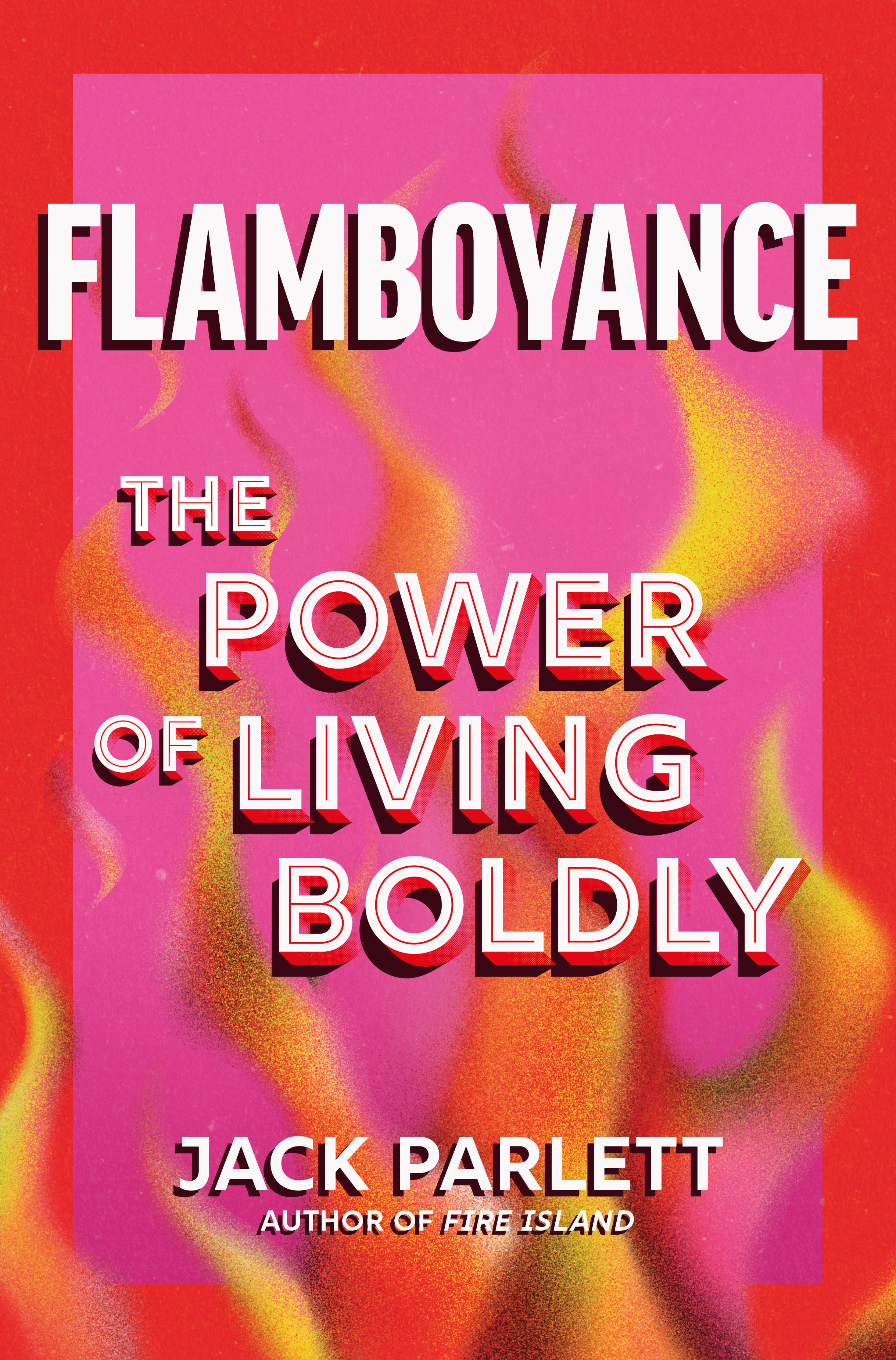
Here’s the 209th installment, featuring Jack Parlett, author most recently of Flamboyance: The Power of Living Boldly. - Sari Botton
P.S. Check out all the interviews in The Memoir Land Author Questionnaire series.
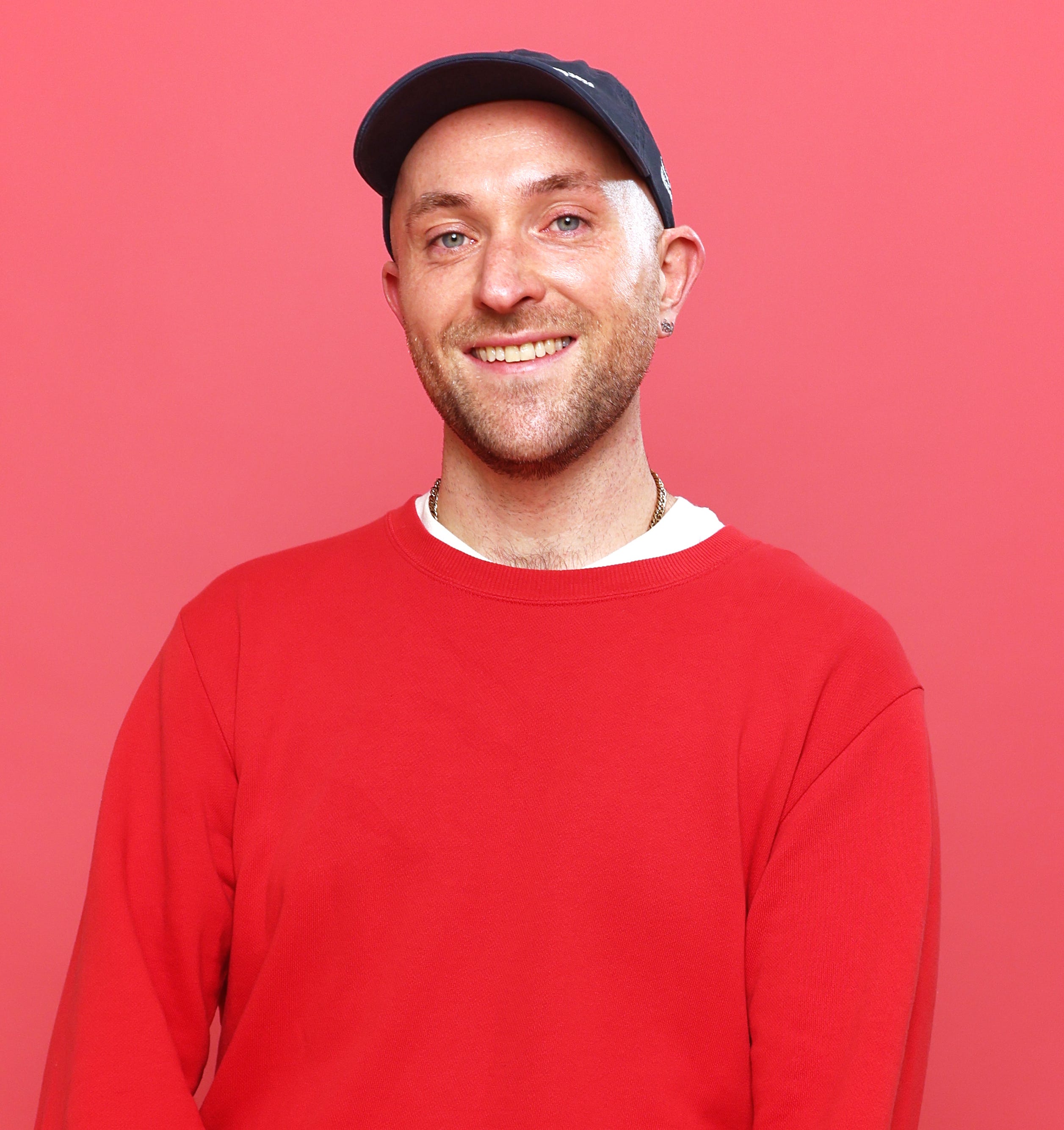
Jack Parlett is the author of The Poetics of Cruising: Queer Visual Culture from Whitman to Grindr, and Fire Island, which was named a New York Times Notable Book and one of the Best Books of the Year by the New Yorker. He has published a poetry pamphlet, Same Blue, Different You, and has writing has appeared in the New Yorker, Literary Hub, Document Journal, Boston Review, and elsewhere. He teaches English Literature at Cambridge University, and lives in London.
—
How old are you, and for how long have you been writing?
I recently turned 34. I’ve been writing things—poems, fragments of stories, reviews of my favourite songs or movies—for as long as I can remember, and for most of my life. I’ve been writing professionally for the last six or seven years, I’d say, as one of my multiple jobs.
What’s the title of your latest book, and when was it published?
My latest book is called Flamboyance: The Power of Living Boldly and it was published May 26th.
What number book is this for you?
This is my third non-fiction book.
Queerness and writing have always been closely linked. The realization that I could study and write about the parts of myself that I was only just coming to accept was a revelation, and it provided me with an important outlet.
How do you categorize your book—as a memoir, memoir-in-essays, essay collection, creative nonfiction, graphic memoir, autofiction—and why?
This project began life as a work of cultural criticism, with first-personal aspects, but in the writing process it became more of a memoir than I had perhaps anticipated. Now it sits somewhere between the two, so I find the capaciousness of creative nonfiction as a category helpful here.
What is the “elevator pitch” for your book?
Flamboyance is a concept we have yet to fully understand. While it has numerous positive associations—stylishness, vibrancy, confidence—the word ‘flamboyant’ has often been used as a pejorative term, too, a euphemism for ‘gay’ or ‘queer’ or, simply, ‘too much.’ By reconnecting with the word’s fiery origins (it travelled from French in to English in the nineteenth century, translated as ‘flaming’), and looking at the rich history of flamboyant figures throughout culture, new and surprising meanings emerge, beyond the term’s historic associations with camp.
Flamboyance, I argue, is a form of creativity, an act of protest, and an expression of our deepest passions. It is an inner flame that we all possess, and one that can help us to live more boldly, particularly during challenging times.
What’s the back story of this book including your origin story as a writer? How did you become a writer, and how did this book come to be?
When I finished writing this book and looked back across the manuscript, it became clear to me that this project was closely intertwined with my origins as a writer. While it is a discrete history of a particular concept, Flamboyance is also a map of the artists, singers, books and movies that I had been drawn for the last fifteen years, ever since I went to university and, over time, came out of my shell and came out of the closet.
Queerness and writing have always been closely linked. The realization that I could study and write about the parts of myself that I was only just coming to accept was a revelation, and it provided me with an important outlet.
My undergraduate dissertation was on flamboyance in the work of Frank O’Hara, my favorite poet, and the idea for this book has been within me since then. I continued studying and went on to do a PhD in literature, with a focus on queer culture. I had always wanted to be a writer and what I liked about academia, along with research and teaching, was the opportunity to write. I knew that I wanted to bring a more personal angle to my postdoctoral project, on the queer history of Fire Island, and so I decided to approach it as a trade non-fiction book. When it came to figuring out my next book, I knew that I wanted to return to flamboyance. It was the subject that had stoked my desire to write and research in the first place.
What were the hardest aspects of writing this book and getting it published?
This project presented two main challenges, one I had foreseen and another that took me by surprise. The challenge I had foreseen was the question of how to pitch it. As a book about a single concept, there are any number of shapes it could take, and I had to try out a few different approaches, some more historical and others more essayistic, before figuring out what suited the material best.
The second challenge was actually writing my personal perspective into the book. I had enjoyed doing that so much with Fire Island, where I discussed how my experience of the island spoke to issues around body image and community, and found it liberating. This time I found it more of a challenge, perhaps because in writing about my own relationship to flamboyance, I was also touching upon experiences and feelings that I hadn’t yet processed. Flamboyance is a joyful book and a book about joy, but it is also about shame. Facing the legacies of shame in my own life and experienced proved quite challenging, but ultimately healing too.
My undergraduate dissertation was on flamboyance in the work of Frank O’Hara, my favorite poet, and the idea for this book has been within me since then. I continued studying and went on to do a PhD in literature, with a focus on queer culture.
How did you handle writing about real people in your life? Did you use real or changed names and identifying details? Did you run passages or the whole book by people who appear in the narrative? Did you make changes they requested?
Most of the references in the book to real people in my life are quite brief and anecdotal. For the instances that are a little more detailed or involved, I sent the person the passage and asked them for their thoughts or any changes they might like to make before approving. There were no changes needed in the end.
Who is another writer you took inspiration from in producing this book? Was it a specific book, or their whole body of work? (Can be more than one writer or book.)
There are multiple non-fiction authors I return to often, with admiration for the way that they blend non-fiction, history, criticism and memoir: Margo Jefferson, Maggie Nelson, Jenny Odell, Olivia Laing.
What advice would you give to aspiring writers looking to publish a book like yours, who are maybe afraid, or intimidated by the process?
The process can be intimidating, and I still find this to be true several years into my writing career, but that fear is part of the process. The simple and obvious advice I would give to any writer (and commonly need to give to myself) is just to start writing. For me, so much of the thinking happens in the writing itself, and writing up material or thoughts that don’t ultimately make it into the final manuscript is never a waste of time, in my book.
It makes for an opening, a way in. Once you are in, you can start taking risks and trying out different things, seeing what works, without trying to problem-solve in the abstract. Planning can be an important tool, but it can also leave you a bit stuck in the architecture of the thing.
What do you love about writing?
Writing has always been how I make sense out of things, and how I process my experience of the world. This is not to say that it’s always a process of elucidation. Sometimes writing can muddy the waters and allow you to see the complexity of an issue or a situation without necessarily resolving it, which is important too and another thing I love about it and am drawn to, both as a writer and a reader.
What frustrates you about writing?
Writing is a process full of doubt and uncertainty. This can be simultaneously frustrating and energizing. I am frustrated on the days when I feel I have run out of things to say, or that I can’t find the right turn of phrase. Quite often those difficult writing days turn out to have been valuable, if only for exposing a snag in the process that requires working through. This part of the process may be laborious or frustrating, but usually it will lead you somewhere.
What about writing surprises you?
I am continually surprised (and sometimes thrilled) by the seemingly incongruous links, connections and echoes that make themselves known in the process of writing. Images, motifs, particular phrases, ideas, objects, quotation that simply won’t go away. It feels like there is something at stake in their recurrence, that they are trying to tell me something, an unconscious desire or fixation that needs addressing.
Does your writing practice involve any kind of routine, or writing at specific times?
I write best in the mornings, and I try to begin writing before I do anything else (admin or answering emails.) I wake early, make a coffee, and get going. I have several day jobs and try to fit writing in around these, which is why the early hours are often really valuable. I am not a fan of afternoons in general and often experience a slump around then. I have learnt to abandon writing tasks between the hours of 2pm and 5pm. I find early evening can be a good time to pick up threads you may have started on earlier in the day.
In writing about my own relationship to flamboyance, I was also touching upon experiences and feelings that I hadn’t yet processed. Flamboyance is a joyful book and a book about joy, but it is also about shame. Facing the legacies of shame in my own life and experienced proved quite challenging, but ultimately healing too.
Do you engage in any other creative pursuits, professionally or for fun? Are there non-writing activities you consider to be “writing” or supportive of your process?
I would say writing is my main creative pursuit, but reading is equally important to me. Quite simply there is no writing without reading. I write best when I make time in my day or my week to read, although this is not always easy to do.
What’s next for you? Do you have another book planned, or in the works?
I have several projects planned, and I am still in the process of deciding which comes next. Both are on slightly unfamiliar terrain: one of them is fiction, which feels new for me, even though the subject matter is autobiographical. The other is non-fiction but a very different narrative mode from what I’ve written before. I’m feeling excited about both at the moment, and only time will tell which comes first.
I started a comment then lost it somehow. Good luck to you, Jack. Your ideas are so good. I appreciated learning about the origin of the word "flamboyance" and I am afraid I am going to have to order the book right away. I love the idea of embracing your passions and creativity and living boldly. I used to live so much in fear; it was truly crippling. And I loved what you said about writing here: "I am continually surprised (and sometimes thrilled) by the seemingly incongruous links, connections and echoes that make themselves known in the process of writing. Images, motifs, particular phrases, ideas, objects, quotation that simply won’t go away. It feels like there is something at stake in their recurrence, that they are trying to tell me something, an unconscious desire or fixation that needs addressing."
Only in my case, many times it is the reader who points it out to me. For example, I was writing about how when I was a young adult and depressed, I would skip my college classes and go watch the planes take off from the airport. In my writing I'd said that my father, a pilot, had always been distant and uncommunicative but it took someone reading to point out that it had something to do with my watching the planes... Ordering your book now! Thank you!
Terrific mini writing workshop that felt designed for me specifically. Looking forward to reading Flamboyance!