


Since 2010, in various publications, I’ve interviewed authors—mostly memoirists—about aspects of writing and publishing. Initially I did this for my own edification, as someone who was struggling to find the courage and support to write and publish my memoir. I’m still curious about other authors’ experiences, and I know many of you are, too. So, inspired by the popularity of The Oldster Magazine Questionnaire, I’ve launched The Memoir Land Author Questionnaire.
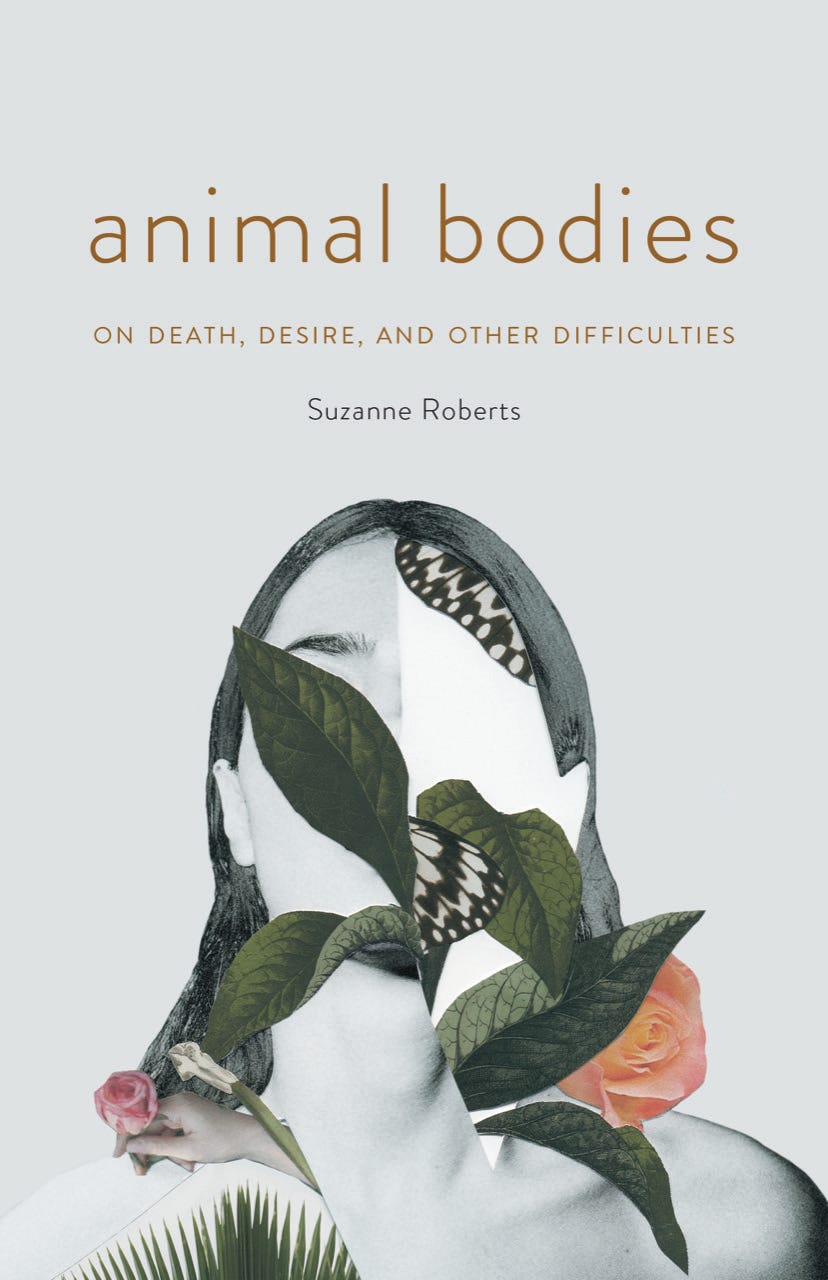
Here’s the 221st installment, featuring Suzanne Roberts, author most recently of the memoir Animal Bodies: On Death, Desire, and Other Difficulties. - Sari Botton
P.S. Check out all the interviews in The Memoir Land Author Questionnaire series.
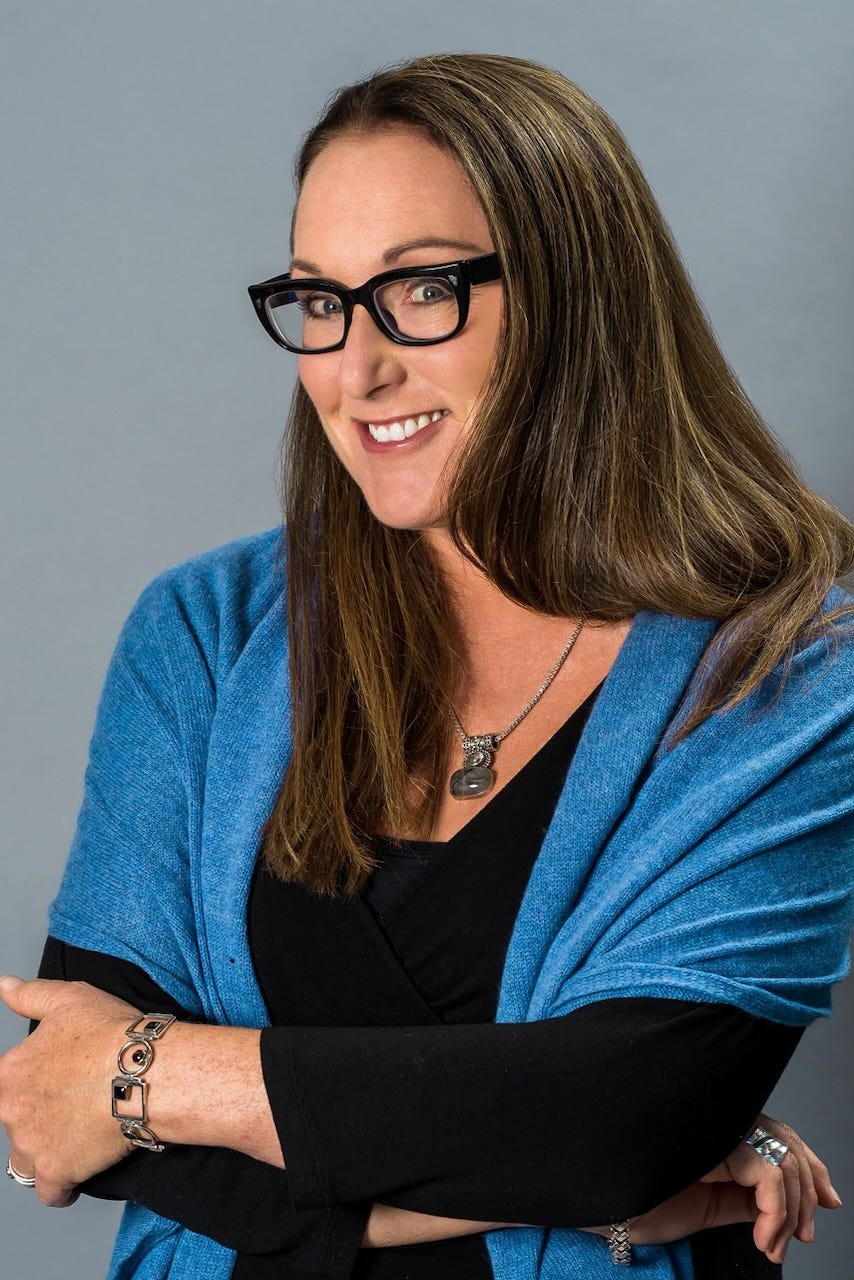
Suzanne Roberts is the author of Animal Bodies: On Death, Desire, and Other Difficulties (Longlisted for the PEN/Diamonstein-Spielvogel Award for the Art of the Essay), Bad Tourist: Misadventures in Love and Travel (North American Travel Journalists Association Bronze Award for a Travel Book), and Almost Somewhere: Twenty-Eight Days on the John Muir Trail (Winner of the National Outdoor Book Award), four full-length collections of poetry, and a creative writing craft book, 52 Writing Prompts: Inspiration for the Creative Writer. Named “The Next Great Travel Writer” by National Geographic’s Traveler, Suzanne’s work has been listed as notable in Best American Essays and included in The Best Women’s Travel Writing. Her work has appeared in The New York Times, Ploughshares, CNN, National Geographic, Creative Nonfiction, Brevity, The Fourth Genre, and elsewhere. She holds a doctorate in literature and the environment from the University of Nevada-Reno, teaches in the low residency MFA in creative writing at UNR-Tahoe, and lives in South Lake Tahoe, California. More information may be found on her website.
--
How old are you, and for how long have you been writing?
I’m 55, and I have been writing since I was three-years old.
What’s the title of your latest book, and when was it published?
Animal Bodies: On Death, Desire, and Other Difficulties was published in 2022.
What number book is this for you?
It’s book 7.
Animal Bodies explores the link between death and desire and what it means to accept our own animal natures, the parts we most often hide, deny, or consider only with shame—our taboo desires and our grief.
How do you categorize your book—as a memoir, memoir-in-essays, essay collection, creative nonfiction, graphic memoir, autofiction—and why?
It’s a memoir in lyrical essays.
What is the “elevator pitch” for your book?
“How do we reckon with our losses? Animal Bodies explores the link between death and desire and what it means to accept our own animal natures, the parts we most often hide, deny, or consider only with shame—our taboo desires and our grief. In landscapes as diverse as Salamanca’s cobbled streets, the Mekong River’s floating markets, Fire Island’s windswept beaches, Nashville’s honky-tonks, and the Sierra Nevada’s snowy slopes, Roberts interrogates her memory and tries to make sense of her own private losses (deaths of people and relationships), as well as more public losses, including a mass shooting in her hometown and environmental devastation in both the Amazon rainforest and the American west. With lyricism, insight, honesty, and dark humor, these essays illuminate the sometimes terrible beauty of what it means to be human, deepening the conversation on death and grief, sexuality, and the shame that comes from surviving the world in a female body.”
What’s the back story of this book including your origin story as a writer? How did you become a writer, and how did this book come to be?
I have been writing before I could write. When I was about 3 years old, I could not yet write stories myself, but I told them to my mother, who wrote them down for me. I made the (very messy) illustrations. My mother then stapled these little books together, and I still have some of them. I was always drawn to storytelling, and my first real win from the universe was winning a writing competition in the fourth grade.
Neither of my parents graduated from college; in fact, my mother didn’t even graduate from high school, so I never went on college tours, and I had to figure out the application process myself. My father was a self-taught writer, so I didn’t consider studying English or creative writing in college; I just figured that was something one could do on her own, so I chose Biology and because I have a math-based learning disability (dyscalculia), I struggled through the math, physics, and chemistry courses. By the time I graduated, I realized plenty of people were studying English and creative writing, so I applied for a few MFA programs. I wasn’t accepted into a single one, so I ended up in an English MA program (with an emphasis in creative writing) and eventually earned a PhD in literature and the environment. I couldn’t get into a single MFA program as a student, but now I teach in multiple MFA programs—it’s important to remember that rejection doesn’t mean “never.” Rejection only means “not right now.”
My publishing journey began with poetry. This was my way to obfuscate. The contract with the reader in poetry is such that a poem may or may not be about the author’s life, whereas the contract for memoir is that the events really happened to the author, and I wasn’t ready for that. After four books of poems (that really were memoir-in-verse), I was finally ready to write my first memoir, which is still in a computer folder somewhere. My second memoir, Almost Somewhere: Twenty-Eight Days on the John Muir Trail, was published in 2010.
My newest memoir Animal Bodies is a collection of lyrical essays about death and desire. At first, I thought the book was solely about grief; it was titled The Grief Scale and divided into the Kübler-Ross five stages of grief—ironically, because as anyone who has suffered loss knows, grief doesn’t happen in tidy, ordered stages. Then I read Elizabeth McCracken’s grief memoir An Exact Replica of a Figment of my Imagination, which was divided that way.
This is why we must read widely and deeply: we think we’re doing something clever and new, but if we read widely enough, we might find out someone else has already done what we’re doing (and maybe even better than we have done it ourselves). So I took a hard look at my manuscript, and I realized it’s about both grief and desire and the way those two emotions are in relationship to one another. Desire is wanting something you have not yet had, whereas grief is the longing for what once was. And both desire and grief are manifestations of our animal natures, our animal bodies, which is where my title came from.
What were the hardest aspects of writing this book and getting it published?
This book required me to go back and mine some really difficult experiences, and I realized it was easier to do if I focused on craft and form. One of the essays is about losing an important friendship due to politics, and I used a hermit crab form. Another essay is about sexual assault, and I used the second person (you) point of view. Still another essay is about losing a dear friend to cancer, and I organized it by different kinds of birds, creating a collage. While it’s true that time creates the needed perspective to write about trauma, I’ve found that focusing on craft and form shortcuts the distance needed to write about traumatic experiences, but also, using more poetic and fragmented forms feels like a truer mirror when writing about grief, shame, confusion, or pain.
Because my two other memoirs had sold well, the University of Nebraska Press bought this book on proposal (even though the book was already completed), so the publishing process was straightforward and easy, as opposed to the 100+ agents I queried when trying to publish Almost Somewhere.
I love the way writing connects me to both myself and the world. I love that when terrible things happen, I can find meaning through writing. Awful things happen to everyone, but the writer transforms a difficult experience into a story, a work of art, an offering to the universe.
How did you handle writing about real people in your life? Did you use real or changed names and identifying details? Did you run passages or the whole book by people who appear in the narrative? Did you make changes they requested?
It took me publishing three memoirs and some of my family disowning me to learn that changing names and/or running pages by loved ones are musts. In this book, the names of my husband and most of my friends have not been changed, but in every instance, I ran the pages by everyone involved and made any requested changes or deletions. When writing about people who are no longer in my life or I am no longer close to, I just changed their names. If people are no longer in your life, you do not owe them anything beyond telling the truth—but change their names!
Who is another writer you took inspiration from in producing this book? Was it a specific book, or their whole body of work? (Can be more than one writer or book.)
As I was revising Animal Bodies, I read Sinéad Gleeson’s Constellations: Reflections from Life, which is a wonderful collection of essays. She writes about difficult topics such as illness and disability without a hint of self-pity. I think that’s really hard to do, and I looked to that book as a model. And of course, I’m grateful to other essayist and poets who paved the way for this kind of book: Virginia Woolf, James Baldwin, Joan Didion, Audre Lorde, Anne Carson, Pico Iyer, Jo Ann Beard, Roxane Gay, Camille Dungy, Maggie Nelson, Eula Biss, Rebecca Solnit, Leslie Jamison, and so many others.
What advice would you give to aspiring writers looking to publish a book like yours, who are maybe afraid, or intimidated by the process?
It’s really important to remember there’s always a third way. I see so many writers going the self-publishing/hybrid publishing route because they can’t get an agent. Certainly for some, self-publishing/hybrid publishing makes sense. But it’s also important to remember that there are a lot of traditional independent presses, including university presses, that are publishing essays and memoir. Certainly, these presses take solicited manuscripts, but most of them don’t require an agent. I also think it’s important to remember that the big accomplishment is finishing the book—that’s what’s important. Putting too much pressure on publishing can ruin the writing.
What do you love about writing?
I love the way writing connects me to both myself and the world. I love that when terrible things happen, I can find meaning through writing. Awful things happen to everyone, but the writer transforms a difficult experience into a story, a work of art, an offering to the universe.
What frustrates you about writing?
All the sitting still. I love to hike, ski, bike, and paddleboard, and the sedentary nature of writing makes it really hard for me, both emotionally and physically.
What about writing surprises you?
Everything! I’m often asked how I know when to stop revising, and I know a piece is finished when it takes a turn or says something I wasn’t intending to say, but that surprising, necessary thing is exactly what needed to be said all along, even if I didn’t see it coming. And then, of course, I edit until I’m putting commas in and taking them out.
Does your writing practice involve any kind of routine, or writing at specific times?
I’m a binge writer, meaning I need long stretches, which I call “going down the rabbit hole.” For this reason, I do a lot of writing retreats, many of them are the DIY kind, where a friend and I get together to write or I go someplace and hole up by myself. All my books have been finished this way.
It took me publishing three memoirs and some of my family disowning me to learn that changing names and/or running pages by loved ones are musts. In this book, the names of my husband and most of my friends have not been changed, but in every instance, I ran the pages by everyone involved and made any requested changes or deletions.
Do you engage in any other creative pursuits, professionally or for fun? Are there non-writing activities you consider to be “writing” or supportive of your process?
Walking and skiing are part of my writing process. If I’m having trouble or feeling stuck, I go out into the forest, and the answer usually comes to me. I also love being a beginner at things, like drawing or body boarding. Being a beginner is an important reminder that you don’t have to be good at something to do it and to love it.
What’s next for you? Do you have another book planned, or in the works?
I’m working on a historical novel. It spans two continents, almost a century, and is told in four different points of view, and because I’m taking such a complicated approach to my first novel, I feel like I’m trying to build the Taj Mahal when I’ve never even built a dog house. But if this novel ends up in the drawer, in the way my very first memoir did, that’s okay. Sometimes you need to write a memoir (or a novel) to learn how to write one. It’s the process that’s most important to me.
You're Interesting!
I am a ture believer of laughing at oneself. Learn the lesson but move on and try again. Life is too short