


The last place my wife and I lived in New York City was on the corner of Delancey and Allen Streets. We had a tiny one-bedroom apartment whose entire north-facing wall was made up of six massive windows looking uptown, where we had a view of the distant Empire State Building. It was the first place we ever shared by ourselves. We lived there for two years, from 2013 to 2015.
And almost weekly, we told ourselves that we needed to check out the Tenement Museum. It’s a series of apartment buildings that have been preserved and restored to show the modern person what it looked and felt like to live on the Lower East Side 🙏🙏during America’s great immigration boom through the stories of a dozen or so families: Russian Jews from the turn of the century, Depression-era Italians, the Chinese and Puerto Rican families who helped the neighborhood evolve through the 1960s and 70s.
Memoir Land runs on paid subscriptions…
We said we needed to check it out because part of it was in the same building as our little one bedroom. And yet, over those final two years in New York, we never did.
Why?
Who knows. Probably because we were young—still in our late twenties and early thirties—and far too busy living the lives of young people in one of the world’s great cities, grinding away at work, at life, and building the foundations for the relationship that would become our marriage. It’s the same excuse we have for missing out on too many shows at the Whitney, MoMA, Guggenheim, and another dozen or so galleries in Lower Manhattan and Brooklyn; the same excuse we have for missing out on so many great shows on, and off, and off-off Broadway.
Every time we’ve come back to New York City—which, since we moved to Chapel Hill eleven years ago, has been at least four or five times a year (minus the Covid years)—we’ve told ourselves that we were finally going to visit the Tenement Museum. Of course, we didn’t.
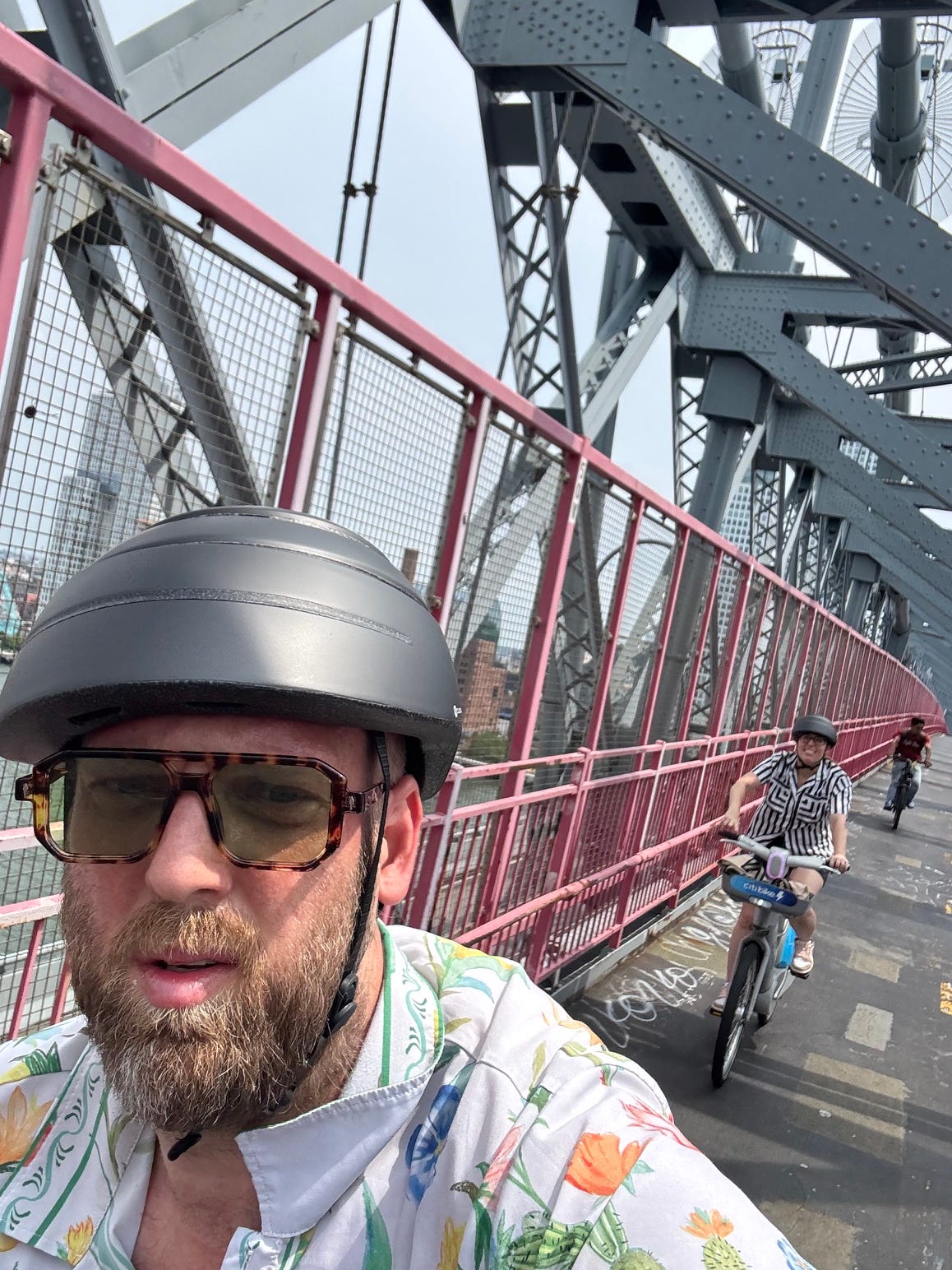
Until earlier this summer, when, after dropping both our kids off at the Midtown daycamp they were in for the week, we straddled two CitiBikes and rode a circuitous route to the Lower East Side, to peek at our old place, and to finally, at long last, visit the Tenement Museum.
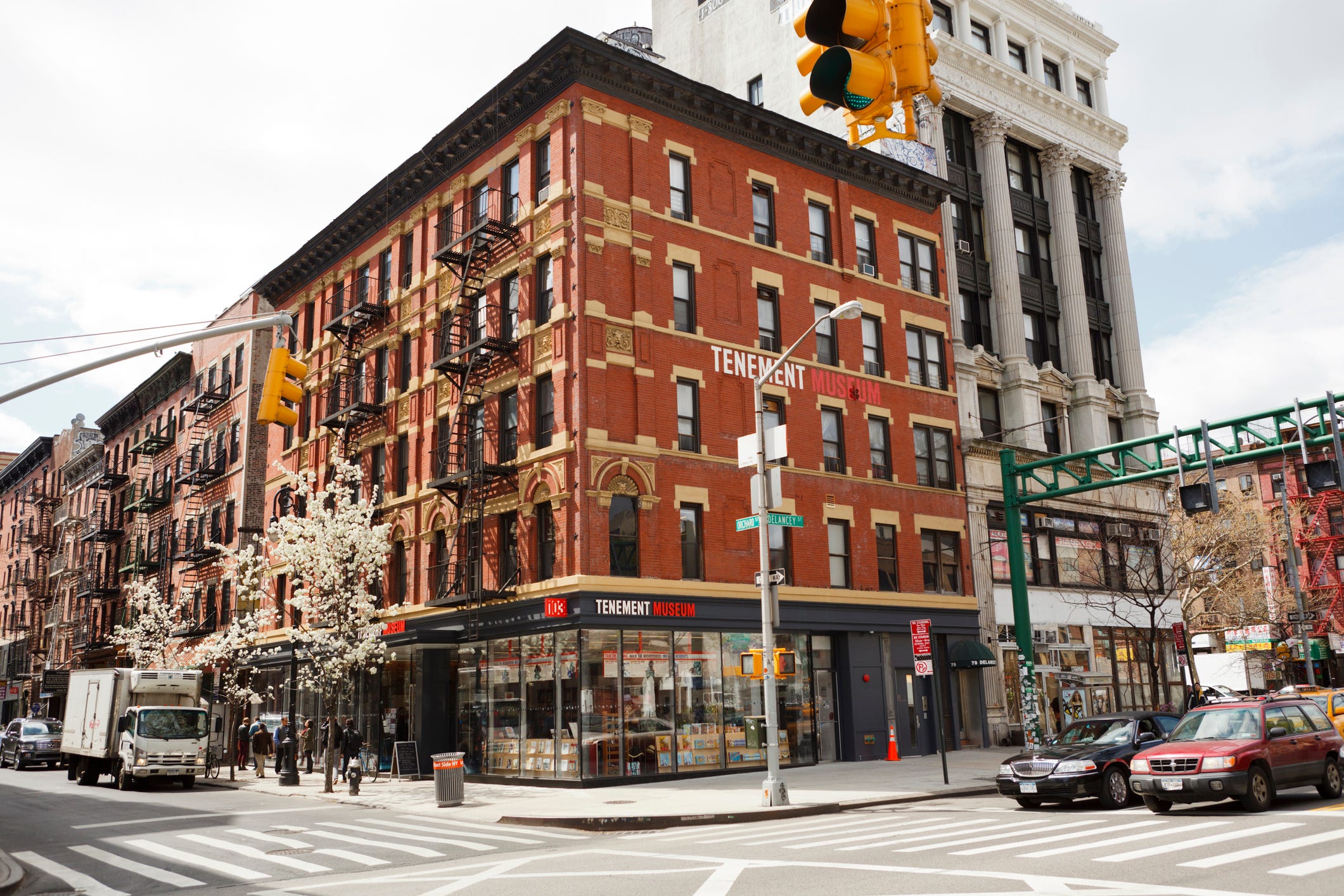
It was amazing, revelatory, and a place I can’t recommend highly enough. And though my own forebears never lived on the Lower East Side, they settled not far away, in Jersey City on my mother’s side and just outside of Queens on my father’s, which is probably why I was almost brought to tears when audio of an older Italian woman played, describing her life there; that voice that could have been my mother’s, my grandmothers’, or any of my beloved aunts’. It was a place that touched me in a way I haven’t been touched in a long time.
But this isn’t an essay about the Tenement Museum. It’s an essay about change and how much easier it is to notice when you’re away from something than when that thing is changing right beneath your feet.
***
We’d been gone from our home in Chapel Hill most of the summer. We spent a few weeks in Minneapolis and a few in Asheville, North Carolina. Meanwhile, I snuck away for a few days for a work trip to the Dolomites. But, as we do every summer, we spent one of our final school-free weeks in New York City. For the first time since becoming parents, this trip had a bit of a different tenor. Because, for the first time since becoming parents, both of our kids were occupied with camp for most of the day, allowing Emily and me a bit more freedom, latitude to explore, to see old friends, to retrace old steps, to relieve old lives.
The truth is New York is always perfect for someone. These days, that someone isn’t me. Or maybe it is. Maybe it’s perfect for the 43-year-old version of me. The 23-year-old me, however, is long gone, not unlike the Greenpoint and Williamsburg of my young manhood.
Before arriving at the Tenement Museum, we took a nostalgic bike ride, visiting every apartment we shared as a couple. From our kids’ camp in Midtown, we rode down Broadway, to Kenmare which becomes Delancey, over the Williamsburg Bridge, headed first to Franklin and Freeman Streets, at the northern tip of Greenpoint, Brooklyn.
It was my third apartment in Brooklyn, in the mid-aughts, a time when Greenpoint and Williamsburg were still a little bit wild. Back when you could find a place with a few other guys, each of you paying a few hundred bucks a month, all of you making art or music or film or poetry or pottery or all of those things. Being that far north in Greenpoint, you often felt removed from the City, even though its riverside promenade offers one of the best views of Manhattan you’ll ever see. It was a neighborhood my wife—ever the Manhattanite until she met me—barely new existed in her pre-Mike years.
Riverside promenade. That’s funny. Because two decades ago, you couldn’t really get close to the river in much of Greenpoint. It was blocked off with massive construction barriers mostly. There was one little park, though, where I used to play basketball, where Emily and I once found a dead body, where you could catch sight of the giants of Midtown, rising high above the East River.
We were shocked, though not unsurprised, to find the neighborhood full of luxury high rises, freshly paved and painted bike lanes, and yes, a riverside promenade full of benches, green space, and fully unobstructed views of Manhattan.
After that, we rode down to Guernsey Street, where Greenpoint meets Williamsburg, where Emily took over the fourth-bedroom lease of a roommate of mine who moved out suddenly. But really, she was moving in with me. That’s how it works in New York, where critical moments in a relationship are often decided in real estate terms. Her lease was ending. I had four months left on mine and a sublet to offer. And so, we moved in together. But, with my two other roommates, we were hardly alone.
Then, when that lease ran out, we found the first place that would be ours and ours alone: the tiny one bedroom above Delancey.
Thanks to Emily making a lot more money than me—she, a television exec, me, a denizen of the independent music world—I was, for the first time, able to move into “the City.”
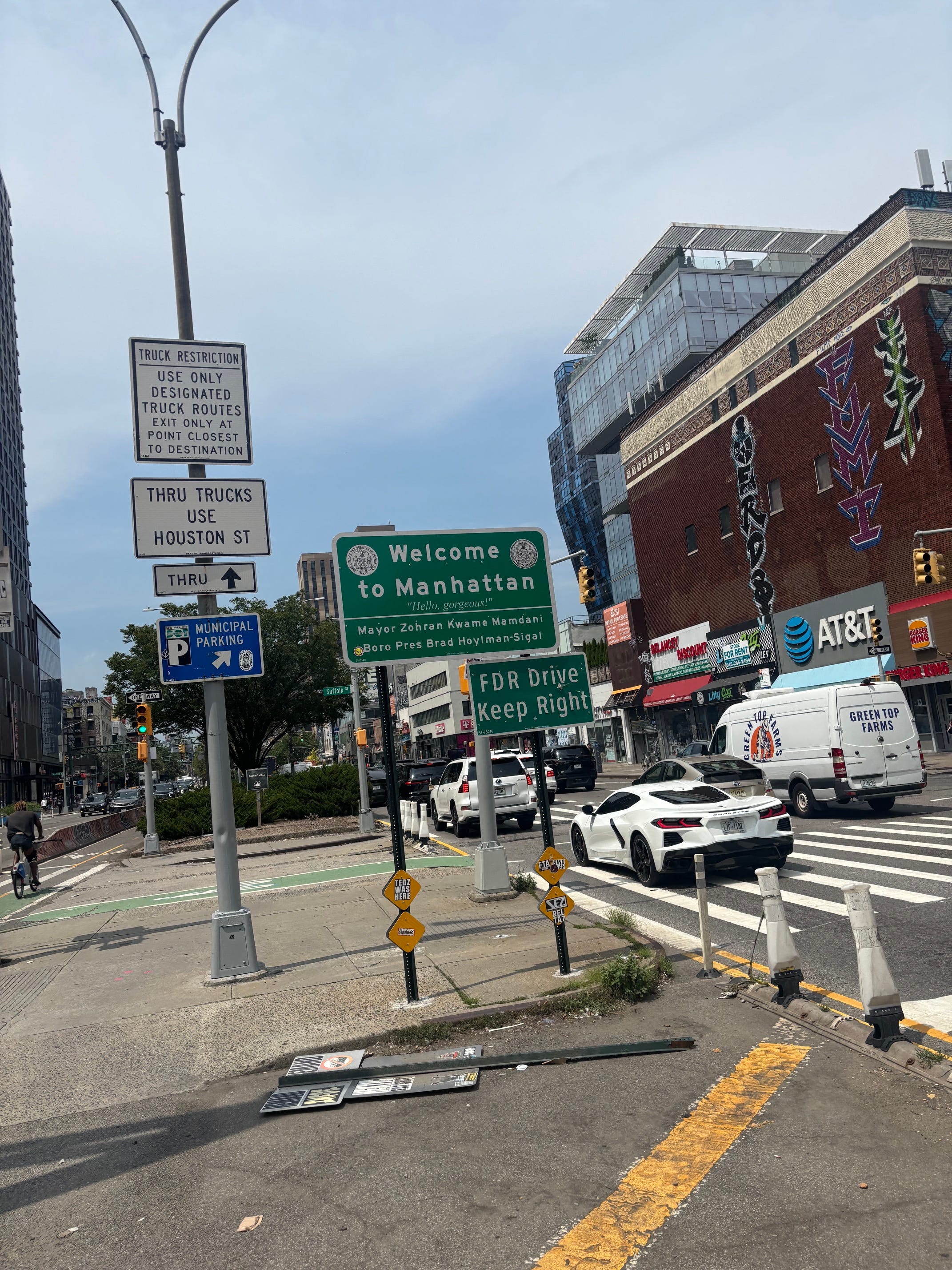
And so, headed back to the L.E.S., we rode through the heart of Williamsburg, down Kent, which was once the main artery of my rock-and-roll life. We’ve been through the neighborhood plenty of times since we left New York, so seeing the modern luxury that was once reserved for Tribeca, the giant J Crew that used to be a DIY space, the high-end coffee shop that was once a rough-and-tumble recording studio held together by duct tape and dreams, the BMWs and Mercedes SUVs parked in front of the ramshackle venues we played a thousand times, was hardly new. Still, it will never not shock me to see these places that used be my places, our places; to see these people who, a few short years ago, wouldn’t have been caught dead in Brooklyn, walking out of their local Trader Joe’s, their favorite Pilates studio.
***
I know what I sound like: early-40s man who pisses and moans about how much better Brooklyn used to be. But the reality is that twenty years ago, some guy who grew up in Brooklyn was pissing and moaning about me, a transplant from Jersey taking advantage of the cheap rent in an old warehouse district in order to live in a place surrounded by the likeminded; in a place where creating something was the standard.
The truth is New York is always perfect for someone. These days, that someone isn’t me. Or maybe it is. Maybe it’s perfect for the 43-year-old version of me. The 23-year-old me, however, is long gone, not unlike the Greenpoint and Williamsburg of my young manhood.
Of all of the neighborhoods we lived in as a couple, it is perhaps the Lower East Side that has changed the least. Don’t get me wrong, it’s changed. Like virtually every other neighborhood in Manhattan and the western edge of Brooklyn, it’s undergone an unprecedented sea change over the last two decades. But, unlike Williamsburg and, to a lesser extent, Greenpoint, the L.E.S. still looks a lot like the L.E.S. of twenty years ago, still feels a lot like the L.E.S. Emily and I called home those final two years. The stark white-and-red façade of Fabco Shoes still lords over Delancey. Dead ducks slathered in delicious red sauce still hang by the neck in shop windows. The nearest J Crew is across the Bowery.
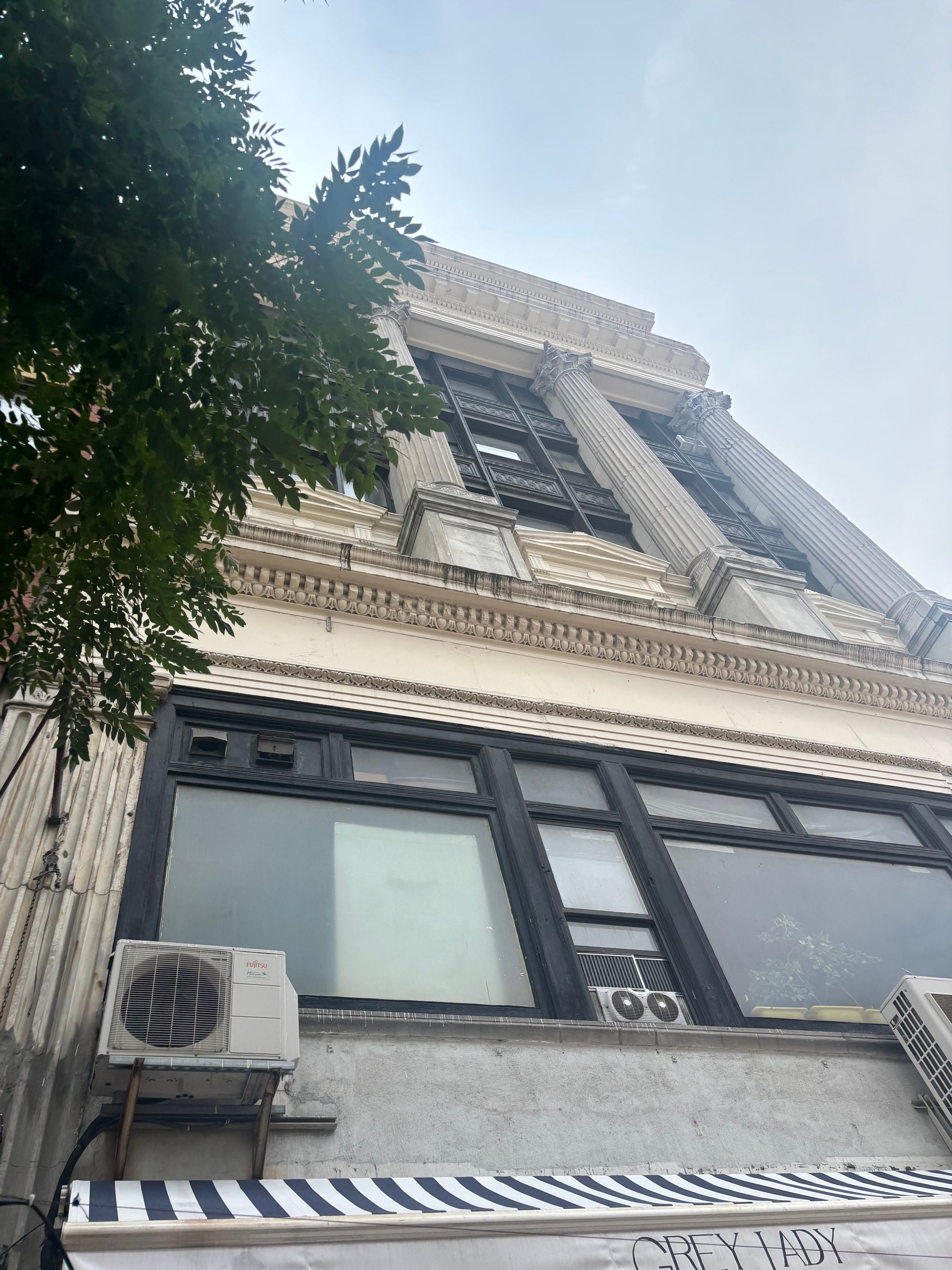
As Emily and I neared the front door of our old building, we recalled the DaVinci Code-like process of getting into our apartment. We lived in apartment 4A but you had to buzz 3C for some reason. Then, because our elevator didn’t stop on our fourth floor on the way up, you had to take it to up five, then press four and go down one floor.
Like everything else in our New York, it was all sorts of fucked up. Like everything else in our New York, it was perfect.
Today, the old metal slat and tiny buttons used to call up to the building’s apartments have been replaced by a fancy touchscreen. Peeking in the window of the front door, however, we noticed the foyer hasn’t changed. It’s still the same brown-tiled hallway were we once had to step over a pile of human shit on our way to work. Standing in front of the door, I wondered if the view from our apartment was still the same or whether any of the city’s million new high rises now stood between it and the Empire State Building.
After we peeked in the front door, after reminiscing about the process to get in to our home and the pile of shit that made us think we might be getting too old for this, we made our way two doors down, back to the Tenement Museum’s storefront where, almost a decade and a half after moving next door, we finally bought tickets to check it out.
There, we learned about a pair of families—the Russian Jewish Rogarshevskys and the Italian Baldizzis—who made their lives in these buildings, where, in tiny, 300-square-foot apartments with communal hallway bathrooms, as many as ten people lived. None of them had any idea that their humble home would someday become one of New York City’s most impactful museums.
As we left the museum and rushed back toward the F train to take us uptown, back to our babies, I looked around at the Lower East Side and I thought of Greenpoint and Williamsburg, wondering if anything could have possibly changed as fast back then as it does now. I wondered when was the last point in history the Rogarshevskys or the Baldazzis might have recognized their family neighborhood. I wondered, if I continued to stay away, how much longer I would recognize these places.
The only constant is change, right? In no place is that more evident than New York City. Stick around and you might not recognize it. Leave for a year and you’ll notice a difference. Leave for a decade and you’ll have a hard time convincing yourself these were once your stomping grounds, that you were ever here at all.
Living in the SAME BUILDING as part of the Tenement Museum for two years and repeatedly saying, “We really should go sometime” is fantastic.
And then it takes moving to North Carolina and coming back to New York for years before you finally make it inside. I swear the closer something is to you, the easier it is to convince yourself you'll get around to it someday.
🫠 melt
New York! Irresistible!