


It took a near-death experience at age 36 to turn me into a writer.
This is true, but not completely. Because I was always a writer, even before I could technically write. In those pre-literate years, I made dozens of “books,” stories I illustrated and narrated aloud to my mother, who transcribed them for me. As soon as I could, I wrote for myself: a play that my second-grade class performed, then a novel based on Little Women, a book which mesmerized me and whose plot I ruthlessly stole. But between my childhood of obsessive writing and the afternoon in my mid-30s when I crawled out from under my desk in Guatemala where I’d been preparing to die, I didn’t write fiction for a quarter-century, or consider myself a writer at all.
Do we read novels to learn how to live? I did, as a child. Beyond plagiarizing the shit out of it, I read Little Women nine times at age 9. That novel laid down a pattern, a plausible pathway for me. It would be years till I learned the terms bildungsroman, a story of becoming an adult who finds a place in their culture, or kunstlerroman, a story of becoming an artist who perhaps never fits in. By third grade, however, I was already turning to fiction in search of ways to grow up.
I was raised as part of a large, noisy clan. Dozens of aunts, uncles, and cousins hurtled in and out of our house in the foothills of North Carolina. Family meals involved several tables, including a picnic table dragged indoors from the deck, set end to end down two rooms, and raucous group singing to bless whatever we ate. We were all Mennonites. Both of my grandpas were Mennonite pastors. The other adults worked as farmers or teachers, doctors or nurses or missionaries. Deeply practical people, focused on the tangible world and the problems in front of them that they could fix.
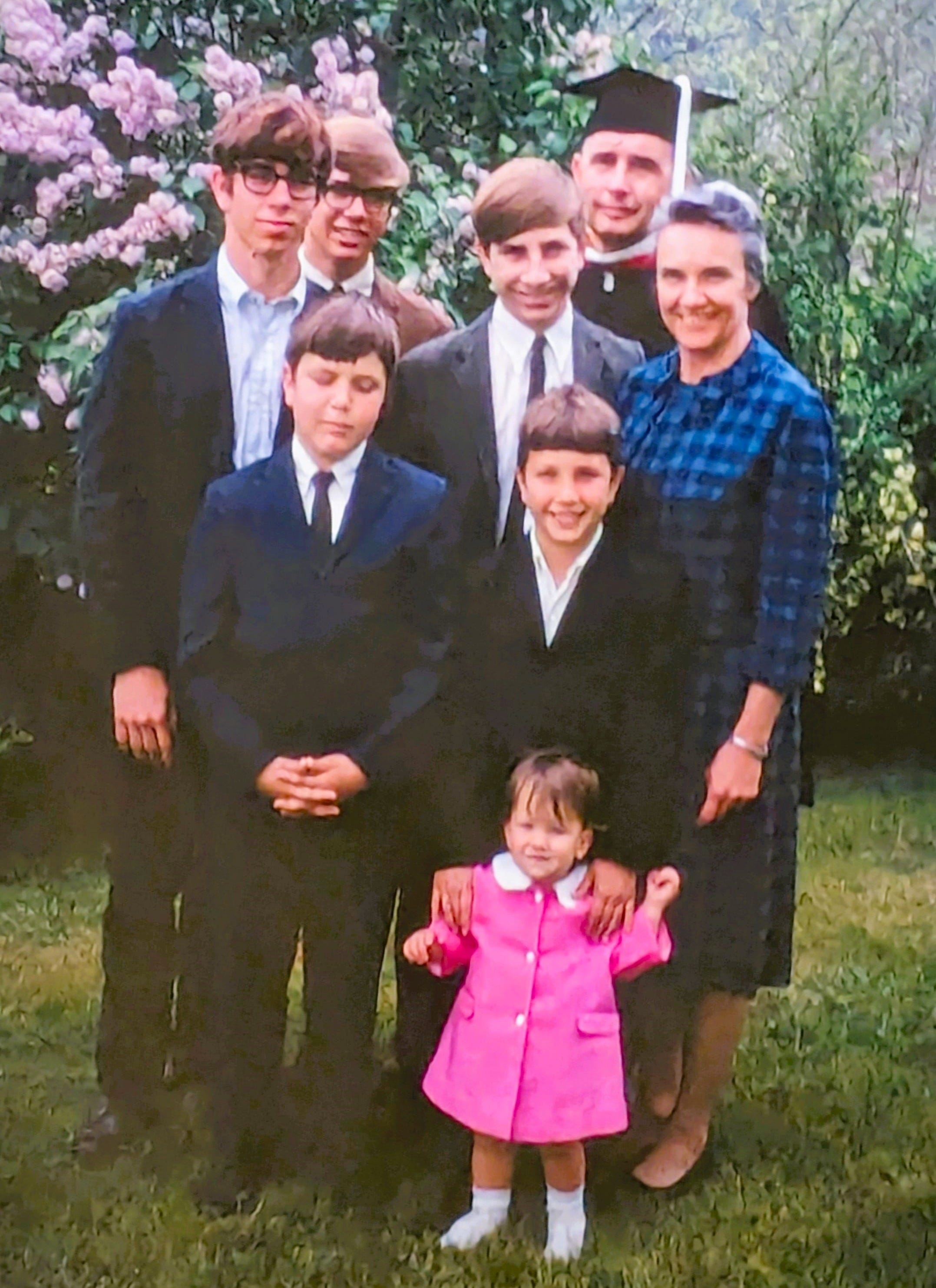
No one I knew was an artist. I mean pursuing their art with a headlong devotion, at the expense of most anything else. Trying to make art their life. I didn’t even know it was possible, that art could be a career people chose. The oldest of five, I grew up rocking baby siblings to sleep and changing diapers. Digging rocks by hand out of the sticky red clay of my father’s vegetable garden. From age 12, I taught Sunday school and Bible school, and led the hymn-singing at church. Some summers, I worked in my parents’ office, typing patients’ names and contact information on filing cards. Every night, well into our teens, I shared a bed with my sister closest in age. There was little room for art in our world. Nobody talked about art. We didn’t even think about it. The closest endeavors we had were canning and quilting, and nobody called these things art.
Writing, my singular passion, happened in the secret interstices of this otherwise crowded, communal life. It was something I did apart. Something, I see now, that required hiding. I hid in our treehouse, or cocooned inside a hammock in the backyard. A certain stump in the forest across from our house, I called mine. There was also a cupboard for my mother’s sewing machine, in the basement, where I could sit to scribble in notebooks. No one else in my environs engaged in these acts: concealing themselves, writing stories. In my Mennonite childhood, activities that demanded so much time alone were vaguely suspect, definitely odd, and probably too self-indulgent.
The Mennonite church grew out of a radical fringe of the Protestant Reformation in Europe, where the first Mennonites so fervently espoused separating themselves from the state, they drew the wrath of both Catholics and other Reformers, and were burned at the stake by the thousands. Surviving Mennonites escaped into the hinterlands and eventually to the American colonies, a heritage that lingers in the conviction that church members should cleave to each other and eschew the outside world. Some communities take this to mean they should paint all the chrome on their cars black, or that their women should cover their heads. My own family emphasized staying close, consorting almost exclusively with one another. My parents had no friends but their siblings, no social life but family and church. Our only parties were family reunions. We reified the Mennonite stance: “a people together, apart.”
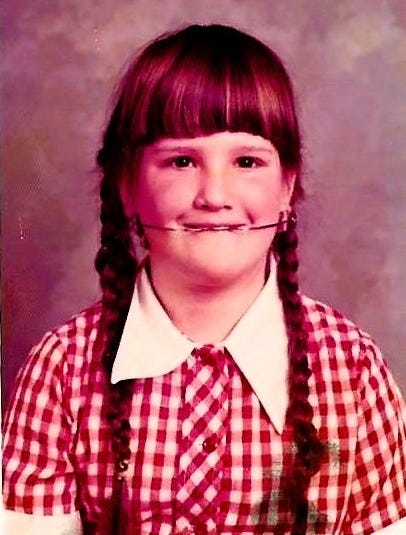
As a child, I rarely met anyone who didn’t belong to my kin group or my church, or to the rural South. Wherever I looked, I saw connections between me and the people around me, forged long before I was born. No wonder Little Women became a lodestar for me, a source of early comfort. Two of the March sisters, Amy and Jo, strive after their art; it takes them away from the family fold. But after a year or two each, they return. They settle down, more or less set their art aside. They are gathered back into the circle.
Writing, my singular passion, happened in the secret interstices of this otherwise crowded, communal life. It was something I did apart. Something, I see now, that required hiding. I hid in our treehouse, or cocooned inside a hammock in the backyard. A certain stump in the forest across from our house, I called mine. No one else in my environs engaged in these acts: concealing themselves, writing stories. In my Mennonite childhood, activities that demanded so much time alone were vaguely suspect, definitely odd, and probably too self-indulgent.
In the strictest sense of the word, I’m not sure Little Women is a kunstlerroman: the story of an artist’s journey. Willa Cather’s The Song of the Lark and My Name Is Asher Lev, by Chaim Potok, are harsher, lonelier stories about pursuing your art, wherever it takes you, and in this sense are more exact models. The protagonists refuse to sacrifice finding themselves as artists in order to integrate into the communities where they were born. They choose rupture above adaptation.
Belonging to a place, to a people, is a powerful drug. I sought stories in childhood where the heroes claimed space for what I most wildly loved—being an artist, immersing one’s life in art—while still clinging to home. I wanted to be a March sister, briefly trying my wings as an artist but ultimately landing back in the nest. Still, I felt such kinship with Asher Lev when he visits a Hasidic museum and is dissatisfied with what his home culture can offer by way of art: “Torah covers, spice boxes, illuminated manuscripts... It was all crafts and unmoving. I felt vaguely betrayed.” And my favorite part of Song of the Lark was when the protagonist, Thea, gets her own bedroom and finds intense succor in it. Before claiming this space from the loft above her family’s house, Thea “lived in constant turmoil. The clamour about her drowned the voice within herself.” But in her own room, “her mind worked better… Pleasant plans and ideas occurred.” The new bedroom is Thea’s first step away from the demanding communal life that holds her back as an artist, and after this she keeps going and going.
Not all artists need to leave home, or to travel so far. Not all communities of faith erect walls against which an artist must batter herself. Nor do all fledgling artists have to batter themselves as long and hard as I did. But at age 12 or 13, I stopped writing stories. I couldn’t see a way forward, couldn’t conceive of a space for my fiction to exist in my world. When I went to college, and then graduate school, it was to become an English professor. I would teach the stories other people had written. I’d forgotten, or nearly forgotten, how to do it myself.
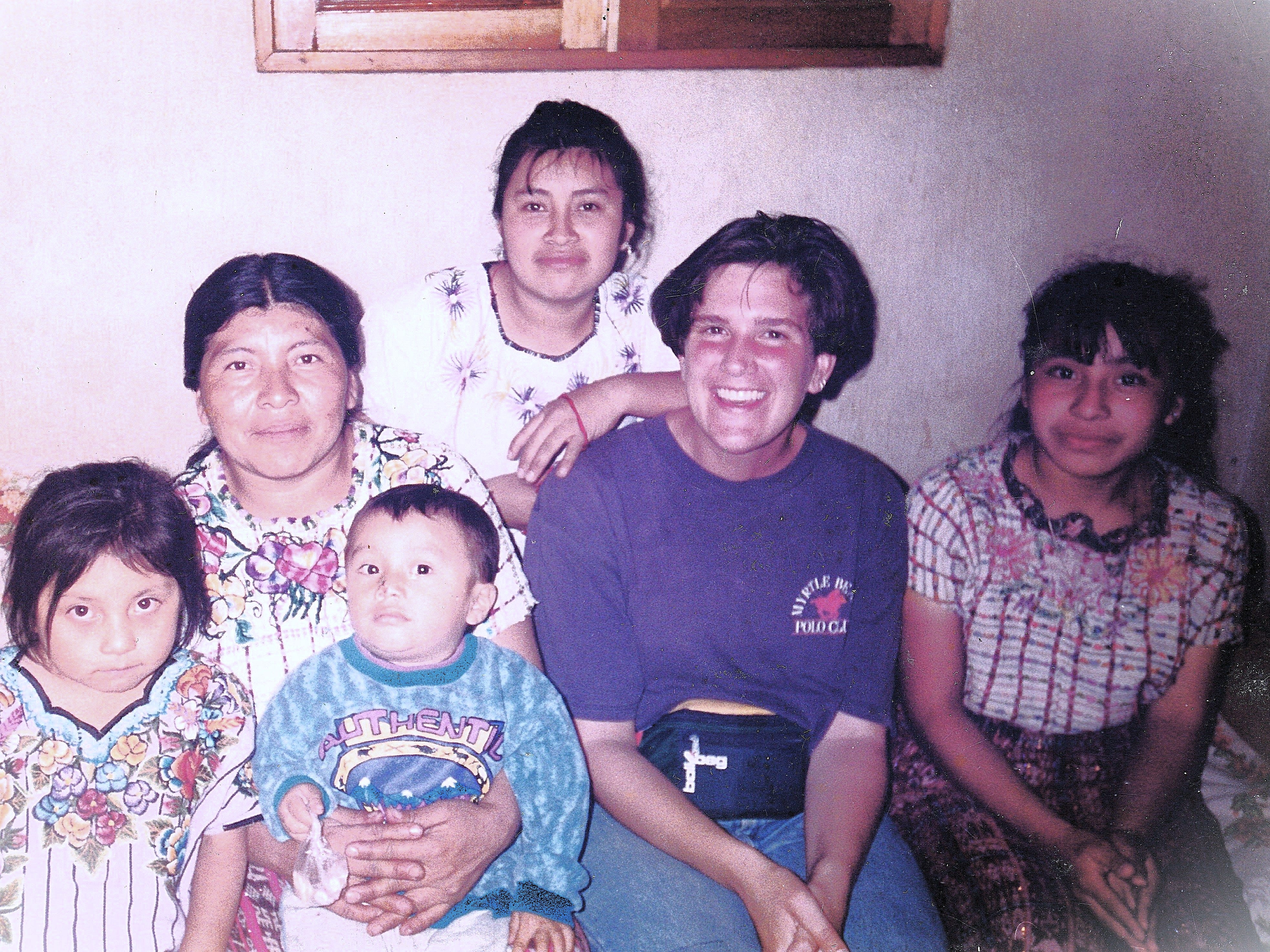
Professorship fit me like a suit that was technically my size but nonetheless squeezed my breath. It was still unclear, in my mid-30, what I wanted to be when I grew up. One year after our wedding, my husband and I moved to Guatemala, where I’d worked on two prior occasions, to direct a language school there. About a year later, on what at first seemed a regular day, armed men in ski masks broke into our building. They held a gun to my coworker’s head. I spent most of the break-in with several other employees, all huddled under a desk.
We were robbed. No one was physically injured, or killed. It could have been so much worse. But when I crawled out and found my husband, unharmed, something had shifted. It was suddenly easy to ask certain questions. If I knew I was going to die very soon, what would I most regret? What would I wish I’d done with my life that I hadn’t, so far? It came down to writing. Writing fiction the way I had done as a child, my whole brain and body abuzz.
You can deny a desire so long, it goes dormant. Once I gave myself permission, however, writing fiction came back in a rush. It was like drinking out of a hose turned on full blast. The easiest transition I ever made.
After Guatemala, we moved to Chicago, then England. I haven’t returned to the Mennonite church. Ever since, though, I’ve kept writing. It wasn’t so much that I found myself, at age 36, as a writer. My writing self had always been with me. But it took leaving my home church and culture to free that self, or wake her back up. Then I could finally see—and step into—this perfectly sized, writer-shaped space in my world.
Honored to be published here -- huge thanks, Sari!
Traveling is a beautiful thing, you can keep your roots but keep expanding in new ways. Happy to read of your transformation here 😃